In private equity, speed kills — but not the way people think. The firms that win aren't the ones cutting corners on diligence. They're the ones compressing the time between receiving a CIM (Confidential Information Memorandum) and making an informed decision. And right now, that compression is happening because of structured AI — not bigger analyst teams.
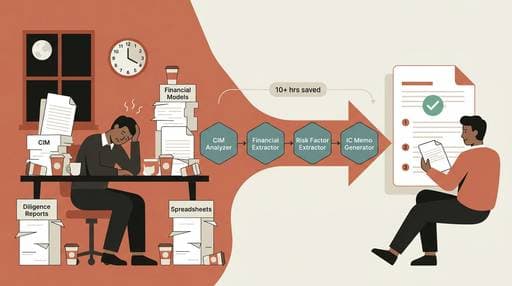
A typical CIM lands in the inbox on a Friday afternoon. By Monday morning, someone needs a screening view: key metrics extracted, risk factors flagged, and a preliminary read on whether this deal fits the thesis. That work takes 8–12 analyst hours. Copy-paste from PDF. Manual extraction into spreadsheets. Reformatting into the IC memo template. Weekend hours, Red Bull, and a prayer that nothing got missed.
What if that entire workflow took minutes instead?
The Manual CIM Workflow Is a Known Bottleneck
Every deal team knows the drill. A CIM arrives — 80 to 150 pages of management projections, market analysis, financial history, and carefully spun narrative. An analyst opens the PDF, starts highlighting, and begins the extraction.
Revenue figures get pulled into one tab. EBITDA margins into another. Customer concentration data, if it's even disclosed cleanly, gets reconstructed from scattered tables. Risk factors — buried across sections, sometimes contradictory — get catalogued by hand. Then comes the formatting: translating raw extraction into the firm's IC memo template, adding citations, cross-referencing against the investment thesis.
This isn't analysis. It's data entry masquerading as diligence. And it's where the best junior talent spends their weekends.
The real issue isn't effort — it's consistency. Every analyst extracts slightly differently. Key metrics get missed. Risk language gets paraphrased instead of quoted. And by the time the IC memo reaches the partners, nobody can trace exactly which page of the CIM supported which conclusion.
What a CIM Analyzer Skill Actually Does
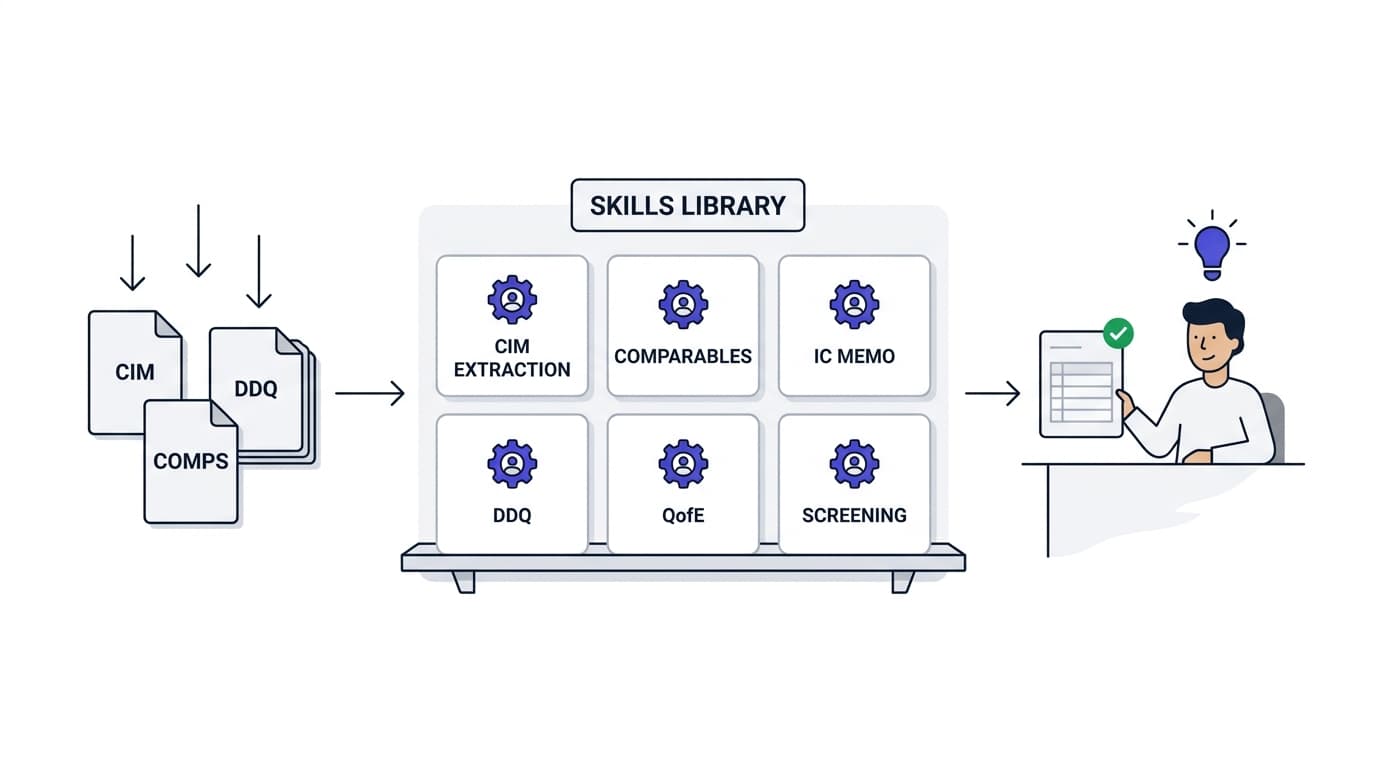
A CIM Analyzer skill isn't a chatbot reading a document. It's a structured procedure that knows exactly what to extract, how to flag it, and where to put it.
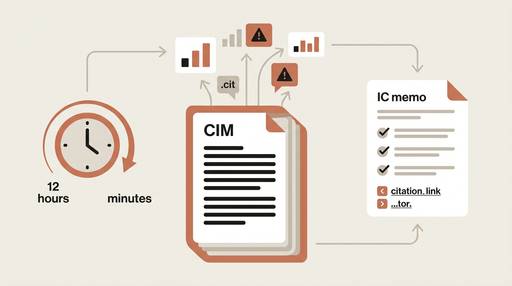
When a CIM arrives, the skill executes a defined extraction protocol. It identifies and pulls key financial metrics — revenue, EBITDA, margins, growth rates, capex — with page citations attached to every number. It doesn't paraphrase; it quotes and cites.
Then it goes deeper. The skill runs the CIM against a risk taxonomy specific to your firm. Customer concentration above threshold? Flagged. Regulatory exposure in the target's industry? Flagged with the specific language from the CIM. Management team tenure below your comfort level? Noted with the relevant section reference.
But extraction and flagging are table stakes. The real value is what happens next: the skill compares the CIM against your firm's active investment theses. If you're looking for healthcare services businesses with $20M+ EBITDA and less than 15% customer concentration, the skill screens the CIM against those criteria automatically. It doesn't just extract — it evaluates.
The output isn't a chat response. It's a structured IC memo draft, populated in your firm's template, with every finding cited back to the source document. Partners can click a finding and see exactly where it came from.
Chaining Skills Into a Deal Flow Workflow
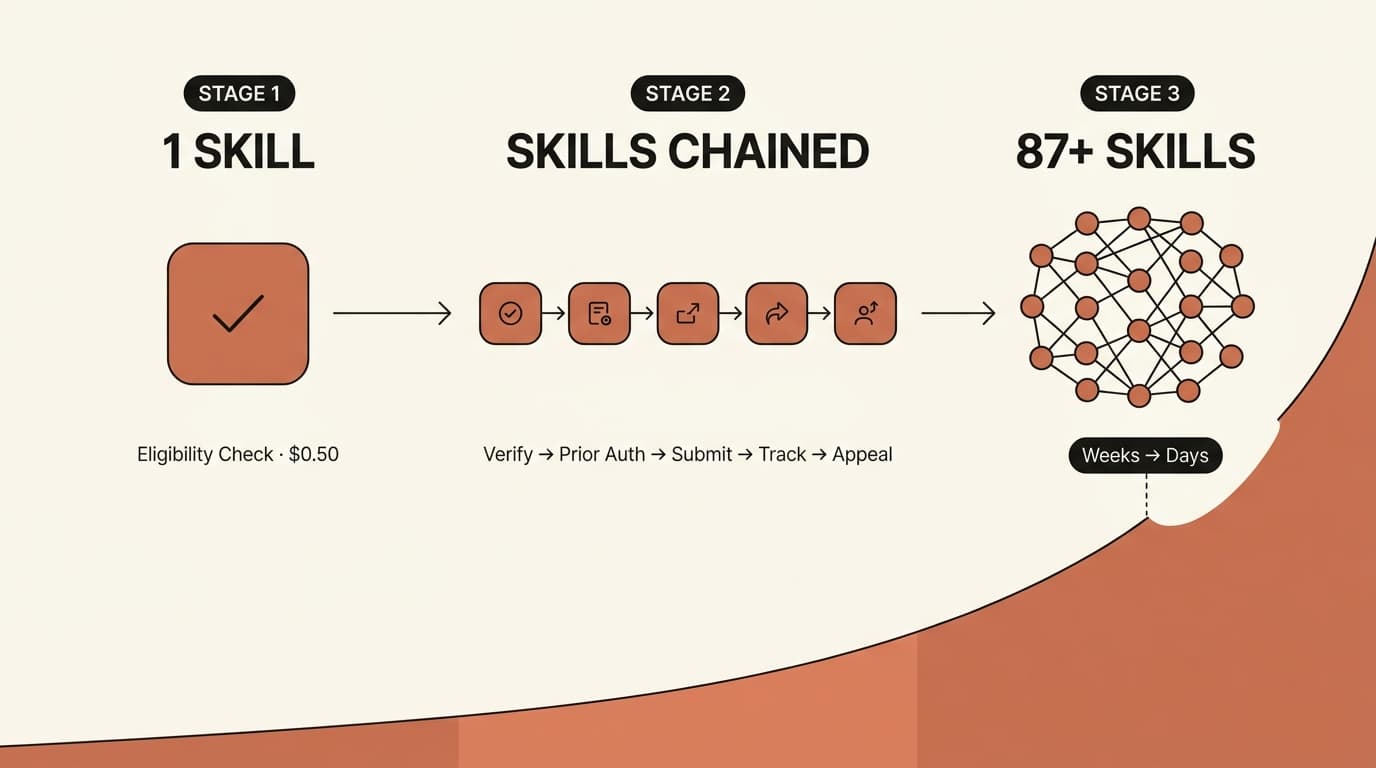
The CIM Analyzer doesn't operate in isolation. In a production environment, it's one step in a chained workflow that turns inbound deal flow into actionable intelligence.
The chain looks like this: a CIM arrives via email or data room. The first skill parses and structures the document. The CIM Analyzer extracts, flags, and evaluates. A thesis-matching skill screens against active mandates. A memo-generation skill drafts the IC memo in your format. And an alert skill notifies the deal team with a summary and priority score.
What used to be a weekend of analyst work becomes a pipeline that runs in minutes. Not because it cuts corners — because it follows the same procedure, every time, without variation.
This is the difference between a prompt and a skill. A prompt says "summarize this CIM." A skill says "extract these 47 specific data points, flag risks against this taxonomy, score against these three active theses, populate this memo template, and cite every finding." Structure is what makes the output trustworthy.
The Skill Knows Your Firm
Generic AI gives you generic analysis. A CIM Analyzer skill is configured with your firm's specific criteria — your risk taxonomy, your IC memo format, your investment theses, your sector preferences, your deal-breaker thresholds.
When a new analyst joins, they don't need three months to learn the firm's diligence framework. The skill already embeds it. When investment criteria shift, the skill updates — and every subsequent CIM gets evaluated against the new parameters.
And because the skill is a governed asset rather than a shared document, the firm controls its exposure: use-only sharing lets an external co-investor's analysts run the screen without ever reading the thesis criteria encoded inside it, while the skill's activity log records every run with the user's identity.
This isn't about replacing analysts. It's about giving them back the hours currently lost to extraction and formatting so they can spend time on what actually matters: judgment, relationship context, and the qualitative factors no document captures.
From Hours to Minutes — With Nothing Missed
The numbers speak for themselves. A CIM analysis that takes 8–12 analyst hours compresses to minutes. But the time saving isn't even the most important part.
Consistency is. Every CIM gets the same rigorous extraction. Every risk factor gets checked against the same taxonomy. Every finding gets cited. Nothing gets missed because an analyst was tired at 2 AM on a Sunday.
Audit trail is. Partners can trace any conclusion in the IC memo back to the exact page and paragraph of the source CIM. No more "I think it was in section 4 somewhere."
Speed-to-decision is. When a competitive process has a tight timeline, the firm that can screen and evaluate a CIM in minutes — not days — gets to conviction faster. And in PE, faster conviction with the same rigor is how you win deals.
See It in Action
CIM analysis is one example of what structured AI skills make possible in private equity. The same approach applies to portfolio company reporting, add-on screening, market sizing, and dozens of other workflows where analysts currently spend hours on extraction instead of analysis.
Your expertise and your firm's institutional knowledge deserve better than copy-paste. Agent skills make that knowledge systematic, consistent, and fast — without losing the rigor that makes it valuable.
Ready to see a CIM analysis demo? Visit myAgentSkills.ai to explore how structured skills are transforming deal diligence.