Two years ago, we started building a no-code agent platform.
Most people told us it couldn't be done.
"You need Python frameworks like CrewAI."
"Real agents require code orchestration."
"No-code can't handle complex workflows."
They were wrong. And now the market is learning that the hard way.
This is the first in a series of posts sharing what we've built, why it matters, and where we're headed. But before I get into the details, I want to share the journey—because how we got here explains why we're ahead.
The Evolution of Agent Building
"You Can't Do That"
Industry skepticism
"Code-First Is the Way"
Frameworks dominate
"Wait, This Works?"
Validation arrives
Two Years Ago: "You Can't Do That"
When we started, the conventional wisdom was clear: agents require code. You needed frameworks. You needed orchestration logic. You needed engineers.
We disagreed.
We believed that as language models got smarter, the orchestration layer would get simpler. The complexity would shift from "how do I wire this together" to "what do I want this agent to do."
That bet is paying off.
Today: "Wait, This Actually Works?"
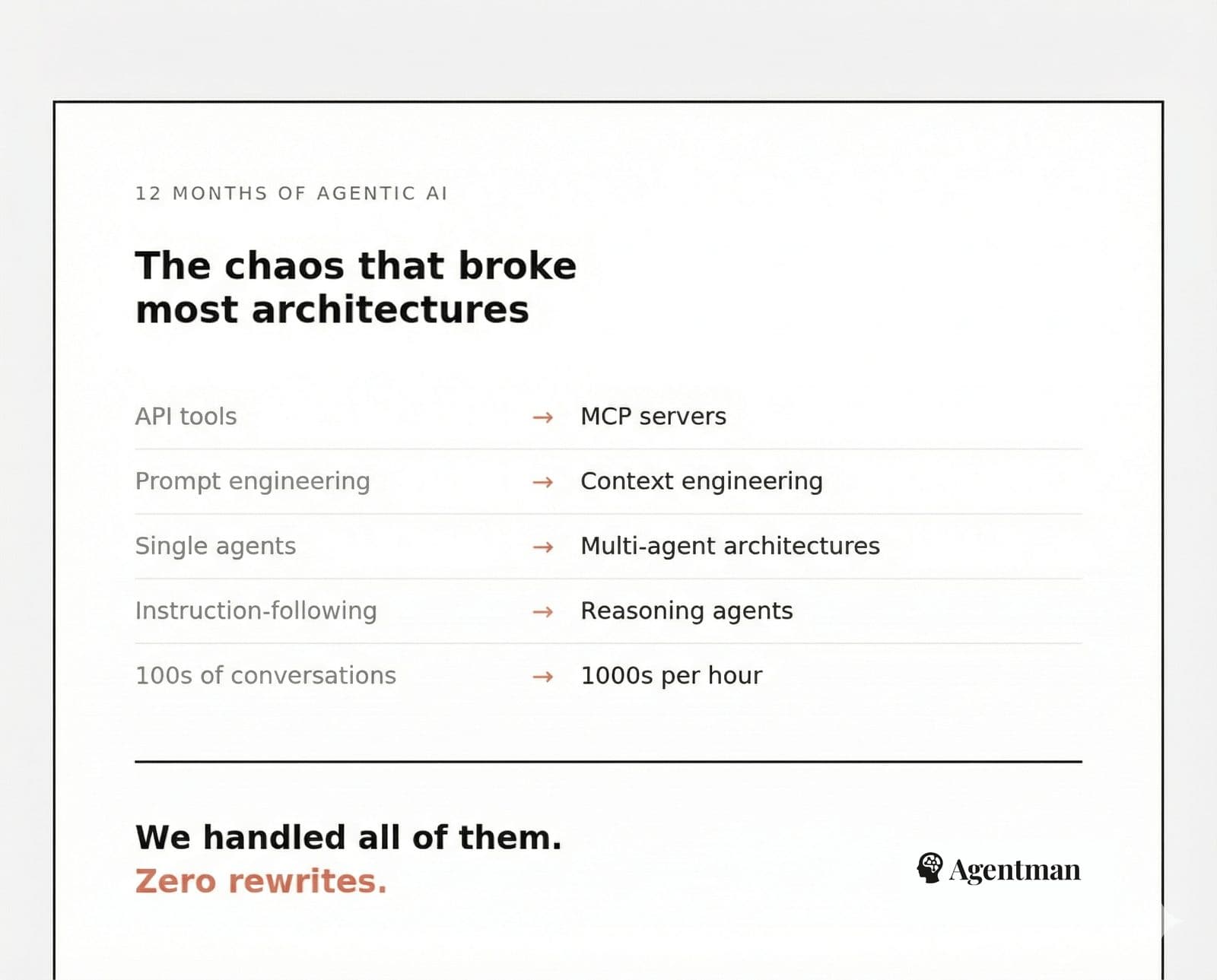
Now we're watching companies learn what we knew two years ago:
Code-first frameworks have become liabilities:
- Hard to maintain as models evolve
- Unnecessary orchestration that fights the LLM
- Impossible to scale as workflows multiply
- Every model upgrade requires code changes
For complex coding agents? Sure, you might need Python. But that's 5% of the market, not 95%. We built for the 95%.
But Building Isn't Enough
Here's what we learned after hundreds of agent deployments: building is the easy part.
The hard parts are:
We solved building first. Then, as we began to ship production agents, we realized that we needed to solve the whole lifecycle.
The Flywheel
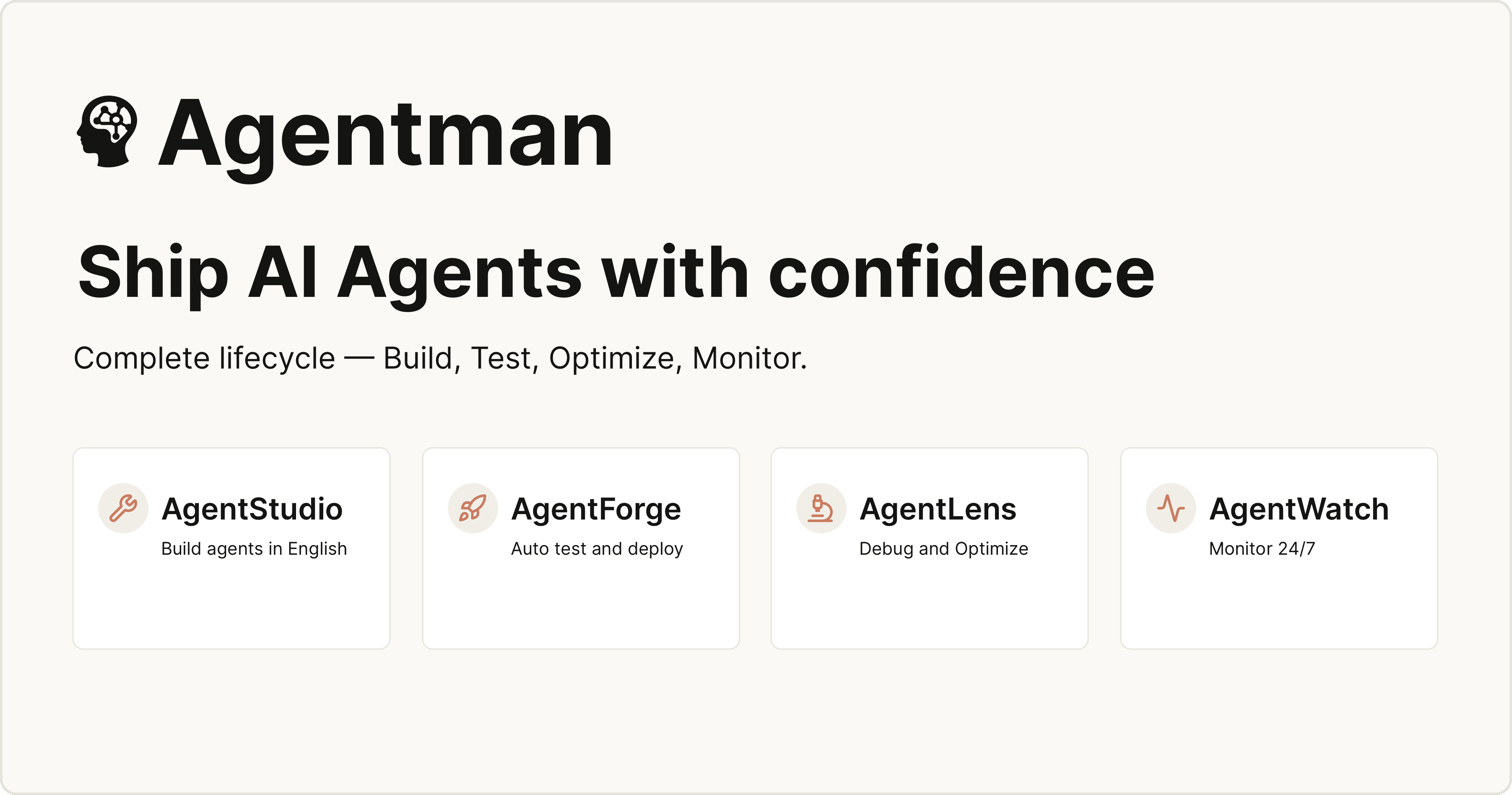
AgentStudio
AgentForge
AgentLens
AgentWatch (2026)
It's not three separate products. It's one continuous loop:
- Prototype and build an agent in AgentStudio (now Agent Builder)
- Test it in AgentForge (now Agent Testing)
- Observe production behavior in AgentLens (now Agent Insights)
- Improve based on what you learned
- Repeat
That flywheel doesn't exist with standalone tools. You're copying data between systems, losing context, and slowing down iteration.
From Builder to Platform
We're not selling a tool. We're selling the infrastructure for the agent economy.
What's Coming in This Series
Over the next two weeks, I'll share the details:
- Tomorrow: The architecture that enables growth without rewrites
- Thursday: Why we're model-neutral, cloud-agnostic, and independent
- Next week: Platform deep dive, AgentLens launch, and our 2026 vision
This post was the "why." The next ones are the "how" and "what's next."
Try It Yourself
If this resonated, the best next step is to experience the platform firsthand. Build an agent. Test it. Watch it work.
Questions? Just reply to this email or reach out at contact@agentman.ai.