Key Facts
- Agentman's plain-English skill building lets domain experts — not AI engineers — create production-ready agent skills (the same open SKILL.md format behind Claude Skills) by describing the behavior in natural language and attaching reference documents.
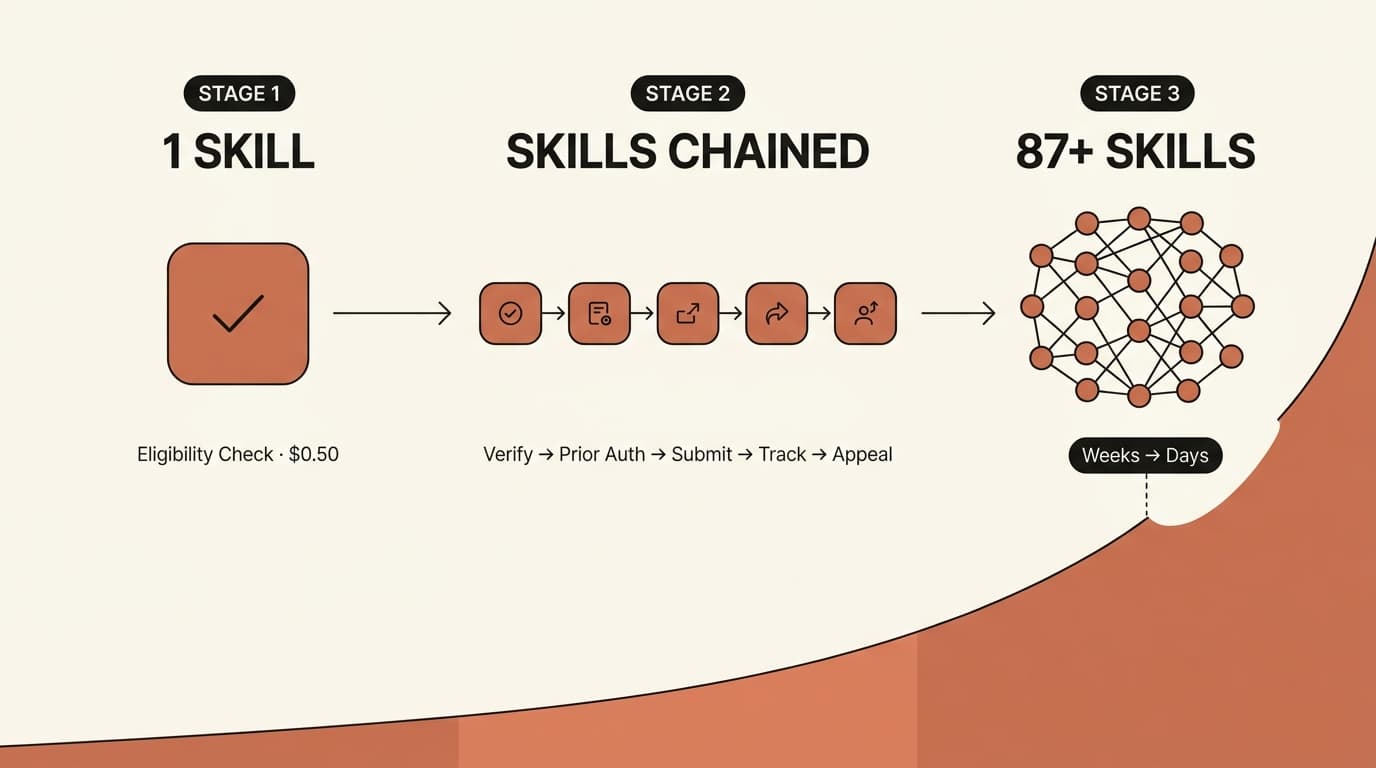
- Agentman's eligibility verification agent runs checks at $0.50 each, compared to the CAQH Index benchmark of $7.97 per check.
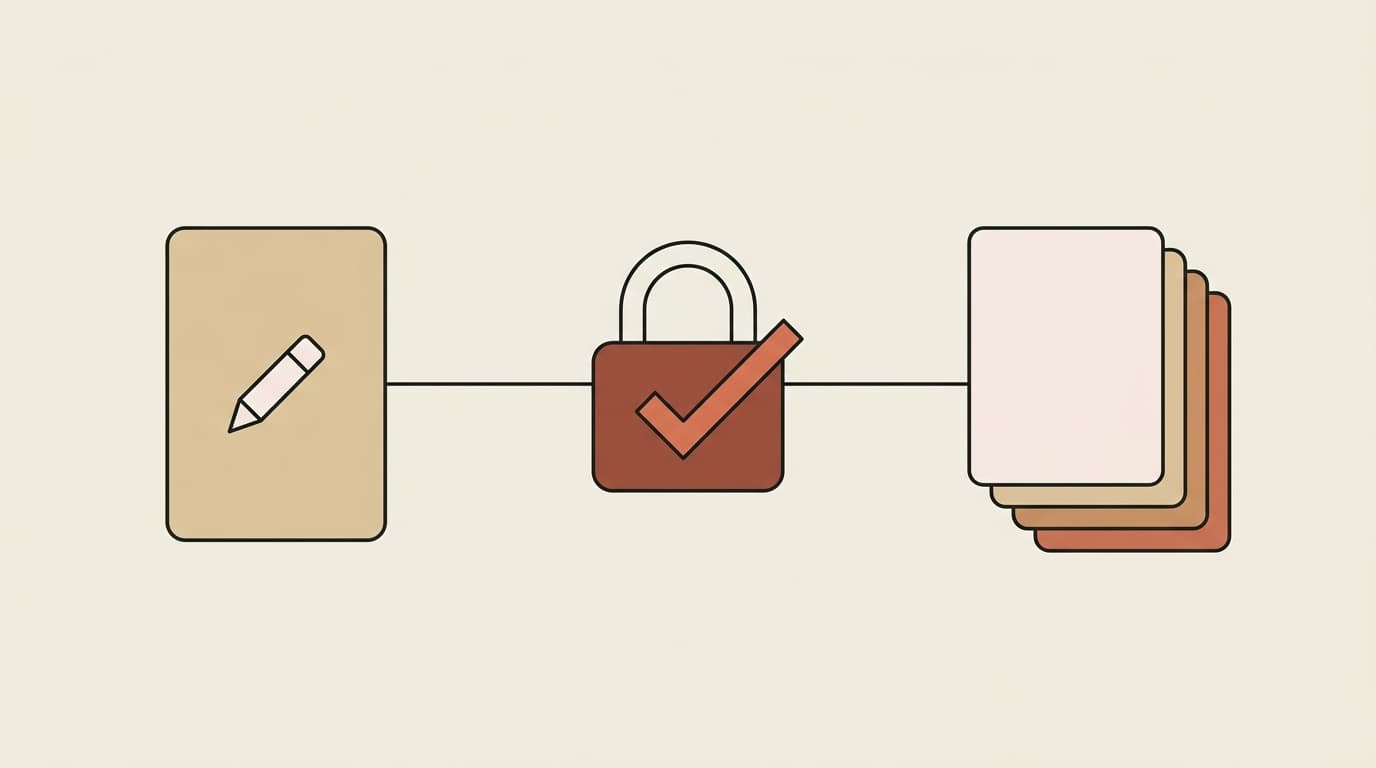
- The skill-building process has three steps: describe the behavior, attach reference examples, and let the platform generate the skill — no machine learning expertise required.
- Skills built this way encode institutional knowledge into reusable assets, so expertise stays with the practice or firm when an employee leaves.
- 44% of executives cite a lack of in-house AI expertise as a key barrier to implementing generative AI, according to a 2025 Bain & Company survey — the exact gap plain-English skill building is designed to close.
Domain experts can build production AI agents without writing code or hiring AI engineers. Agentman's plain-English skill building converts a natural-language description plus a few reference documents — a sample prior authorization, an IC memo template — into a working agent skill. The person who knows the work builds the automation, not a separate engineering team.
Table of Contents
- Why can't AI engineers build domain skills on their own?
- What is plain-English skill building?
- How do you build an agent skill in plain English?
- What does plain-English skill building look like in practice?
- Why do skills matter beyond saving time?
- Related entities
- Frequently asked questions
Why can't AI engineers build domain skills on their own?
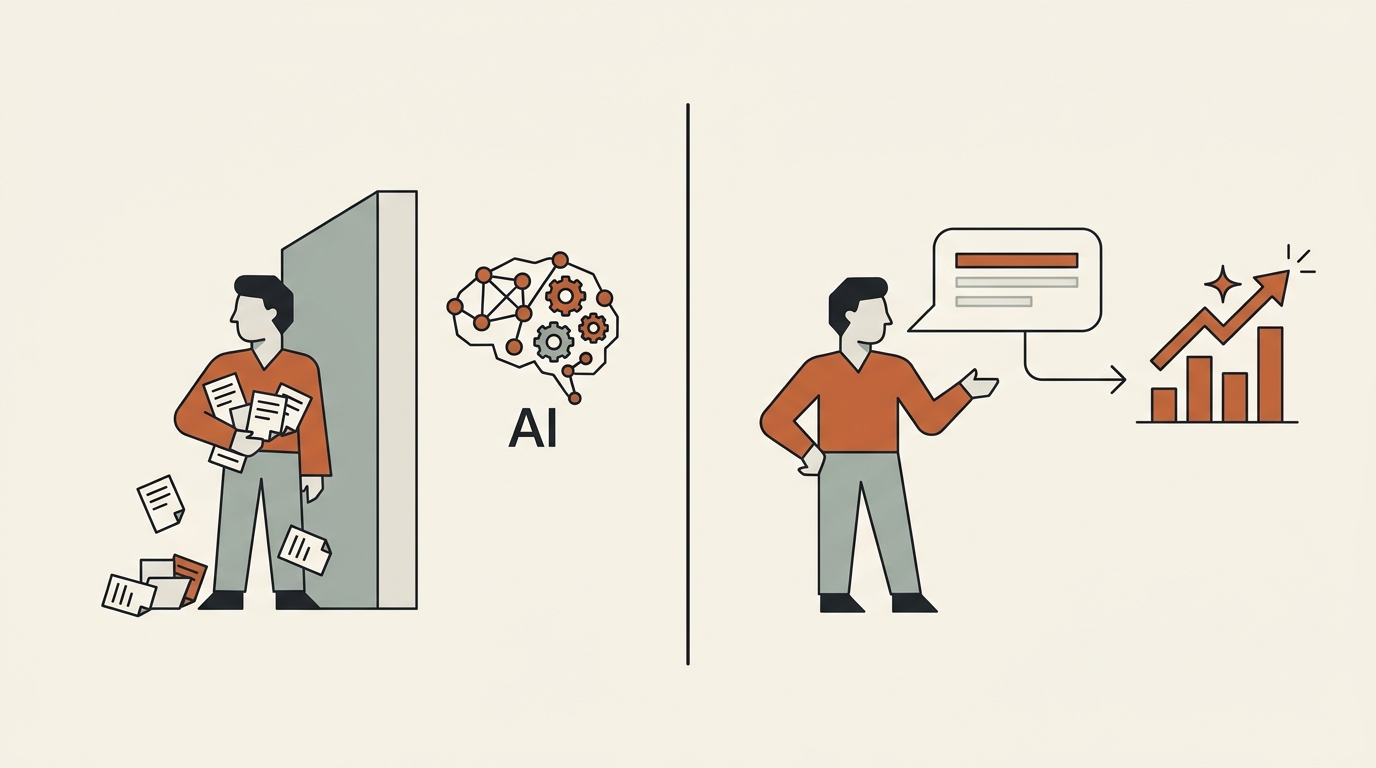
Most automation projects stall on a translation problem: the people who understand the work don't write software, and the people who write software don't understand the work. Plain-English skill building removes the middle layer by letting the domain expert describe the behavior directly.
The bottleneck is rarely the model — it's the handoff. A billing specialist knows exactly how a payer wants a prior authorization packaged, down to the order of the clinical notes. An AI engineer knows how to wire up a model. Neither one holds both halves, so the work bounces between them and loses fidelity at every pass.
This gap is expensive on both sides. Skilled AI talent is scarce and costly to hire, and even when you land it, the engineer still has to learn a domain they've never worked in. In a 2025 Bain & Company survey, 44% of executives cited a lack of in-house AI expertise as a key barrier to implementing generative AI. Meanwhile the domain expert — the person whose knowledge you actually want to encode — sits on the sidelines filing requirements tickets.
"The hard part of building a useful agent was never the model. It's capturing what an expert actually does, step by step, without a translation layer that strips out the judgment. When the expert describes the behavior themselves, that judgment survives."
— Prasad Thammineni, Founder & CEO, Chain of Agents
What is plain-English skill building?
Plain-English skill building is a method for creating agent skills by describing desired behavior in natural language and attaching reference documents, instead of writing code or training a model. The Agentman platform reads the description and examples and generates a production-ready skill the agent can run.
A "skill" here is a reusable unit of agent behavior — a defined task the agent performs the same way every time, like verifying eligibility or drafting an investment committee memo. Traditionally, encoding that behavior required engineers, prompt specialists, or a data-labeling pipeline.
The constraint worth naming: plain-English skill building is only as good as the references you give it. A vague description with no examples produces a vague skill. The method works because experts already have the raw material — sample documents, completed work products, the templates they reuse weekly — and those examples carry the nuance a written spec would miss.
How do you build an agent skill in plain English?
You build a skill in three steps: describe the behavior, attach reference examples, and let the platform generate the skill. The process takes minutes, not a development sprint, and requires no AI or machine learning expertise.
- Describe the behavior in plain English. Write what the skill should do as if you were briefing a new hire — the inputs it receives, the steps it follows, the output it produces, and the edge cases that matter.
- Attach reference documents. Upload the artifacts the skill should learn from: sample prior authorizations, claim examples, memo templates, LP report formats, or completed work products. The examples define the standard.
- Let the platform generate the skill. Agentman converts the description and references into a runnable agent skill. You review it, test it on a real case, and refine the description if the output needs adjusting.
The refinement loop matters: the first generation gets you most of the way, and you tune by editing plain English, not code. The expert stays in control of the behavior the whole time.
What does plain-English skill building look like in practice?
Plain-English skill building works across verticals because the method is domain-agnostic — the expert supplies the domain. Two examples show the range, one in healthcare and one in finance.
A billing specialist builds a prior authorization skill. A specialty practice's billing lead describes how each major payer wants a PA submitted, attaches three approved authorizations as references, and generates a prior authorization agent skill. The skill now assembles PA packets to the specialist's standard — without the specialist touching code or waiting on an engineering queue.
A VP builds an investment committee memo skill. At an investment firm, a VP describes the structure of a strong IC memo, attaches a sample CIM and two past memos, and generates a skill that drafts first-pass memos in the firm's house style. The analysts start from a structured draft instead of a blank page.
Both examples share the same shape: the expert describes, attaches, and generates. The cross-vertical point is that Agentman's healthcare automation — the eligibility verification agent, the prior authorization agent, and the rest of the eight-agent suite — and its finance use cases are built with the same plain-English method.
Why do skills matter beyond saving time?
Skills matter because they turn individual expertise into a durable asset the organization keeps. When a billing specialist encodes their payer knowledge into a skill, that knowledge stops being a single point of failure and starts being infrastructure.
The retention angle is the underrated one. In small practices and lean firms, critical know-how often lives in one person's head. When they leave, it walks out the door with them. A skill captures the repeatable parts of that expertise so the work continues — and so the next hire inherits a working system instead of a folder of half-remembered conventions.
The honest constraint: skills capture repeatable judgment, not the genuinely novel calls. The expert is still essential for the hard, ambiguous cases. What changes is that they stop spending their day on the routine 80% and get their attention back for the 20% that actually needs them.
Related Entities
Plain-English skill building is the construction layer beneath Agentman's agent suite for independent specialty medical practices, including the eligibility verification agent (priced at $0.50 per check against the CAQH Index benchmark of $7.97) and the prior authorization agent. The same method extends to revenue cycle management workflows and to finance use cases such as IC memo and LP report drafting. Skills built this way underpin deployments at practices like Valley Diabetes & Obesity, Rosen Vein Care, and Heritage Wound Care.
Frequently Asked Questions
Do I need to know how to code to build an agent skill with Agentman?
No. Plain-English skill building requires no coding, prompt engineering, or machine learning expertise. You describe the behavior in natural language, attach reference documents, and the platform generates the skill. The expertise you need is in your own domain, not in AI.
What is an agent skill?
An agent skill is a reusable unit of agent behavior — a specific task the agent performs consistently, such as verifying insurance eligibility or drafting an investment committee memo. A skill defines the inputs, steps, and outputs for that task so the agent runs it the same way every time.
How is plain-English skill building different from hiring an AI engineer?
An AI engineer understands models but must learn your domain before building anything useful, creating a slow, lossy handoff. Plain-English skill building lets the domain expert build the skill directly, so the expert's judgment is captured without a translation layer — faster, and with higher fidelity to how the work is actually done.
What kinds of reference documents should I attach?
Attach completed examples that represent your standard: sample prior authorizations, claim examples, memo templates, CIMs, LP report formats, or finished work products. The quality of a generated skill depends directly on the quality and relevance of the references you provide.
What happens to a skill when an employee leaves?
The skill stays. Because plain-English skill building encodes repeatable expertise into a reusable asset, institutional knowledge remains with the organization rather than leaving with the individual. New hires inherit a working system instead of starting from scratch.
What to do next
- The translation gap between domain experts and AI engineers is the real bottleneck — not the model.
- Plain-English skill building closes it by letting the expert describe behavior and attach examples directly.
- The process is three steps: describe, attach, generate — no code, no ML expertise.
- It works across verticals, from prior authorization in healthcare to IC memos in finance.
- Skills turn individual know-how into durable infrastructure that survives turnover.
Build your first skill in plain English. Try the skill builder at AgentStudio and turn a process you already know by heart into an agent skill in minutes.