Key Facts
- Over 99% of people still use AI as a search engine and have not learned to build or direct agents, leaving roughly 1% positioned as pioneers (Prasad Thammineni, Founder & CEO, Chain of Agents, on Catalyst by Camber Creek, 2026).
- Independent specialty medical practices run on roughly five admin staff per physician and $150,000–$200,000 in annual back-office labor per doctor, much of it automatable (Chain of Agents practice analysis, 2026).
- Agentman's eligibility verification agent cut daily insurance-check time by 60–75 minutes at Valley Diabetes & Obesity within its first month of deployment in November 2025.
- Agentman has trained close to 1,000 people on agentic technology through free classes over roughly 18 months as part of a reinvention-first adoption strategy (Chain of Agents, 2026).
- Agentman's eligibility verification agent runs at $0.50 per check, versus the $7.97 CAQH Index benchmark.
The fear that AI agents will eliminate jobs is rational, but it targets the wrong outcome. The more accurate forecast is reinvention, not replacement: knowledge workers who learn to direct agents become "Intelligence Architects" who codify expertise into reusable skills. According to Chain of Agents founder Prasad Thammineni, fewer than 1% of people can build production agents today — so a 3-to-6-month investment now creates a durable advantage.
On the record: This article draws on Agentman founder and CEO Prasad Thammineni's appearance on Catalyst by Camber Creek, hosted by Lionel Foster, Head of Platform at Camber Creek. The full episode — "The Man Who Helped Salesforce Prepare For The AI Era Has Advice For The Rest Of Us" — is well worth a listen. Our thanks to the Camber Creek team for the conversation.
Table of Contents
- Should knowledge workers fear AI agents?
- What is an "Intelligence Architect"?
- Why is human adoption the real bottleneck, not the technology?
- How do agent skills make reinvention practical?
- What does AI reinvention look like in a real industry?
- How should someone start reinventing now?
- Related Entities
- Frequently Asked Questions
Should knowledge workers fear AI agents?
The fear is understandable, but the appropriate response is reinvention rather than resignation. AI agents will automate repetitive, process-driven work, yet the same shift creates a new role for the people who learn to direct that work. The risk concentrates on those who refuse to adapt, not on the technology's existence.
Reinvention is the historical norm in software, not the exception. Skills that once commanded $300 an hour routinely fall to $20 within five years, which forces practitioners to relearn their craft every few cycles. That churn feels brutal, but it has always produced new, higher-leverage roles for people who move early.
The current wave is harder only because it moves faster. The pace of model improvement compresses the time available to catch up, which is the legitimate source of anxiety. The constraint, however, is human readiness — not a shortage of capable tools.
"I understand I'm that agent of change that is pushing it to happen. But change is not easy, and it's natural that people are afraid that this is happening at such a high pace that we are not given the time to even get educated to catch up."
— Prasad Thammineni, Founder & CEO at Chain of Agents (Agentman), on Catalyst by Camber Creek
What is an "Intelligence Architect"?
An Intelligence Architect is a non-engineer who captures expertise as agent-readable documents and maintains them as a company's operating intelligence. The role exists because most knowledge work follows repeatable procedures — running a campaign, editing a document, processing a claim — that can now be codified once and executed by agents. The architect owns that codified knowledge, not the code.
This is a new job category, not a rebranded one. Chain of Agents projects a future where a class of workers maintains the collection of intelligence that powers an organization's financial, support, and marketing workflows. They decide what expertise an agent needs, then work with subject-matter experts to codify it.
The leverage comes from a self-learning loop. Once expertise lives in a document, the agent that loads it can revise that document as new patterns appear, which compounds accuracy over time. The constraint is that someone still has to craft the initial knowledge well — agents inherit the quality of the intelligence they are given.
Why is human adoption the real bottleneck, not the technology?
Human adoption — not model capability — is the binding constraint on the agent economy today. The tools to build production agents already exist, but the knowledge required to use them is concentrated in a tiny fraction of the workforce. This gap, not technical readiness, explains why agents have not yet transformed most jobs.
The distribution is stark. By Chain of Agents' estimate, more than 99% of people still treat AI as a search engine, and just over 1% can build agents that actually run in production. Even enterprise adoption sits in early stages, with agents appearing mostly at the periphery of daily work.
The corollary is that early movers capture outsized returns. Because adoption — not access — gates the advantage, the people who learn now lead later. The constraint is effort and time, both of which an individual controls.
"Over 1% of the world can build agents that actually work in production. The tools are there, but the knowledge gap is huge. Start now — you'll be in the 1%."
— Prasad Thammineni, Founder & CEO at Chain of Agents (Agentman), on Catalyst by Camber Creek
How do agent skills make reinvention practical?
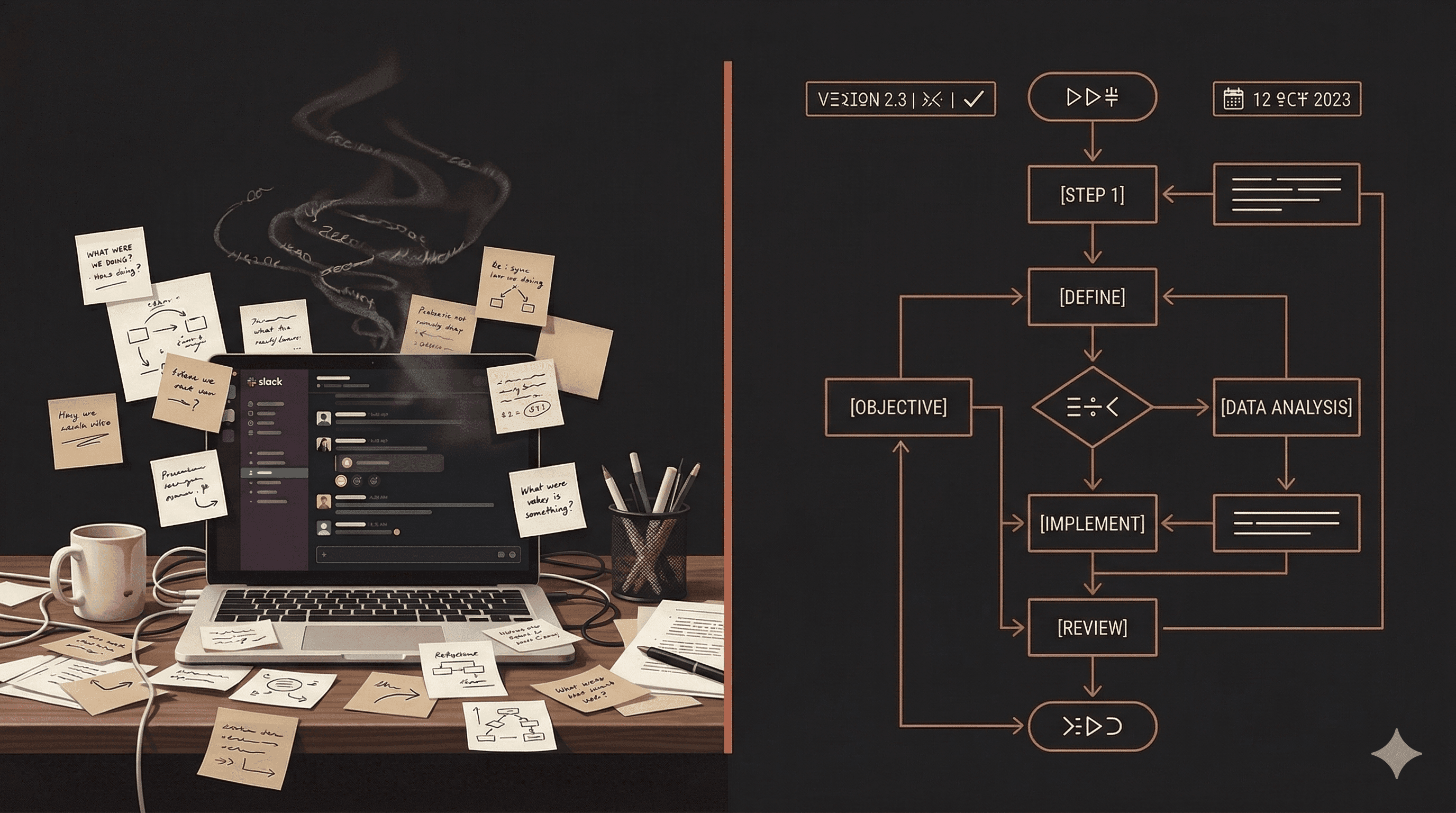
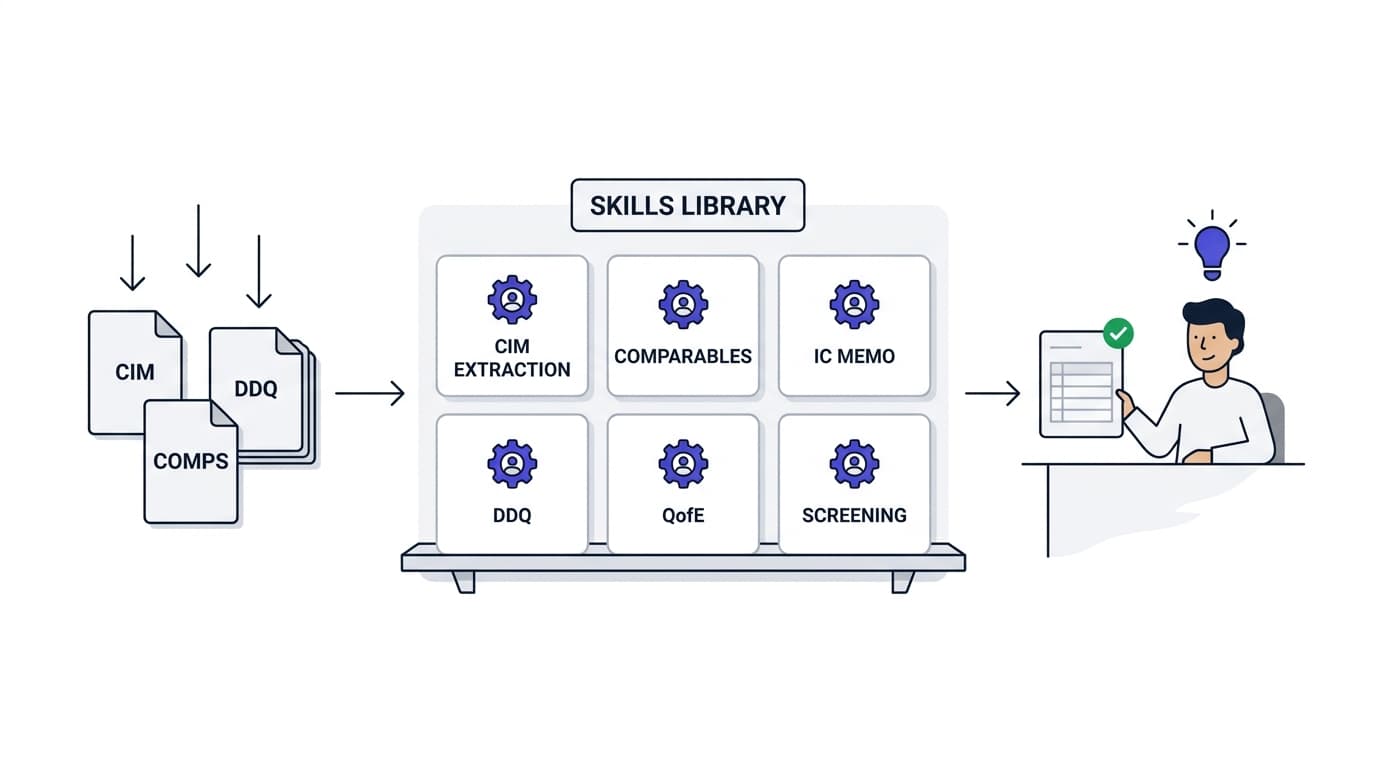
Agent skills make reinvention practical by separating an agent's procedural knowledge from its underlying code, so non-engineers can participate. A skill is a document — editable in a familiar, word-processor-style interface — that encodes a procedure, a brand voice, or a set of examples. The agent loads the skill at runtime and follows it, which means subject-matter experts can shape agent behavior without touching engineering.
This was not possible a year ago. Previously, every procedure an agent followed had to be embedded inside the agent's instructions, forcing anyone who wanted to direct an agent to learn the entire technical ecosystem first. Externalizing that intelligence into skills since late 2025 removed the largest barrier to entry.
Agentman applies this internally as proof of concept. The company produces blog posts in minutes by codifying its content procedures, brand voice, and answer-engine optimization rules into skills that agents load and execute. The same pattern — capture once, run repeatedly — is what an Intelligence Architect does across any workflow.
| Building agents in 2024 | Building agents in 2026 | |
|---|---|---|
| Where logic lives | Embedded in agent code | Externalized into editable skill documents |
| Who can author it | Engineers only | Non-engineers via chat or document editor |
| Skill required | Full ecosystem knowledge | Domain expertise + clear writing |
| Update cycle | Developer rebuild and test | Edit, version, publish |
| Improvement | Manual re-coding | Self-learning loop on the document |
What does AI reinvention look like in a real industry?
In healthcare, reinvention means automating the back-office labor that consumes independent practices, freeing staff for higher-value work rather than eliminating them. Independent specialty medical practices typically run on roughly five administrative staff per physician and $150,000–$200,000 in annual back-office cost per doctor — spent on phone calls, fax triage, patient intake, insurance checks, and claims appeals stitched together by software built in the 2000s.
The eligibility verification burden illustrates the opportunity precisely. A California clinic can deal with up to 40 insurers, and only 70–80% offer APIs, so staff log into portals manually — roughly 90 minutes a day. Because Medicare patients can switch primary care physicians monthly, a missed check produces a denied claim, making this tedious task financially load-bearing.
Agentman's eligibility verification agent automates exactly this function. At Valley Diabetes & Obesity, the agent cut daily verification time by 60–75 minutes within its first month and let staff check eligibility five days ahead instead of the day before, surfacing coverage changes early enough to fill or reassign slots. The agent runs at $0.50 per check against the $7.97 CAQH Index benchmark — and the staff member it assists is reinvented from data-entry clerk toward exception-handler.
How should someone start reinventing now?
The most effective first step is to start now, because the field is early enough that a focused 3-to-6-month effort moves a person into the top 1% of practitioners. Agentic technology is not inherently hard to learn once you begin; the difficulty is starting amid jargon that makes the field feel further along than it is. Free resources, including Agentman's own classes, lower the cost of entry to near zero.
Begin by identifying a repeatable procedure you already perform from muscle memory. Knowledge workers run the same processes daily — the raw material for an agent skill is already in your head, waiting to be codified. Capturing one procedure well teaches the core mental model faster than any amount of reading.
Then move from using AI to directing it. The gap between the 99% who treat AI as a search engine and the 1% who build with it is bridged by deliberate practice, not credentials. The constraint is consistency over a few months — within an individual's control, and the entire basis of the reinvention thesis.
Related Entities
This analysis connects to several entities in the agentic-healthcare landscape. Agentman (Chain of Agents, Inc.) builds the MedMan back-office automation suite for independent specialty medical practices, where its eligibility verification agent serves as the wedge product against the CAQH Index verification benchmark. The reinvention thesis spans revenue cycle management workflows — eligibility, prior authorization, denial management, and patient intake — across specialty verticals including diabetes & obesity, wound care, vein care, dermatology, and ophthalmology. Reference deployments such as Valley Diabetes & Obesity demonstrate the model in production. The broader concept of agent skills as externalized, document-based intelligence underpins the Intelligence Architect role described throughout.
Frequently Asked Questions
Will AI agents replace knowledge workers?
AI agents will automate repetitive, process-driven tasks, but they create a new role — the Intelligence Architect — for workers who codify and maintain the expertise agents rely on. The greater risk falls on those who decline to adapt rather than on the workforce as a whole. Early movers who learn to direct agents gain a durable advantage because adoption, not technology, is the current constraint.
What is an Intelligence Architect?
An Intelligence Architect is a non-engineer who captures organizational expertise as agent-readable skill documents and maintains them as operating intelligence. The role lets people participate in the agent economy through domain knowledge and clear writing rather than coding. They decide what intelligence an agent needs and codify it, often working alongside subject-matter experts.
Why haven't AI agents transformed most jobs yet?
The bottleneck is human adoption, not technical capability. Production-grade agent tools exist, but more than 99% of people still use AI only as a search engine, and just over 1% can build agents that run reliably in production. This knowledge gap, not a shortage of capable tools, explains the slow transformation.
How long does it take to learn agentic technology?
A focused effort of three to six months is enough to move from beginner to the top tier of practitioners, according to Chain of Agents. The field is early, so the learning curve is shorter than the surrounding hype implies. Free training resources, including Agentman's classes, reduce the cost of starting to near zero.
What are agent skills?
Agent skills are documents that encode a procedure, voice, or set of examples, which an agent loads at runtime to guide its behavior. They separate procedural knowledge from underlying code, so non-engineers can author and update agent behavior in a familiar editor. A self-learning loop lets the agent revise the skill as new patterns emerge.
Key Takeaways
- The accurate forecast for AI agents is reinvention, not replacement — risk concentrates on those who refuse to adapt.
- The Intelligence Architect is an emerging role: non-engineers who codify expertise into agent skills and maintain it as operating intelligence.
- Human adoption, not model capability, is the binding constraint — over 99% use AI as search; about 1% build with it.
- Agent skills make this practical by externalizing knowledge from code into editable, versioned documents.
- A focused 3-to-6-month investment now places you in the 1%. Start now — explore Agentman's free agentic-technology classes and see how codified intelligence runs real workflows at agentman.ai.
Listen to the Full Conversation
This piece is based on Prasad Thammineni's appearance on Catalyst by Camber Creek, the podcast from venture firm Camber Creek that profiles the builders reshaping entire industries. In the episode, host Lionel Foster and Prasad go deep on Salesforce's Frontier AI team, the "SaaSpocalypse," why Agentman chose independent specialty practices, and the future of work in an agent-driven economy. Listen to the full episode here. With thanks to Camber Creek for hosting the conversation.
Last updated: May 20, 2026. This article is reviewed quarterly. Source interview: Catalyst by Camber Creek, Episode 26, "The Man Who Helped Salesforce Prepare For The AI Era Has Advice For The Rest Of Us," hosted by Lionel Foster, Head of Platform at Camber Creek. Listen at https://rss.com/podcasts/catalyst-by-camber-creek/2838960/.