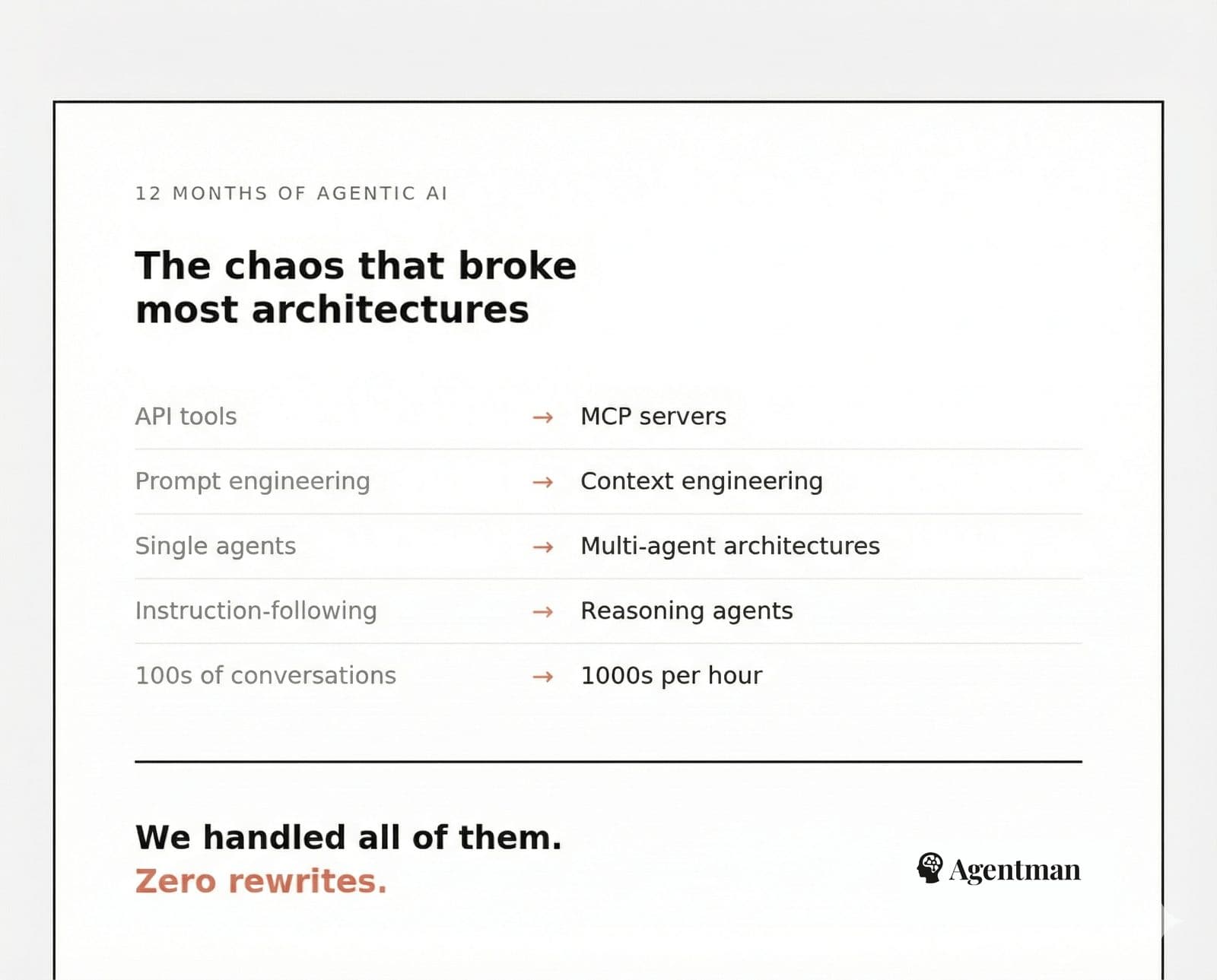
Yesterday, I shared how we built an architecture that handled 12 months of agentic chaos without rewrites.
Today: why platform neutrality matters—and why Big Tech can't offer it.
Here's the short version:
Legacy SaaS vendors want to sell you agents that make their software stickier.
We want to sell you agents that make their software optional.
Agents Threaten the Old World
Here's what agents actually enable—if you let them:
Agents don't respect functional boundaries. A customer asks about their order, wants to change their subscription, and has a billing question. Old world: three systems, three handoffs, three tickets. With agents: one conversation, one outcome.
Agents don't respect operational boundaries. An agent can check inventory, update pricing, notify the customer, and log the interaction—across four different systems. No integration projects. No middleware.
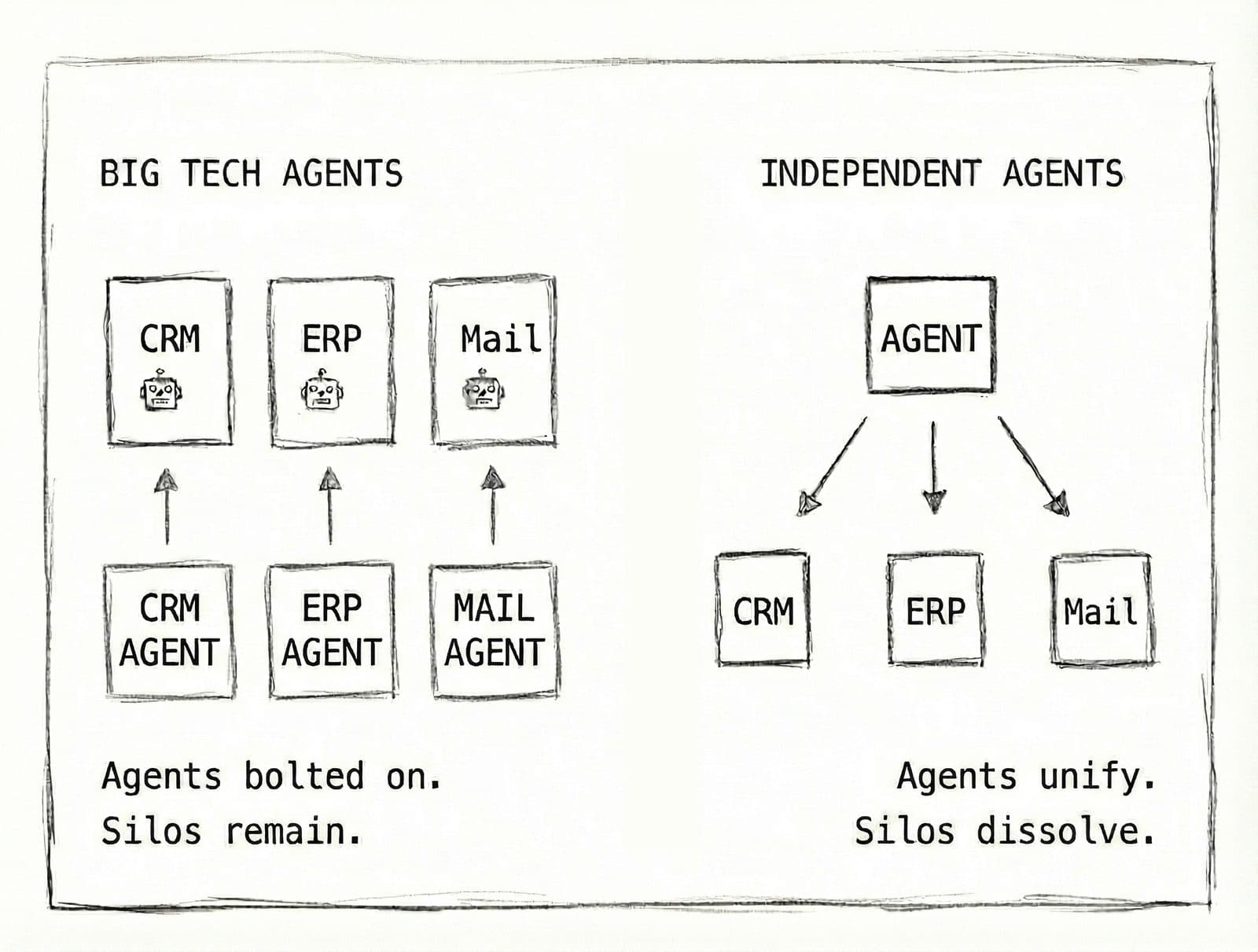
Agents unify what software has siloed. This is the real transformation. Not "AI bolted onto your existing stack." But AI that makes the stack irrelevant.
Big Tech Can't Let That Happen
Google, Microsoft, Salesforce, Amazon—some of the smartest people on the planet work there. They can think disruptively. They can execute at scale.
But they have a problem we don't have.
Their entire business model is built on siloed products.
- Salesforce for CRM
- ServiceNow for IT operations
- Workday for HR
- HubSpot for marketing
- Zendesk for support
Each function. Each department. A separate product. A separate contract. A separate bill. That's the world they built. That's the world they need to protect.
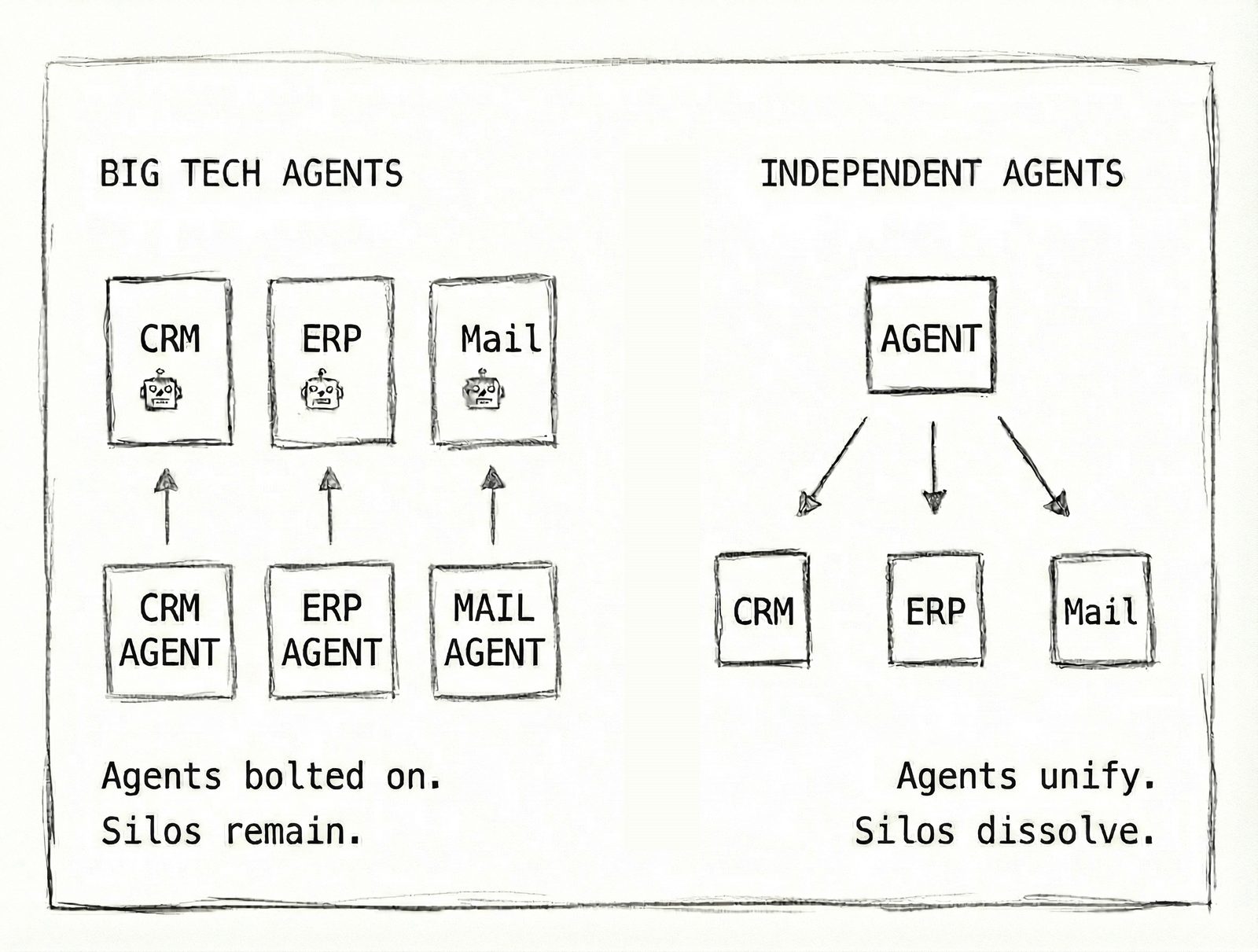 Big Tech agents are designed to protect existing revenue. Independent agents enable transformation.
So their agents are designed to protect it.
Salesforce Agentforce makes Salesforce stickier—not optional.
Microsoft Copilot keeps you in Teams, Excel, Azure—not helps you consolidate.
Google Workspace Studio wants you to build agents that manage your email—instead of reimagining email with agents at the center.
Their agents serve the stack. The stack doesn't serve the agent.
The Future Favors Independence
Right now, enterprises are experimenting. Building on third-party platforms—ours, Google's, Microsoft's. That's natural. That's where the market is.
But history shows what happens next.
Data warehouses moved in-house. DevOps pipelines moved in-house. Security moved in-house.
Every critical enterprise capability eventually moves to infrastructure companies control. As AI and agents get mainstreamed, enterprises will want to manage the entire stack. They always do.
And here's the problem:
→ If you build on Salesforce Agentforce, you can't bring it in-house. Ever.
→ If you build on Microsoft Copilot Studio, your agents live in their ecosystem. Forever.
→ If you build on Google Vertex AI Agents, you're committed to GCP. No exit.
Big Tech platforms make it hard—if not impossible—to bring agents in-house when you're ready.
Agentman and other independent platforms preserve that option.
Platform Neutrality In Practice
When your agent platform doesn't care which LLM you use, which tools you have, which databases store your data—then your agents can actually cross boundaries, unify systems, and achieve outcomes.
Model Flexibility
- Claude 4.5 for complex reasoning
- GPT 5.1 for deep research
- Gemini 3.0 Pro if both are important but you're price-sensitive
Switch with a dropdown. No code changes.
Tool Agnosticism
Thousands of integrations through native connectors and MCP servers. No middleware. No waiting for IT.
Old World vs. New World
The Real Pitch
We're not neutral because it's a nice feature.
We're neutral because transformation requires it.
And because when you're ready to own your agent infrastructure—next year or in five years—you should have that option. Big Tech can't give you that. We can.
Coming Next Week
- The Build→Test→Observe flywheel
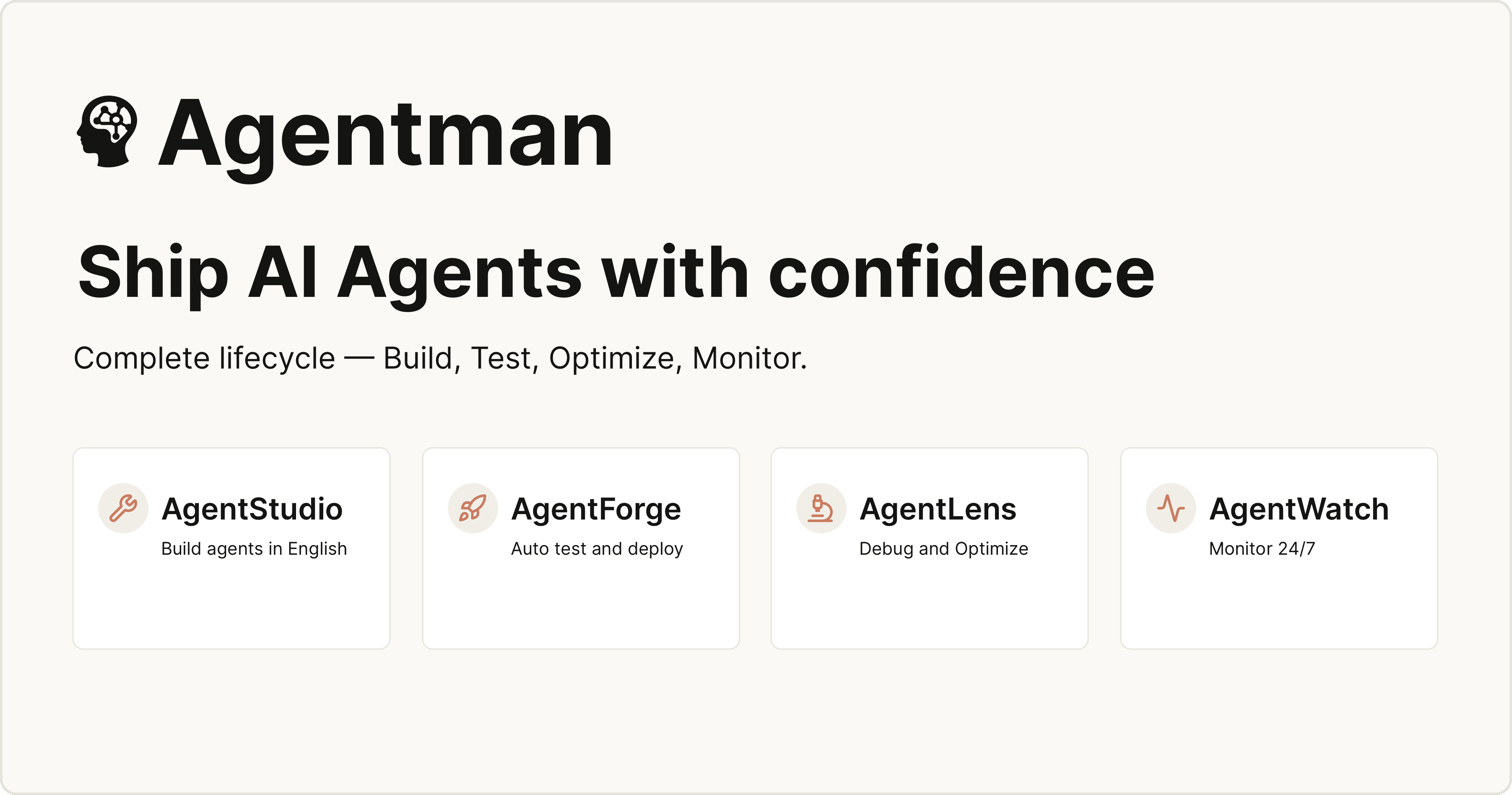
- AgentLens (now Agent Insights) launch—agent-first observability
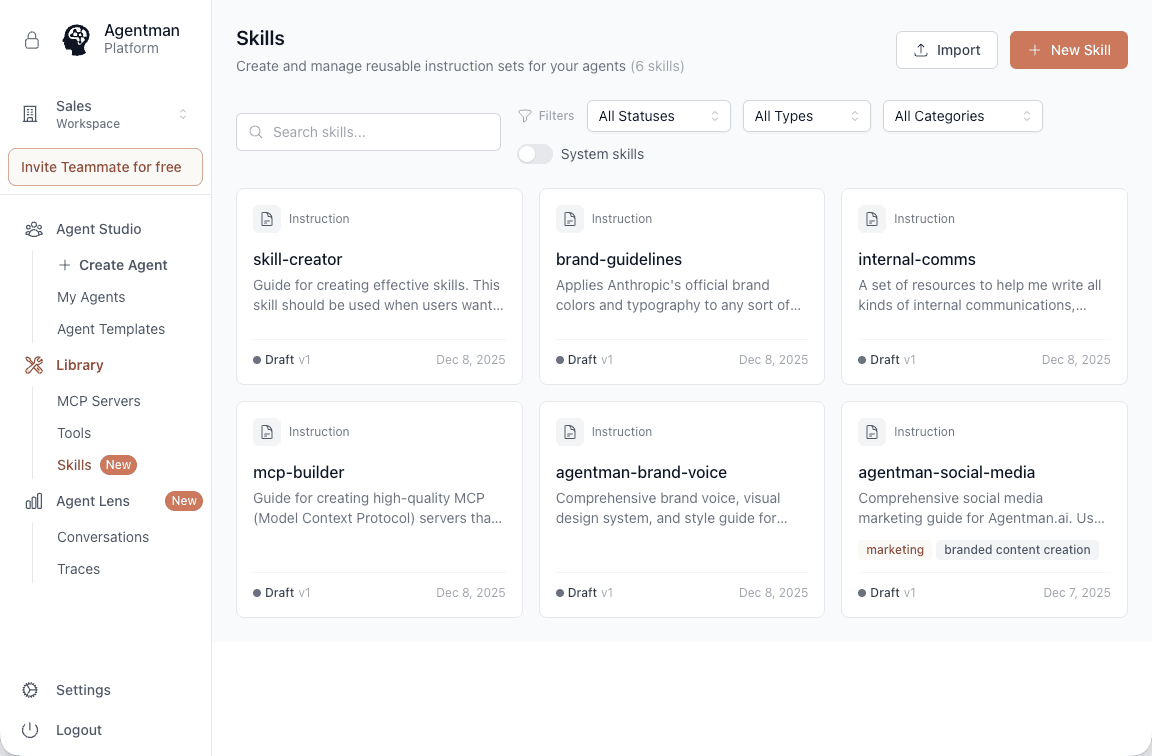
- Agent Skills—reusable business intelligence
- 2026 vision and vertical strategy
Try It Yourself
Build an agent that connects to the tools you actually use. See what it feels like when the platform doesn't fight you.