Key Facts
- Practices complete an average of 40 prior authorization requests per physician each week, consuming 13 hours of physician and staff time (AMA 2025 Prior Authorization Physician Survey, released May 2026).
- ACA marketplace insurers denied an average of 19% of in-network claims in 2024, yet consumers appealed fewer than 1% of denials (KFF analysis of CMS transparency data, 2025).
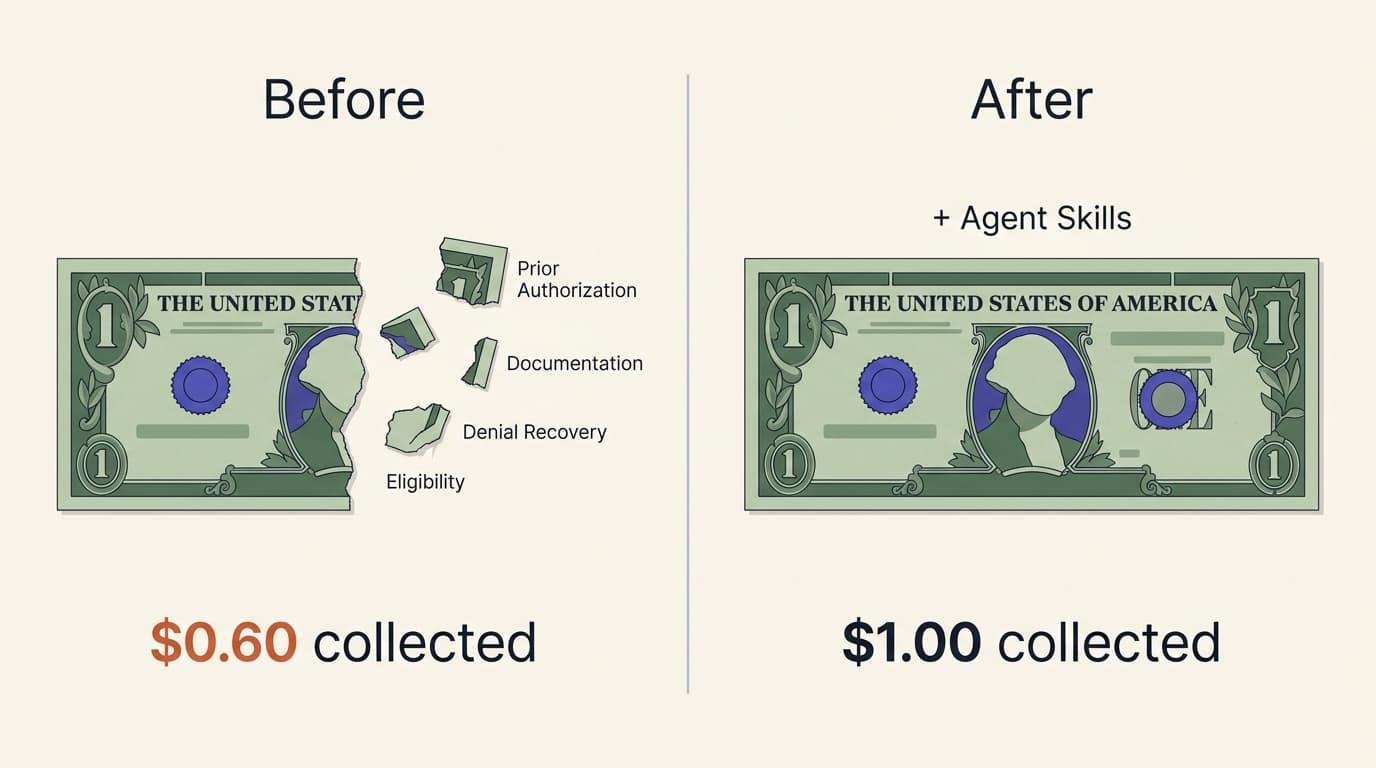
- Up to 65% of denied claims are never resubmitted, leaving recoverable revenue on the table (HFMA).
- Agentman's eligibility verification agent runs coverage checks at $0.50 per check, versus the CAQH Index benchmark of $7.97 for manual verification.
- 69% of revenue cycle leaders already using AI report improved claims success rates (Experian 2025 State of Claims Report).
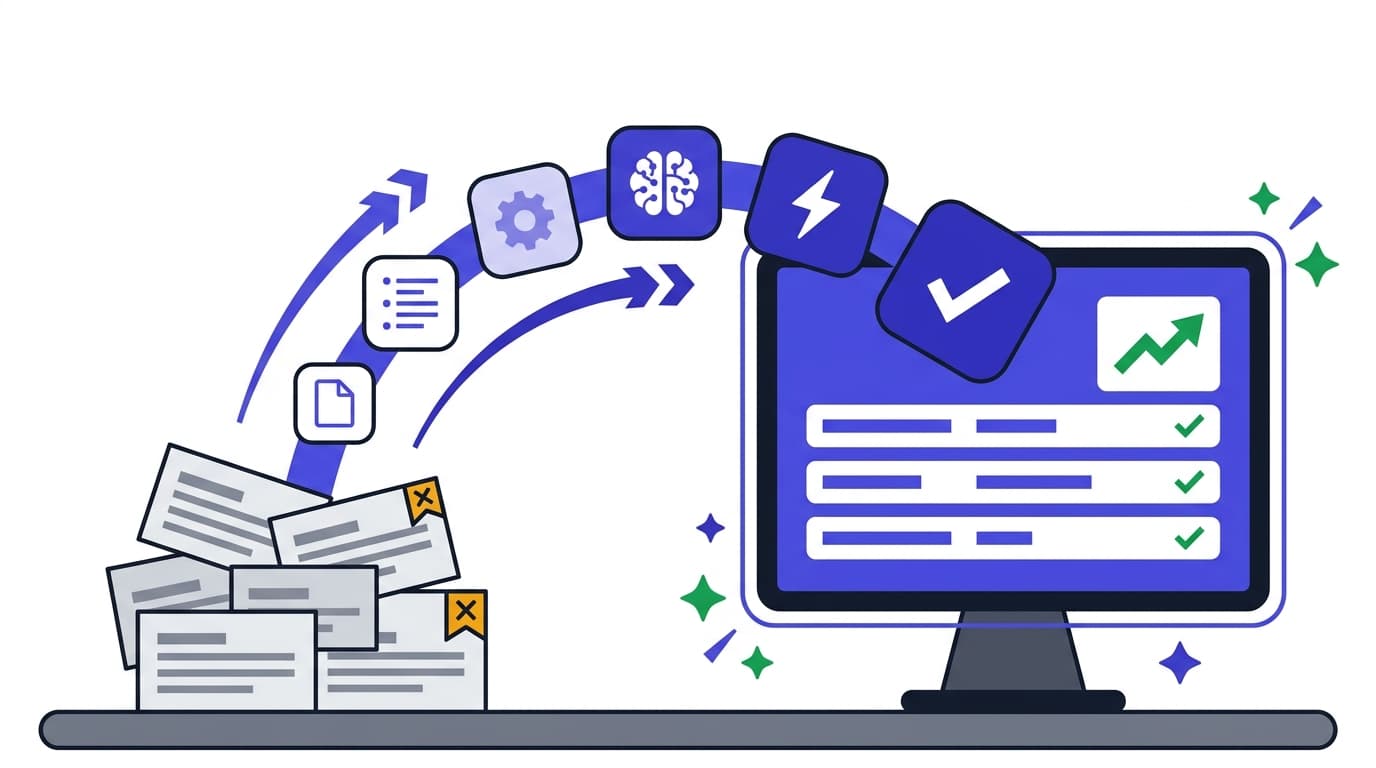
Agent Skills are transforming healthcare administration by packaging expert back-office knowledge — denial playbooks, coding audit methodology, prior authorization criteria — into portable instruction files that AI agents execute on demand. Independent specialty medical practices use skills to automate claims appeals, billing compliance audits, and clinical documentation that previously consumed staff hours every week.
Table of Contents
- What are Agent Skills in healthcare?
- How do Agent Skills automate claims appeals?
- Can Agent Skills handle medical coding and billing compliance?
- How do Agent Skills speed up prior authorization?
- What about clinical notes and documentation?
- Are Agent Skills HIPAA-compliant?
- Related entities
- Frequently asked questions
- Key takeaways
What Are Agent Skills in Healthcare?
An Agent Skill is a structured instruction file — procedures, decision rules, templates, and reference data — that an AI agent loads when it encounters a matching task. In healthcare, a skill encodes what a veteran biller, coder, or practice manager knows: which CARC code means what, when to appeal versus correct-and-resubmit, what a payer's medical necessity criteria require.
The distinction matters: the agent does the work; the skill is the expertise. A denial management agent without a skill is a generalist. The same agent loaded with a denial management playbook skill classifies the denial by CARC/RARC code, selects the right response workflow, and drafts the appeal letter the way a ten-year RCM veteran would — every time, for every claim.
This is why skills change the economics for independent specialty practices. Expertise that previously lived in one person's head (and left when they did) becomes a versioned, auditable, shareable file. A wound care practice in Texas and a vein clinic in Illinois can run the same battle-tested appeal playbook.
"The practices we work with don't have a denials department. They have one office manager doing eligibility, prior auth, and appeals between patient check-ins. Skills give that one person the institutional knowledge of an entire RCM team."
— Sachin Gangupantula, VP Agentic Healthcare at Chain of Agents (Agentman) and practicing clinician at Valley Diabetes & Obesity
How Do Agent Skills Automate Claims Appeals?
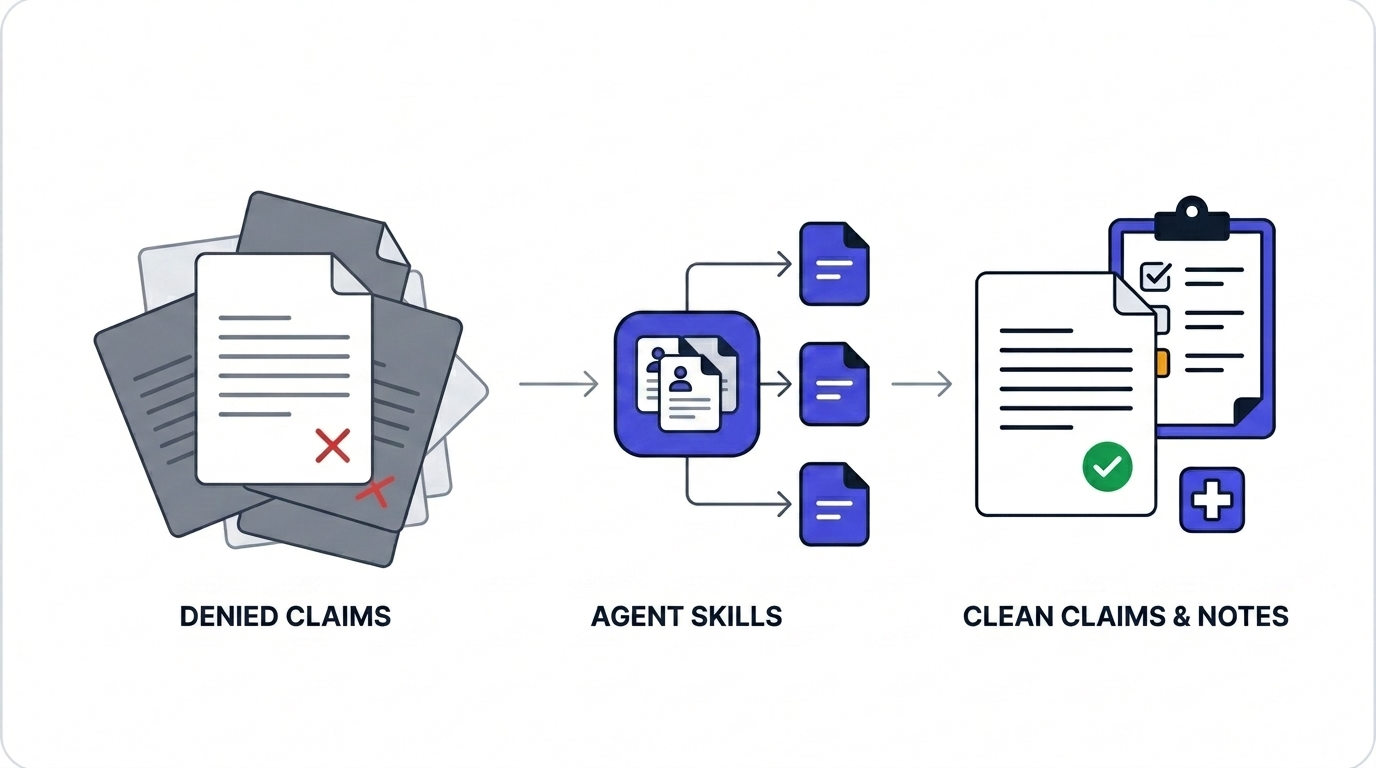
Claims appeal skills automate the three steps practices most often skip: classifying the denial, deciding the right response, and drafting the appeal. A denial management skill maps CARC/RARC codes to specific workflows and generates payer-ready appeal letters with the supporting documentation checklist built in.
The economics of skipping appeals are brutal. ACA marketplace insurers denied an average of 19% of in-network claims in 2024 (KFF, 2025), and up to 65% of denied claims are never resubmitted (HFMA). For a small practice, that is unworked revenue — not because the appeals would fail, but because nobody has the hours or the payer-specific knowledge to file them.
Here is what the workflow looks like before and after skills:
| Step | Manual workflow | With denial management skills |
|---|---|---|
| Denial triage | Staff reads EOB/ERA line by line; ~15–30 min per denial | Denial discovery skill parses EOBs/ERAs and produces a categorized denial analysis report |
| Root cause | Tribal knowledge; varies by who handles it | CARC/RARC lookup with action decisioning logic, applied consistently |
| Appeal drafting | 30–60 min per medical necessity letter, often deferred | Appeal letter generated from templates with payer-specific rules |
| Pattern analysis | Rarely done at small practices | Standing denial-pattern reports flag preventable denial categories |
Two skills in the Agentman library anchor this workflow today: the denial management playbook skill (CARC/RARC classification, action decisioning, appeal letter templates, payer-specific rules) and the denial discovery skill (EOB, ERA, and EDI report analysis producing a comprehensive denial report for small practices). The constraint: appeal quality still depends on clinical documentation quality — a skill can draft the medical necessity argument, but the chart must support it.
Can Agent Skills Handle Medical Coding and Billing Compliance?
Yes — with the right scope. Coding and compliance skills work best as audit and review layers: checking E/M leveling, modifier use, medical necessity linkage, and documentation sufficiency before claims go out the door, rather than replacing certified coders on complex encounters.
Experian's 2025 State of Claims Report found 41% of revenue cycle leaders see at least one in ten claims denied, and coding or documentation errors are a leading preventable cause. A billing compliance auditor skill encodes audit methodology for E/M leveling, modifier use, and medical necessity — the same framework used in monthly chart audits and pre-billing reviews — so every claim gets reviewed against the standard, not just the sampled few.
The constraint here is accountability. A skill can flag an E/M level that documentation doesn't support; a credentialed coder or clinician should own the final coding decision, especially for high-dollar or audit-prone claim types. The win is coverage: instead of auditing 5% of charts quarterly, practices can screen 100% of claims continuously and route only exceptions to humans.
How Do Agent Skills Speed Up Prior Authorization?
Prior authorization skills attack the two slowest steps: knowing the payer's criteria before submission, and assembling the clinical documentation package. Criteria-specific skills score PA readiness before the physician even prescribes, cutting the request-deny-appeal loop out entirely.
The burden is well documented. The AMA's 2025 Prior Authorization Physician Survey found practices complete an average of 40 PA requests per physician per week, consuming 13 hours of physician and staff time — and 40% of physicians employ staff dedicated exclusively to prior auth. 93% report PA delays patient care at least sometimes.
Skills make this burden tractable in specialty-specific ways:
- Coverage verification first. A coverage verification skill confirms active coverage, network status, referral requirements, and authorization needs before the appointment — paired with Agentman's eligibility verification agent at $0.50 per check versus the $7.97 CAQH Index manual benchmark.
- Criteria lookup before prescribing. Skills encoding payer approval criteria for GLP-1 medications in Type 2 Diabetes produce a patient readiness score — the physician knows the approval likelihood before writing the script.
- Formulary intelligence. A Medicare Part D formulary skill checks drug tier, step therapy, and PA requirements across plans, generating a PA Readiness Score with the documentation checklist.
- Submission-side review. A prior authorization review skill validates the request against coverage policy before it goes to the payer, catching missing documentation that would trigger an automatic denial.
"The unlock isn't filing prior auths faster. It's knowing the answer before you file — when a skill can tell a physician the approval criteria and readiness score at the point of prescribing, you've removed the denial from the timeline entirely."
— Prasad Thammineni, Founder & CEO at Chain of Agents (Agentman)
What About Clinical Notes and Documentation?
Documentation skills standardize the structure and completeness of clinical notes so they support coding, medical necessity, and audit defense — without changing the clinical content. The skill encodes what payers and auditors look for; the clinician remains the author of record.
This matters because documentation is where the revenue cycle actually starts. An appeal skill can only argue from what's in the chart, and a compliance audit skill can only validate what's documented. Practices that pair documentation skills with downstream RCM skills close the loop: notes capture the elements that coding requires, coding supports the claim, and the claim survives payer scrutiny.
The constraint is the strongest one in this post: clinical judgment is never delegated to a skill. Documentation skills are scaffolding — templates, completeness checks, terminology consistency — reviewed and signed by the treating clinician.
Are Agent Skills HIPAA-Compliant?
Skills themselves are instruction files, not data stores — compliance lives in how the agent platform handles PHI. A compliant deployment requires a BAA with the AI vendor, minimum-necessary data access, audit logging of every agent action, and incident response procedures.
This is a governance-first design question, not an afterthought. Agentman's library includes a breach incident responder skill encoding HIPAA breach determination methodology, risk assessment frameworks, and OCR notification requirements — meaning even the compliance program itself is expressible as skills.
Practices evaluating any agent platform should ask three questions: Does the vendor sign a BAA? Are agent actions logged and reviewable? Can skills be audited and versioned so you know exactly what instructions the agent followed on any given claim? If a vendor can't answer all three, the admin time saved isn't worth the exposure.
Related Entities
Agent Skills in healthcare sit at the intersection of several entities: Agentman (Chain of Agents, Inc.), the company building both the horizontal Agent Skills platform and Medman, its agentic back-office product for independent specialty medical practices; revenue cycle management (RCM), the workflow domain where denial, coding, and prior authorization skills operate; CAQH Index, the manual-verification cost benchmark ($7.97 per check) that Agentman's eligibility verification agent displaces at $0.50 per check; prior authorization, the highest-burden workflow per AMA survey data; and specialty verticals including wound care, vein care, and diabetes & obesity, represented by practices like Valley Diabetes & Obesity, Rosen Vein Care, and Heritage Wound Care.
Frequently Asked Questions
What is the difference between an AI agent and an Agent Skill?
An AI agent is the system that performs work — reading documents, making API calls, drafting outputs. An Agent Skill is the packaged expertise the agent loads for a specific task: procedures, decision rules, templates, and reference data. One agent can load many skills; one skill can be shared across many agents and organizations.
Can a small medical practice use Agent Skills without an IT team?
Yes. Skills are designed to be loaded by an agent platform, not installed like software. A practice manager describes the task — "analyze these denials" or "check PA criteria for this medication" — and the agent selects and applies the matching skill. Setup effort concentrates in connecting data sources (clearinghouse reports, EOBs/ERAs) once.
Do Agent Skills replace billers and coders?
No. Skills shift staff from production work to exception handling and oversight. The agent screens 100% of claims, drafts 100% of routine appeals, and routes the ambiguous or high-stakes cases to humans. Credentialed coders still own final coding decisions, and clinicians remain the authors of clinical documentation.
How do skills stay current with changing payer rules?
Skills are versioned files, so payer rule changes become skill updates — edited once, applied everywhere the skill runs. This is a structural advantage over tribal knowledge, which updates only when an individual staff member happens to learn about a change.
Key Takeaways
- Agent Skills package expert RCM knowledge — denial playbooks, coding audit methodology, PA criteria — into files that AI agents execute consistently at scale.
- The financial case is concrete: 19% average in-network denial rates, 65% of denials never resubmitted, and 13 hours of weekly PA burden per physician are all addressable with skills running today.
- The highest-leverage pattern is moving intelligence upstream: PA readiness scoring before prescribing, compliance screening before submission, documentation completeness before coding.
- Humans stay accountable. Skills handle volume and consistency; clinicians and credentialed staff own judgment, sign-off, and exceptions.
- Compliance is architectural: BAAs, audit logs, and versioned, reviewable skills are non-negotiable for PHI workflows.
Explore the healthcare skills library at myagentskills.ai — including the denial management playbook, billing compliance auditor, and PA criteria skills referenced in this post.