Key Facts
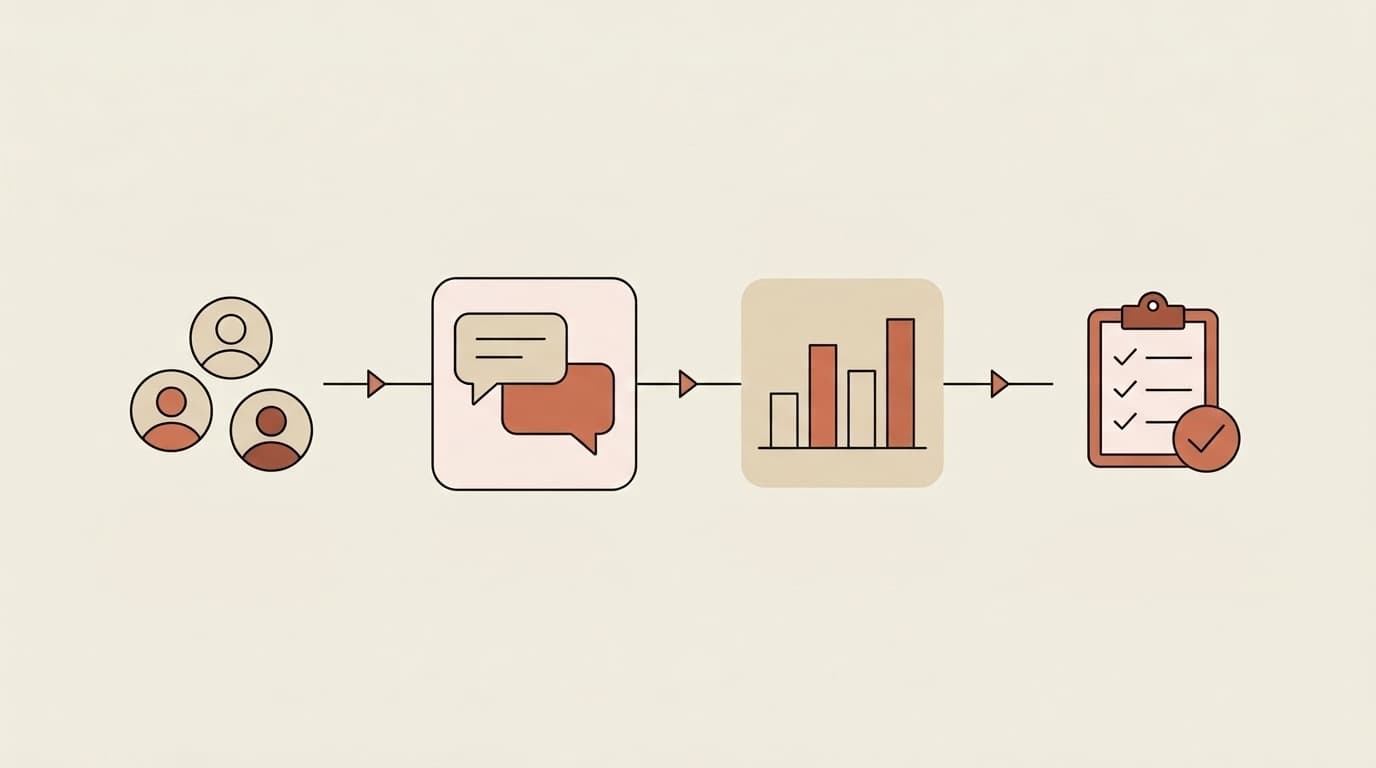
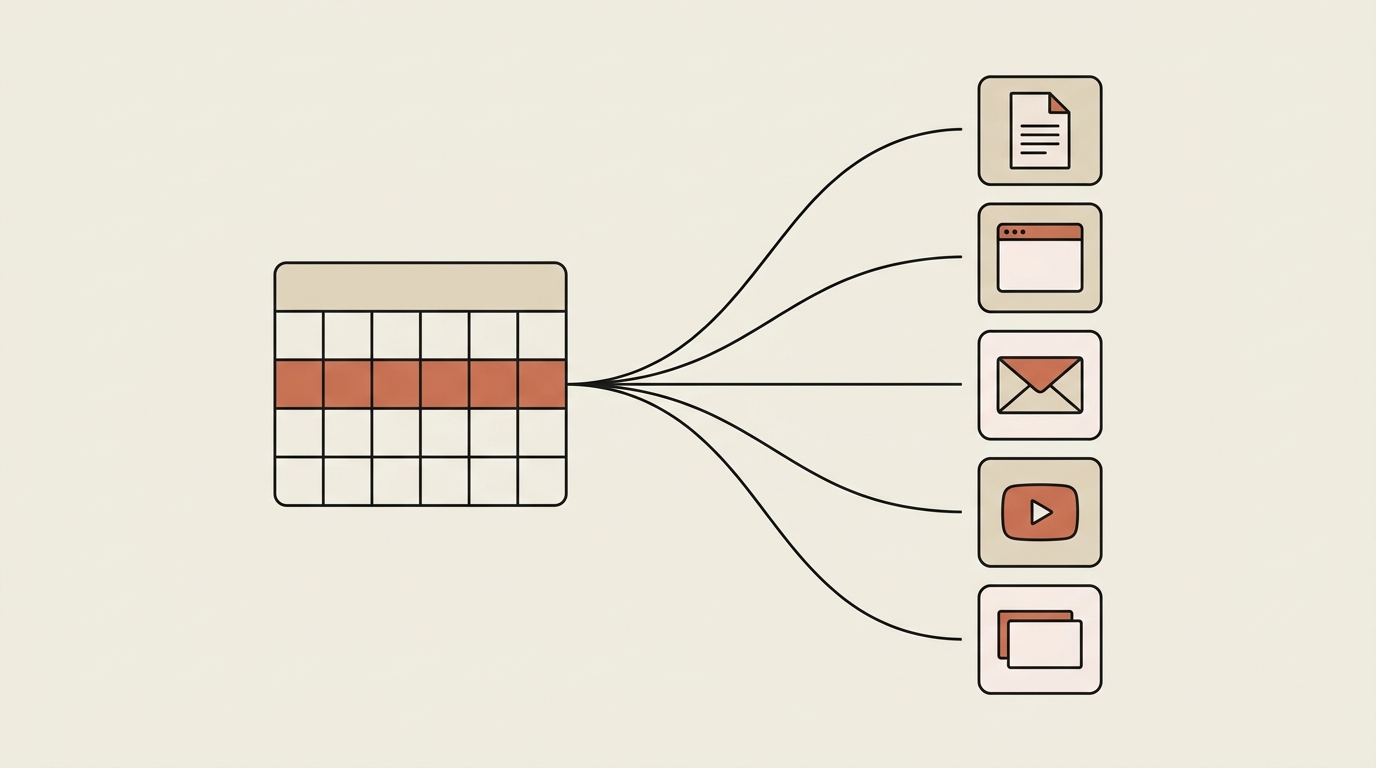
- A campaign calendar isn't just a plan — it's a queue of prompts. Each row (theme, channel, angle) is enough to drive a skill stack that produces the actual content.
- Two orchestration skills sit above the stack: seo-content-strategist (keyword clusters, content briefs, topical authority) plans what to make; product-launch-orchestrator (launch tiers, channel coordination, timing sequences, deliverables checklists) sequences when.
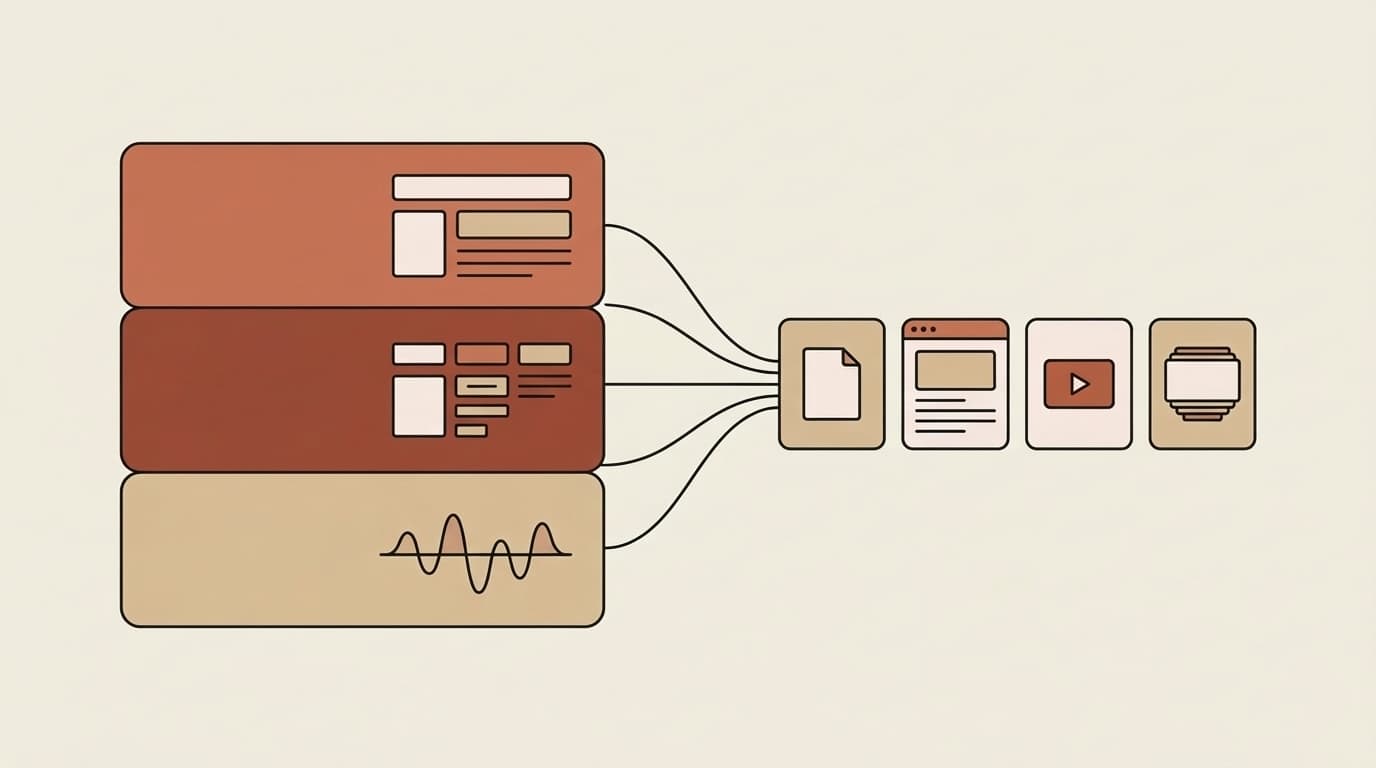
- Below them, skill stacking fans each entry into per-channel deliverables — one brand voice, many formats.
- On-brand media is part of the stack: at Agentman, every blog hero image is generated by our on-brand image skill on an in-house Nano Banana connector; the same pattern extends to on-brand video with a model like Veo.
- The worked example in this post is real: it's the system behind our own quarterly content calendar.
Most teams treat the content calendar as the output of planning — a grid you fill in, then execute by hand, row by weary row. Flip it. A campaign calendar is the highest-leverage prompt a marketing team has: each row already specifies a theme, a channel, and an angle, which is exactly what a skill stack needs to generate the piece. Plan the calendar once with the right skills, and executing it stops being a week of manual work and becomes a pipeline you run. This post is that system — and its worked example is the calendar we run ourselves.
Table of Contents
- Why the calendar is the prompt
- The planning layer: what to make and when
- The execution layer: one entry, five deliverables
- The media layer: on-brand images and video
- A worked example: our own quarter
- What stays human
- How to build this yourself
- Related entities
- Frequently asked questions
- Key takeaways
Why the Calendar Is the Prompt
A row in a content calendar is a compressed brief. "Week 4, LinkedIn, carousel, the 7-step brand workflow, angle: an agency quoted $40k for these deliverables" contains everything a generator needs: the topic, the format, the hook, the channel. You wrote that brief when you planned the calendar. The waste is re-writing it — as a prompt, from scratch, every time you sit down to make the actual post.
Skill stacking removes that waste. Point a content stack at a calendar row and it produces the piece in your voice, in the right format. The calendar becomes an executable queue: theme rows in, on-brand content out. The planning you already did is the prompt engineering you no longer have to redo.
The Planning Layer: What to Make and When
Before the stack runs, two skills shape the calendar itself.
seo-content-strategist decides what's worth making. It performs keyword research, clusters topics, maps topical authority, and produces content briefs — so the calendar targets terms you can actually win and covers a subject deeply enough to rank, rather than scattering one-off posts. Its output is the backbone of a calendar's blog column. (Pair it with competitive-intelligence-analyst when you want the calendar to answer competitors' positioning, not just chase keywords.)
product-launch-orchestrator decides when and in what order. It brings launch-tier classification, channel-coordination frameworks, timing sequences, and deliverables checklists — the machinery for turning "we're announcing X" into a dated, multi-channel rollout with nothing forgotten. It's built for launches, but a content quarter is just a series of smaller launches, and the same sequencing logic drives the calendar's shape.
Try Product Launch Orchestrator right now
One click opens Claude or ChatGPT with the skill loaded — no setup required.
Together they answer the two questions a calendar exists to answer — what and when — and hand the stack a queue of well-formed rows.
The Execution Layer: One Entry, Five Deliverables
This is where skill stacking does the work. Each calendar entry fans out into the channels you publish on, with the same brand voice stacked underneath every one:
- Blog — voice skill + blog-generator (or aeo-blog-generator for answer-engine visibility)
- LinkedIn — voice skill + linkedin-post-generator
- Email — voice skill + email-sequence-architect (for the nurture the post feeds)
- Short-form video — voice skill + viral-social-video-creator
- Case study / deck — voice skill + case-study-producer + the pptx or docx format skill
One theme, one voice input, five on-brand artifacts. The handoffs that used to eat the week — reformatting the blog into a LinkedIn post, cutting a video script from the same idea, adapting it for email — become stack invocations. The wall-clock cost of a calendar row drops from hours to minutes of generation plus a human edit pass.
The Media Layer: On-Brand Images and Video
Content isn't only words, and the media layer is where a lot of "AI content" gives itself away — off-brand stock-looking images, generic thumbnails. It doesn't have to.
At Agentman, this is dogfooded: every hero image on this blog is generated by stacking our on-brand image skill on an in-house Nano Banana connector. The style skill supplies the palette, the composition rules, and the flat-design constraints; the image model renders; no designer sits in the loop for a routine cover. The same shape extends to video — stack your style skill with a model like Veo and the motion graphics inherit the brand the way the covers do.
So the calendar's media column automates too: a carousel, a thumbnail, a hero, a short video, all on-brand, all from the same style skill that governs your written content. The stack is text, image, and video — one brand system underneath all three.
A Worked Example: Our Own Quarter
We don't just recommend this; we run it. Our quarterly content calendar is twelve weeks by five channels — a blog post, a LinkedIn post, an Instagram piece, a short video, and a YouTube video each week, organized into weekly themes (relaunch, importing Claude Skills, use-only, the brand workflow, skill stacking, legal, and so on).
Here's the system behind it, mapped to the layers above:
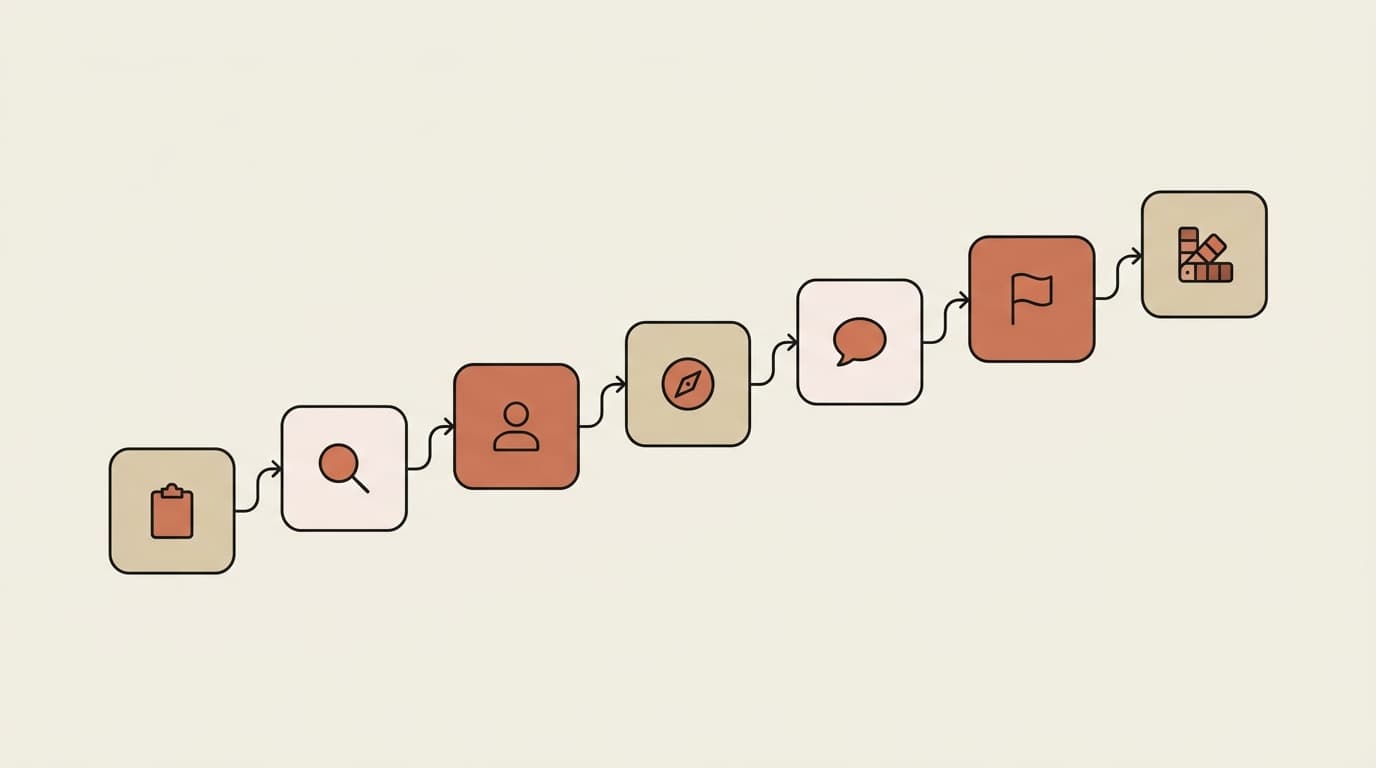
- Planning: each week's blog anchor is either a live post being distributed or a briefed post from a content plan — seo-content-strategist shaped the keyword targets; the week-by-week sequencing is product-launch-orchestrator logic (themes ordered, nothing announced before its supporting content exists).
- Execution: each week's five rows are the same theme fanned across channels through the content stack — the blog row generates the anchor, and the LinkedIn/IG/TikTok/YouTube rows adapt it, all in one voice.
- Media: the hero images — including the one on this post — come from the Nano Banana + style-skill stack.
The calendar is the prompt; the quarter is the loop. Once it exists, running it is a weekly pass, not a weekly scramble.
What Stays Human
Automation earns trust by being honest about its edges. The stack generates drafts. A person still reads every piece, sharpens the argument, checks the facts, and approves it before it publishes — the same editorial judgment you'd apply to a junior writer's work, applied faster because the blank-page cost is gone. And the strategy itself — what the quarter is about, which bets to make, what to say when a competitor moves — is human. The skills execute the plan; they don't decide it.
The win isn't "content without people." It's people spending their hours on judgment, angle, and quality instead of on reformatting the same idea five ways.
How to Build This Yourself
The skills are all in the public library, free to run:
- Plan with the orchestration skills. Use seo-content-strategist to shape your blog targets and product-launch-orchestrator to sequence the quarter. Put the result in a calendar — a sheet is fine.
- Build your voice layer once. Generate a brand voice card and save it as a skill, so every stack loads the same voice (skill stacking explains this).
- Stack per channel. For each calendar row, run the voice skill under the right content generator; add the style skill for media.
- Connect to Claude and run the queue. With your library connected, each row is a natural-language ask — "draft this week's theme as a blog, a LinkedIn post, and a short video script, in our voice."
- Edit and approve. The human pass that turns good drafts into publishable work.
Related Entities
This system sits in Agentman's Agent Skills platform: the orchestration skills seo-content-strategist, product-launch-orchestrator, and competitive-intelligence-analyst; the execution layer of skill stacking (blog-generator, linkedin-post-generator, email-sequence-architect, viral-social-video-creator, case-study-producer); and the media layer of an on-brand image skill on a Nano Banana connector plus Veo for video. It runs on the open SKILL.md format popularized as Claude Skills, connected to Claude over MCP. The marketing context: content calendars, editorial planning, campaign orchestration, and content operations.
Frequently Asked Questions
Does this replace my marketing team?
No. It removes the blank-page and reformatting work — the mechanical middle of content production — so your team spends its time on strategy, angle, and editorial judgment. Every piece still gets a human edit and approval before it publishes. The skills execute the plan; people decide it and sharpen it.
Do I need a special tool to turn calendar rows into content?
No special tool — you need your library connected to Claude and a voice skill built. Then each calendar row is a natural-language ask that loads the right stack. The "tool" is the skill library plus the calendar; the calendar rows are the prompts.
How do the images stay on brand?
By stacking a style skill under the image model, the same way voice stacks under a text generator. Our own blog heroes are generated this way — an on-brand image skill on a Nano Banana connector — so the palette, composition, and constraints come from the skill, not from luck. The same approach extends to video with a model like Veo.
Can I see a real example of a calendar built this way?
Yes — the quarterly calendar behind this blog is exactly this system: twelve weeks by five channels, planned with the orchestration skills and executed through content and media stacks. This post is part of it.
Key Takeaways
- A campaign calendar is a queue of prompts — each row already contains the brief a skill stack needs to generate the content.
- Plan with seo-content-strategist (what to make) and product-launch-orchestrator (when) — the two skills that shape the calendar itself.
- Execute by fanning each row through a skill stack — one brand voice, five on-brand formats, in minutes plus a human edit.
- Media automates too: an on-brand image skill on a Nano Banana connector (how our blog heroes are made) and Veo for video keep visuals on brand.
- The strategy and the final edit stay human; the mechanical middle is what the system removes.
Turn your calendar into a pipeline. Plan a quarter with the orchestration skills, build your voice layer, and run each row through a stack. Start free at myAgentSkills.ai — then connect your library to Claude and execute where you already work.