

Make every blog, deck, and post sound like your brand
Stack a voice skill with a content skill so every format sounds like you.
Go from an intake questionnaire to a full brand book — research, personas, strategy, voice, POV, and visual style — with seven free Agent Skills, each feeding the next. Learn the branding method and run it in Claude.
Free to try. One click loads the skill into Claude or ChatGPT, with no account and no setup.
Most people think “brand” means the logo and the colors. Those are the last two percent. A brand is really a stack of decisions: who you serve, where you sit in the market, what you stand for, how you sound, and only then how you look. Skip the foundation and the visuals sit on nothing — which is why so many DIY brands feel generic.
The value of a structured workflow is that it forces the decisions in the right order and writes each one down, so the whole thing hangs together. That’s the same discipline a branding agency sells — and this workflow puts it in your hands, one skill per layer, so you can build (and later evolve) a coherent brand without the retainer.
The skill isn’t magic. It encodes a proven framework anyone can learn. Here’s the method itself, so you understand what it’s doing for you.
Good branding isn’t a logo — it’s a layered process where each layer depends on the one beneath it. You can’t write a credible brand voice before you know the strategy; you can’t set strategy before you understand the market and the audience; and you can’t understand either without a structured intake. Agencies charge for this sequence because doing it in order is what makes the output coherent instead of arbitrary.
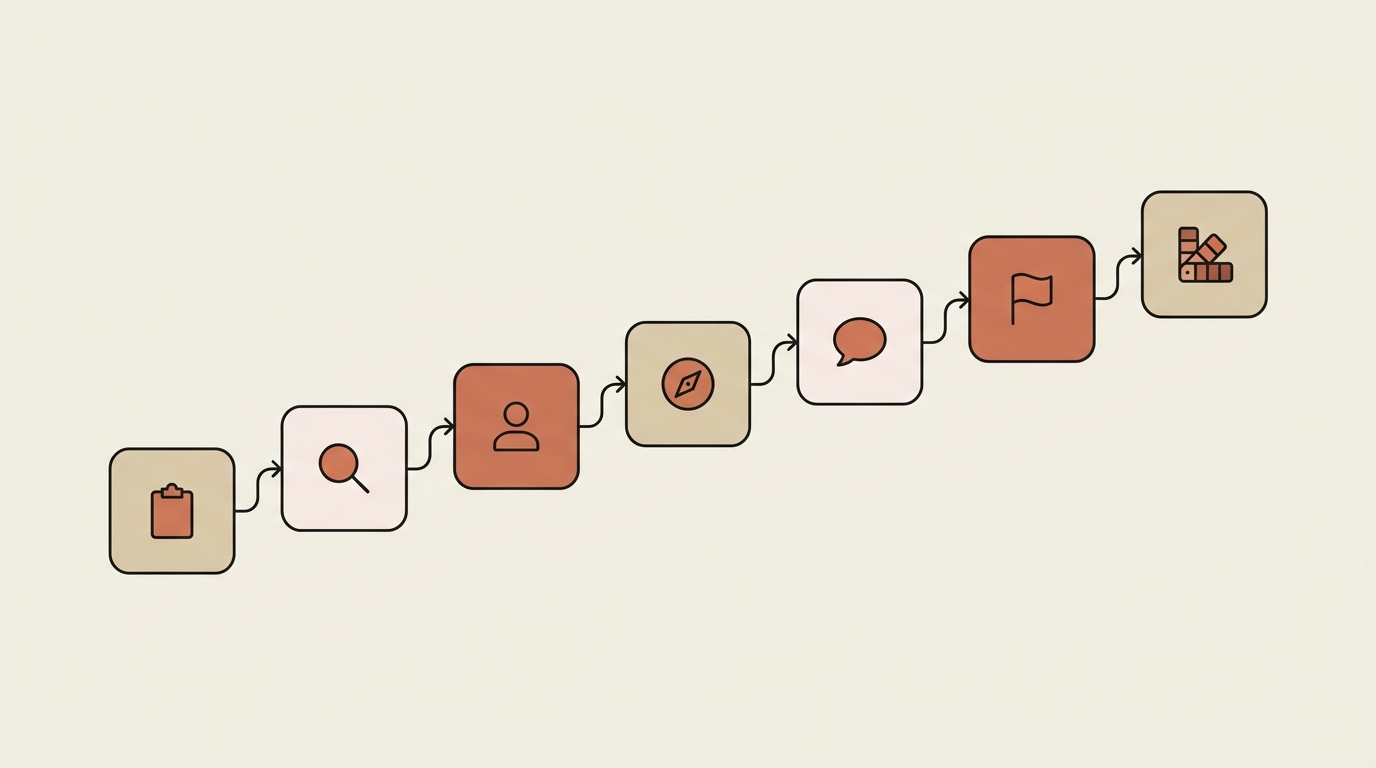
This workflow encodes that sequence as seven skills: intake (raw inputs) → research (the market) → personas (the audience) → strategy (positioning) → voice (how it sounds) → POV (what it believes) → style (how it looks). Each skill’s output is the next one’s input, so the brand book that comes out the far end is internally consistent — the voice reflects the strategy, the strategy reflects the research, all the way back to the brief.
Use any one on its own, or chain them. Each hands its output to the next. Every one is free in the public library.
The starting questionnaire — captures the raw inputs (business, audience, goals) the rest of the chain builds on.
Researches the market, category, and competitors so positioning is grounded in reality, not guesses.
Builds the audience personas the brand must resonate with — who you’re actually talking to.
Turns research and personas into positioning, differentiation, and the strategic spine of the brand.
Defines the voice framework — tone, vocabulary, and rules that make every piece sound like you.
Articulates the brand’s point of view — the narrative and beliefs that give it a distinct stance.
Produces the visual style guide — the look that carries the strategy into design.
Launching something new, rebranding something old, or bringing order to a brand that grew by accident. Any time you need brand decisions to be deliberate and documented rather than improvised piece by piece.
It takes you from a blank page to a brand book — research, personas, strategy, a voice framework, a POV narrative, and a visual style guide — with each step a skill whose output feeds the next. It’s the strongest “workflows unlocked” story in the whole library.
A founder or agency runs the intake questionnaire, and the chain carries that seed through every layer of brand development, producing artifacts you’d normally pay a studio weeks to deliver. For a fast standalone, brand-voice-generator-v2 produces a Brand Voice Card in one pass.
Real prompts, and what the skill hands back.
“I’m launching a B2B fintech for small clinics. Run the brand brief intake and tell me what you need from me to start.”
A structured intake that captures your business, audience, and goals — the seed the rest of the workflow builds on.
“Here’s my brand brief and research. Build the positioning strategy and a voice framework that reflects it.”
A positioning strategy grounded in your research, plus a voice framework (tone, vocabulary, rules) aligned to that strategy.
Each layer depends on the one below — intake before research, strategy before voice — so the output is coherent.
Every decision becomes an artifact, so the brand is documented, not carried in one person’s head.
Each skill’s output is the next one’s input, so the voice reflects the strategy all the way back to the brief.
Need just a voice card? Run one skill. The chain scales from a quick slice to a full brand book.
Clone and customize the skills so the workflow reflects your category and reruns as the brand grows.
The chain runs intake → research → personas → strategy → voice → POV → style, each skill handing structured output to the next. Run it end to end for a full brand book, or drop in at any stage when you only need that layer.
Once the brand exists, it becomes the input to your content stack — the brand voice profile feeds skill stacking so every blog, deck, and post sounds like you.
You can run the whole sequence in Claude, one skill at a time, and end up with a documented brand book:
Already connected your library to Claude? Tell it: “Use the brand-brief-intake skill (and the others above) from the agentman_skills MCP server.”
Not connected yet? The Try in Claude / ChatGPT button loads the first one from the public library, with no setup. Or connect your library.
Click “Try in Claude / ChatGPT” above, or — if you’ve connected your library — tell Claude: “Use the brand-brief-intake skill from the agentman_skills MCP server.” Add the next skill by slug as you finish each step.
Run brand-brief-intake to capture your business, audience, and goals. This seed feeds everything downstream.
Pass the brief to brand-research-agent, then brand-persona-agent — ground the brand in the market and the people you serve.
Feed both into brand-strategy-agent for positioning and differentiation — the spine everything else hangs on.
Run brand-voice-agent and brand-pov-agent so the brand has a consistent sound and a distinct stance.
Finish with brand-style-agent for the style guide that carries the strategy into design — then you have a complete brand book.
In a hurry? `brand-voice-generator-v2` gives you a Brand Voice Card on its own — a fast slice of the full workflow.
One click loads the skill into Claude or ChatGPT. No account, no setup.
No. Each works on its own — run just the voice skill for a Brand Voice Card, or the strategy skill to sharpen positioning. Chained in order, they produce a full brand book, but you can start with the one layer you need most.
A single prompt skips the foundation and jumps to the visible layer, so the output feels generic. This workflow forces the decisions in the right order — audience and strategy before voice and visuals — and writes each down, so the result is coherent and documented.
Yes. Clone the skills into an Agentman workspace and adapt them to your industry, then rerun the workflow as your brand evolves.
No. Click “Try in Claude / ChatGPT” above and the first skill loads from our public library — no setup. Clone the skills to customize and share them.
Stack a voice skill with a content skill so every format sounds like you.