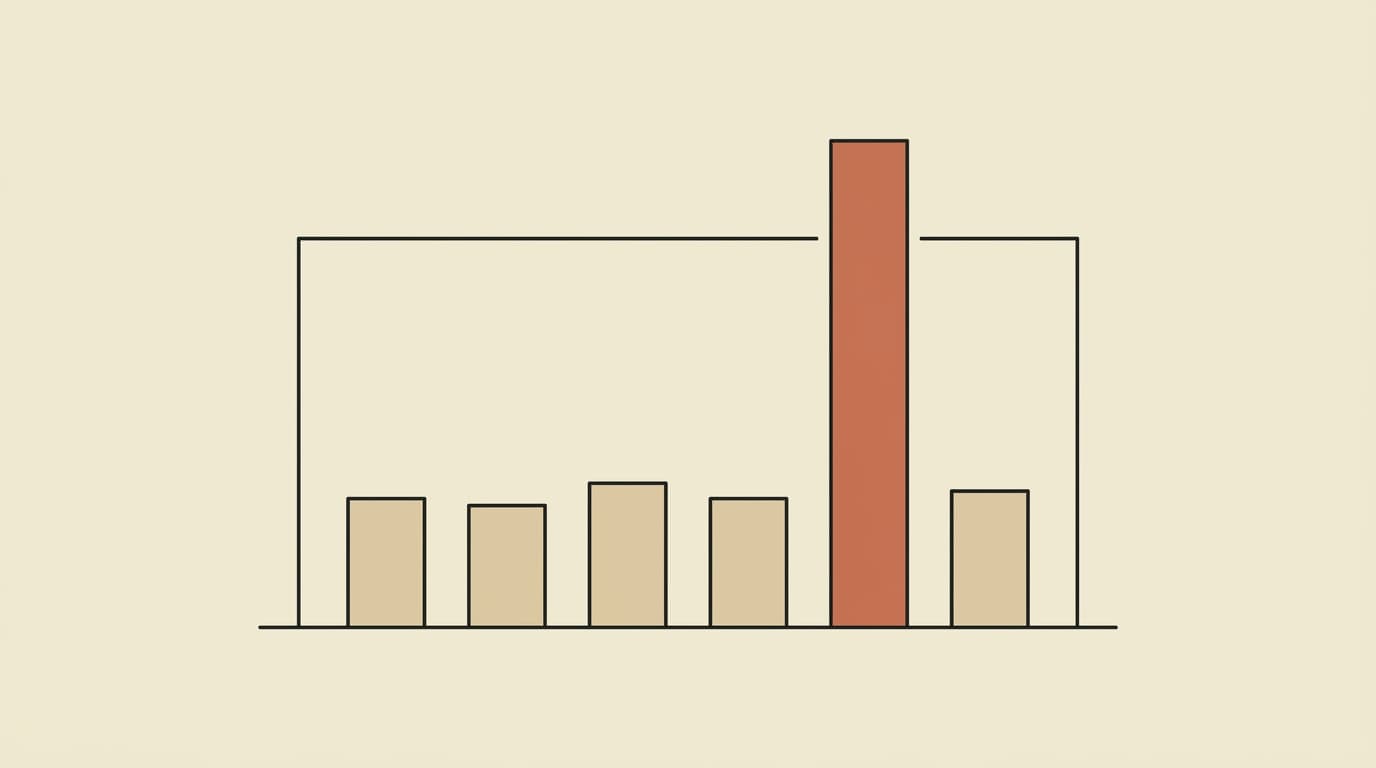
A manual eligibility verification costs a provider $7.97 per transaction. The same check run electronically costs $2.18. The portal your front desk uses is free to log into and is the most expensive option on the list.
The short answer
The cost of an eligibility check is almost entirely labor, which is why the "free" methods cost the most. The 2023 CAQH Index prices a manual eligibility and benefit verification at $7.97 to the provider, a partially electronic one at $4.07, and a fully electronic one at $2.18. An automated agent that runs the electronic transaction and resolves the exceptions runs about $0.50 per check at our published rate. The spread between the cheapest and most expensive method is roughly sixteen times, and no invoice ever shows it.
Key facts
- Manual eligibility verification: $7.97 per transaction to the provider (2023 CAQH Index, Average Cost and Savings Opportunity per Transaction by Mode, Medical)
- Partial: $4.07. Fully electronic: $2.18. Same source, same table
- A phone verification takes about 15 minutes on hold; an automated check returns in about 5 minutes end to end
- Valley Diabetes & Obesity: 15 hours per week on manual verification before automation, 65% fewer eligibility and prior-auth-related denials after
- Agentman's published rate: $0.50 per check, or $225/provider/month on the group plan
Why the portal feels free and isn't
Nobody sends an invoice for a payer portal. That is the whole problem.
The cost is the ten to fifteen minutes per patient that disappears into logging in, clearing two-factor, searching by member ID, reading a benefits screen laid out differently on every payer's site, and copying the result somewhere your billing system can use. Multiply by a schedule of thirty patients and it is several hours a day. The CAQH Index counts that labor, which is how a free website becomes the most expensive line in this comparison.
The phone is worse. It is the same information, plus hold time.
The comparison: five ways to verify coverage
| Method | Cost per check | Time per check | Handles exceptions? | Best for |
|---|---|---|---|---|
| Payer portal | $7.97 in staff time | 10–15 min | Staff resolves everything | Low volume, or a payer with no electronic option |
| Phone call | $7.97+ in staff time | 15+ min on hold | Staff resolves everything | Complex benefits a portal won't show |
| Clearinghouse / EDI | Per-transaction fee, low | Seconds | No — returns what the payer sends | High volume with staff available for gaps |
| Outsourced team | Per-FTE or per-check | Varies | Yes, by people | Practices choosing to buy labor rather than software |
| AI eligibility agent | ~$0.50 | ~5 min end to end | Yes, then escalates the rest | Practices that want the routine cases gone |
Manual figures are CAQH provider costs, 2023 Index. Clearinghouse and outsourcing prices vary too widely by contract to state a single figure honestly.
The distinction that actually matters
Clearinghouses and agents both run the same X12 270/271 transaction. The difference is what happens when the response comes back incomplete — a member ID that does not match, a plan that returns no deductible detail, coverage that terminated last month, a patient who turns out to have Medicare Advantage rather than Original Medicare.
A clearinghouse hands that back to you. An agent works it.
That is why cost per transaction is the wrong comparison and cost per completed verification is the right one. A cheap transaction that generates fifteen minutes of staff follow-up is not cheap.
What the current state actually looks like
Someone pulls up Thursday's schedule on Tuesday afternoon. Open the browser. First payer portal. Credentials. Wait for the code. Search the patient. Click through three screens. Copy the details. Close the tab. Next payer.
Twelve portals across Medicare, Medicaid, commercial plans, and IPA networks. One times out after five minutes idle. One forces a password reset every thirty days. One shows coverage in a format that does not match what your billing system needs.
If you run a practice you know this ritual well enough to have stopped noticing how fragile it is — and how much of your revenue depends on one person doing it correctly, every time, before the patient arrives.
Why practices still do it manually
Not because anyone is slow. Three reasons, all rational:
- The EHR technically supports it. There is an eligibility button. It works for some payers, returns thin data for others, and nobody has audited which is which.
- The volume never justified a project. Eligibility feels like a small task repeated often rather than a large problem, so it never reaches the top of anyone's list.
- The cost is invisible. It shows up as a busy front desk and a denial rate, not as a line item. Nothing forces the comparison.
The denial is where it surfaces, six to ten weeks later, long after the connection to a missed verification is obvious.
Before and after
| Dimension | Manual today | With an eligibility agent |
|---|---|---|
| Time per provider per day | 90 min – 2 hrs | Under 10 min |
| Lookahead window | 1 day, capacity-limited | 5 days, automated |
| Payer coverage | Whatever staff has time for | ~90% of major payers |
| Reaction time on bad coverage | Hours, often after the visit | Days before the visit |
| Empty slot from a cancelled visit | Usually stays empty | Reassigned from the waitlist |
| Audit trail | None | Every check logged |
What it does not do
The honest limits, because a comparison without them is marketing:
- It does not verify every payer. Roughly 90% of major commercial and government payers are handled programmatically. The rest fall back to staff review — fewer calls, not zero calls.
- It does not replace judgment on complex benefits. Carve-outs, coordination of benefits, and unusual plan structures still need a person.
- It does not fix a wrong member ID at intake. Garbage in still produces garbage out; the agent flags it earlier, which is the actual win.
- It does not eliminate denials. It removes the eligibility-driven ones. Coding, documentation, and medical necessity denials are separate problems.
Is this worth automating at your practice?
Four checks you can run this week, before talking to any vendor:
- Count the portals. How many separate payer logins does your front desk use? Above five, the switching cost alone justifies looking.
- Time one check. Actually time it, door to door, including the two-factor wait. Multiply by your daily patient count.
- Pull your denial reasons for last quarter. What share trace to eligibility or coverage? If it is in the top three, this is your highest-leverage fix.
- Ask when verification happens. If the answer is "the day before," you have no recovery window on bad coverage, which is a schedule problem as much as a billing one.
What changes in week one
Not a transformation. The realistic version: verification moves from the day before to five days out, the first batch of bad coverage surfaces early enough to actually call the patient, and your front desk stops opening twelve portals. Denials take a full billing cycle to move, because the claims in flight today were filed under the old process.
Valley Diabetes & Obesity went from 15 hours a week on manual verification to a fraction of that, and saw 65% fewer eligibility and prior-authorization-related denials — but that verdict took a quarter to read, not a week.
Frequently Asked Questions
How much does an eligibility check cost?
It depends entirely on how you run it. The 2023 CAQH Index puts the provider cost of a manual eligibility and benefit verification at $7.97 per transaction and a fully electronic one at $2.18. An automated agent that runs the electronic transaction and resolves the exceptions costs about $0.50 per check at Agentman's published rate. The portal itself is free — the cost is the 10 to 15 minutes of staff time it consumes.
Why is a payer portal check not free?
Because the cost is labor, not license fees. A portal check takes 10 to 15 minutes per patient once you count logging in, two-factor authentication, searching, reading the benefits screen, and copying the result into the chart. Across a schedule of 30 patients that is several hours of staff time daily. The CAQH Index counts that labor, which is why it prices a manual verification at $7.97 to the provider even though no one sends an invoice.
What is the difference between a manual, partial, and electronic eligibility check?
CAQH classifies them by how the transaction runs. Manual means phone, fax, or a payer web portal — a human does the work. Partial means a mix, typically an electronic query whose gaps get resolved by phone. Electronic means a standard X12 270/271 transaction with no human in the loop. The 2023 CAQH Index prices these to the provider at $7.97, $4.07, and $2.18 respectively.
Is an AI eligibility agent cheaper than a clearinghouse?
They do different amounts of the job. A clearinghouse charges per transaction for running the 270/271 and returns whatever the payer sends back, including incomplete responses. An agent runs the same transaction and then resolves the exceptions — bad member IDs, missing plan details, coverage that terminated — which is the part that otherwise lands back on staff. Compare cost per completed verification, not cost per transaction.
How many denials come from eligibility problems?
Eligibility and coverage errors consistently rank among the top denial causes across specialty practices. In Agentman customer practices the category is large enough to be worth automating first. Valley Diabetes & Obesity saw a 65% reduction in eligibility and prior-authorization-related denials after automating verification.
Does automating eligibility verification replace front-desk staff?
No. It removes a specific repetitive task that consumes one to two hours per provider per day. The front-desk role shifts toward patient communication, exception handling, and the complex cases that require judgment. Practices that automate eligibility typically redeploy that time rather than reduce headcount.
How far in advance should eligibility be verified?
Five days before the appointment, not the day before. A five-day window leaves time to reach a patient whose coverage is invalid, update their insurance, or rebook the slot. Day-before verification leaves no recovery window: the slot goes empty or the visit becomes uncompensated care.
What to do next
Run the four checks above. If eligibility is in your top three denial reasons, it is worth fixing before anything else in the revenue cycle, because every downstream step inherits the error. Our eligibility agent publishes its rate — $0.50 a check — so you can do the arithmetic against your own volume without booking a call.