Blog

Field notes on AI agents and Agent Skills at work: in medical practices, legal teams and deal teams, and from the people who build them.

All posts

85 posts · page 5 of 7
  • AI inbox triage agent organizing faxes, voicemails, and messages for an independent medical practice

    Healthcare

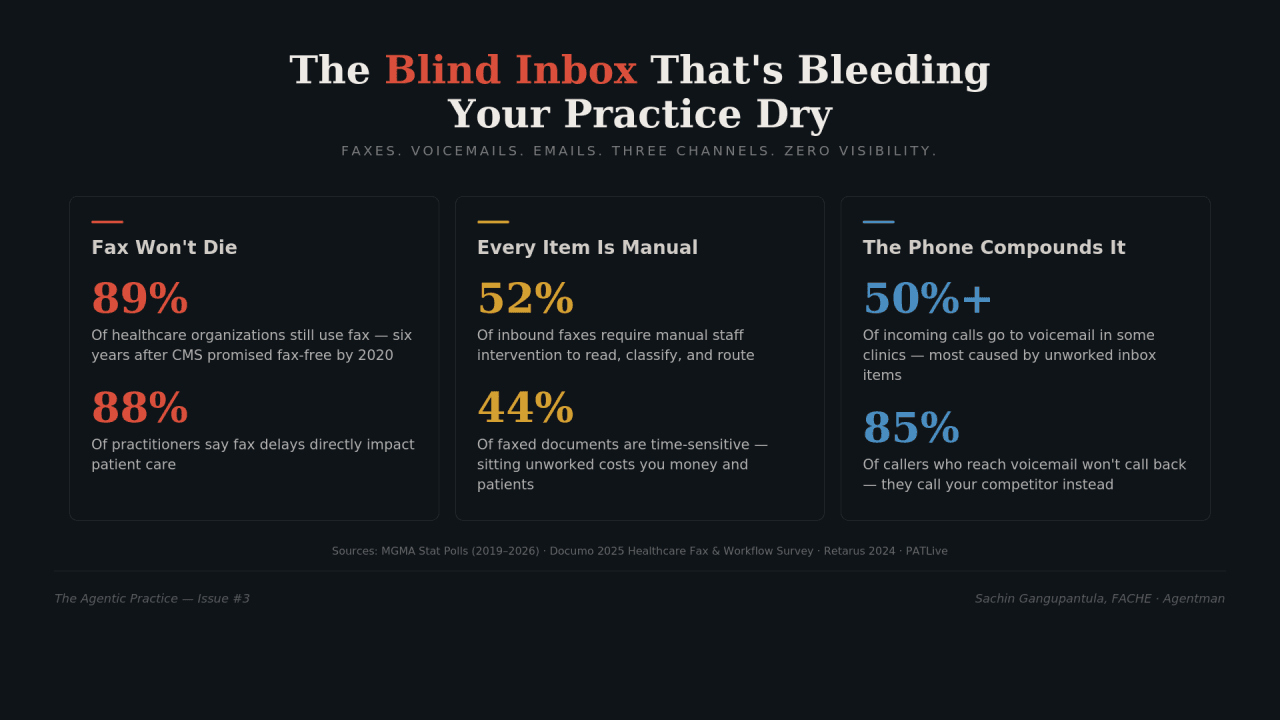
    Newsletter #3: The Blind Inbox That's Bleeding Your Practice Dry

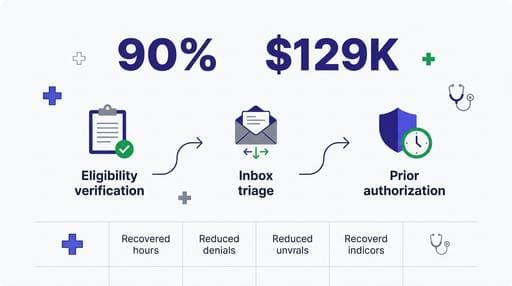
    Independent medical practices lose over $50,000 annually to unsorted faxes, voicemails, and unworked messages. An AI inbox triage agent can cut processing time from 120 minutes to 15 minutes per day and recover revenue hiding in the blind inbox.

    Sachin Gangupantula
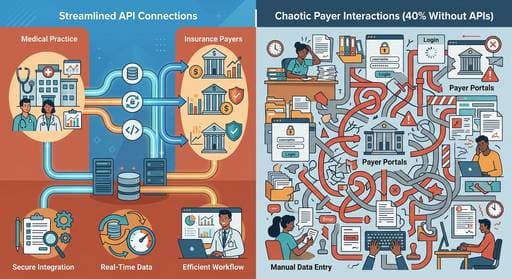
  • Flat illustration showing two paths from a medical practice — one through clean API connections and another through messy browser portals — with a desktop application bridging both

    Healthcare

    Why Healthcare AI That Only Works With APIs Is Missing 40% of the Problem

    Every healthcare AI startup building prior auth automation assumes payers have APIs. They don't — an estimated 30–40% of payer portal interactions lack clean API access. Cloud-only platforms can automate 60–70% of the revenue cycle. Medman's screen agent technology closes the rest.

    Kofi Agyare-Kwabi

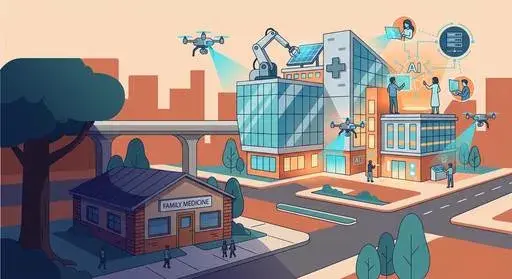
  • Flat illustration showing a large hospital surrounded by AI technology while a small family medicine clinic is left in shadow, representing the gap in healthcare AI adoption

    Healthcare

    The $5B Problem No One's Solving: Why Small Practices Are Left Behind by Healthcare AI

    The healthcare AI market has poured billions into large health systems while leaving ~190,000 small practices to drown in the same administrative complexity — prior authorizations, claim denials, payer variability — without the resources to fight back. The $5B RCM opportunity for independent clinics remains largely unaddressed.

    Kofi Agyare-Kwabi

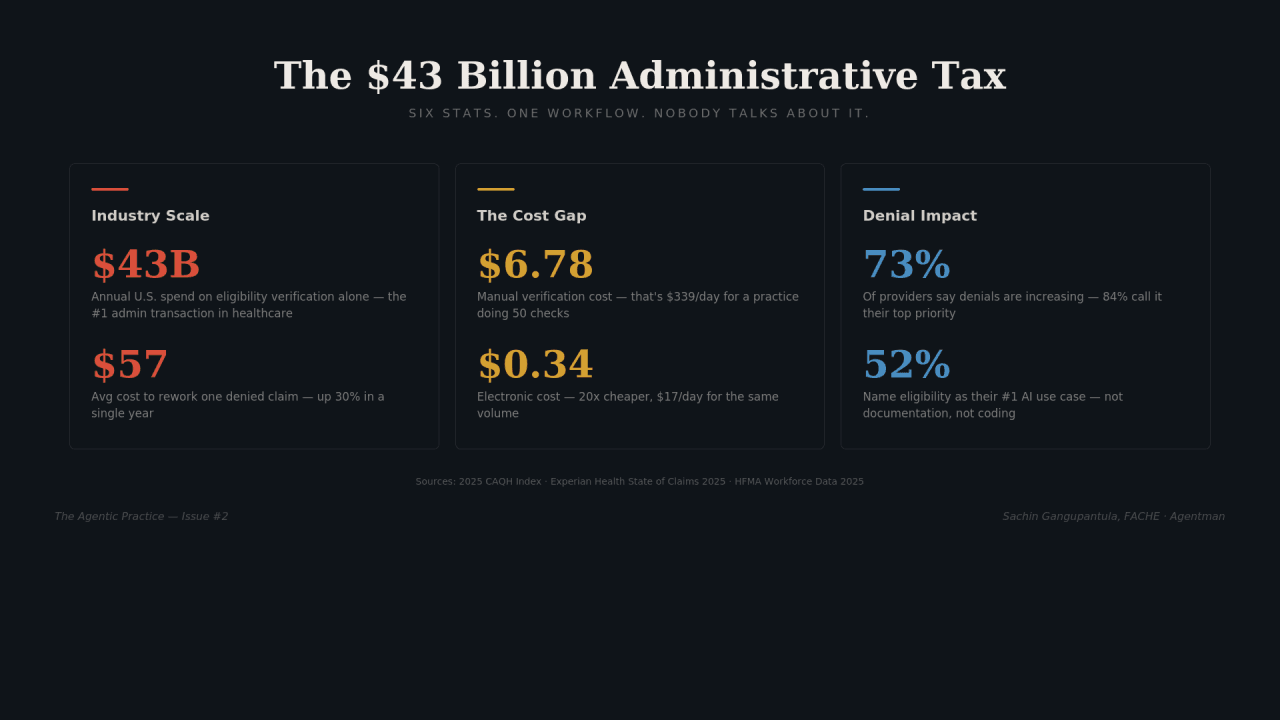
  • Infographic showing six key statistics about the $43 billion administrative tax in healthcare eligibility verification — industry scale, cost gap, and denial impact

    Healthcare

    Newsletter #2: 12 Payer Portals, Zero Logins: The $43 Billion Administrative Tax Nobody Talks About

    The U.S. healthcare industry spends $43 billion annually on eligibility and benefit verification — the most expensive administrative workflow in medical practice operations. Most of this work is still performed manually, with front-desk staff logging into 12 separate payer portals per session. A single-agent automation approach can eliminate portal logins entirely while improving verification accuracy.

    Sachin Gangupantula

  • Healthcare AI adoption data visualization showing 75% of health systems have adopted at least one AI solution in 2026

    Healthcare

    75% of Health Systems Have Adopted AI — Where Is the Whitespace Left?

    New survey data from 120 health systems reveals that three-quarters have deployed at least one AI solution, with multi-solution adoption growing 67% year-over-year. But the real story is in the categories where demand is massive and implementation is still low — exactly where agentic healthcare platforms are positioned to win.

    Prasad Thammineni

  • Infographic illustrating the five-front squeeze on independent medical practices — collapsing reimbursement, administrative burden, AI-powered denials, staff burnout, and fragmented technology

    Healthcare

    Newsletter #1: The Healthcare System Wasn't Built for You. Now You Can Fight Back

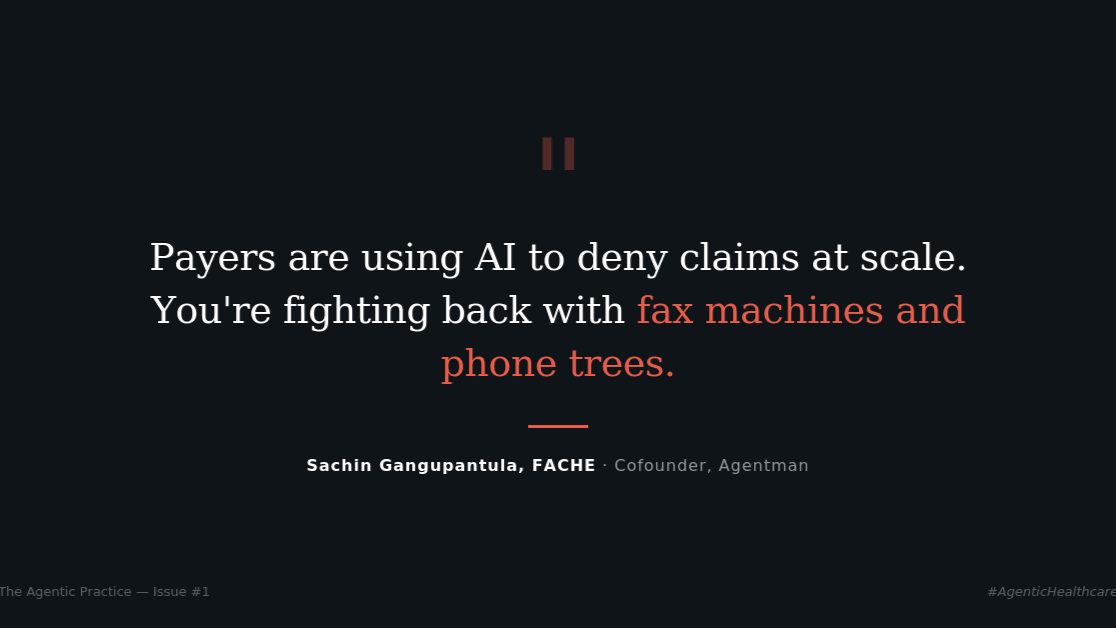
    Independent medical practices face a five-front squeeze — collapsing reimbursement, crushing administrative burden, AI-powered claim denials, staff burnout, and technology that solves one problem while worsening four others. Agentic AI gives independent practices the first tool capable of fighting back on every front simultaneously.

    Sachin Gangupantula

  • Flat design illustration of a healthcare AI flywheel with interconnected clinic nodes sharing knowledge across a network

    Healthcare

    Agent Skills Are the Flywheel That Makes Every Clinic Smarter

    Agent skills create a compounding network effect in healthcare AI. When one clinic teaches an agent how to handle Blue Shield GLP-1 prior authorizations, every similar clinic on the platform inherits that knowledge. The more clinics that deploy, the smarter every agent gets.

    Debby Wang

Have a workflow that will not behave?

We have run agents in production for 24 months. Tell us what you are trying to automate and we will tell you plainly whether agents help.