Dilating eyes all morning? The new cataract consult still gets an answer.
Exam requests, contact lens reorders, cataract questions and optical shop calls all come in on the same line. Medman’s AI receptionist answers each call on your number, writes down what the caller needs and, with your EHR connected, books the visit on the call. Your team reviews the write-ups and calls back the urgent ones first.
Free to start, no card needed · Nothing changes on your current number until you forward it
- Surgery tomorrow without pre-op instructions is marked Urgent; “are my glasses ready?” is Low
- It never interprets a vision change or gives advice on drops or lenses
- Part of Medman, so coverage questions go to the eligibility agent
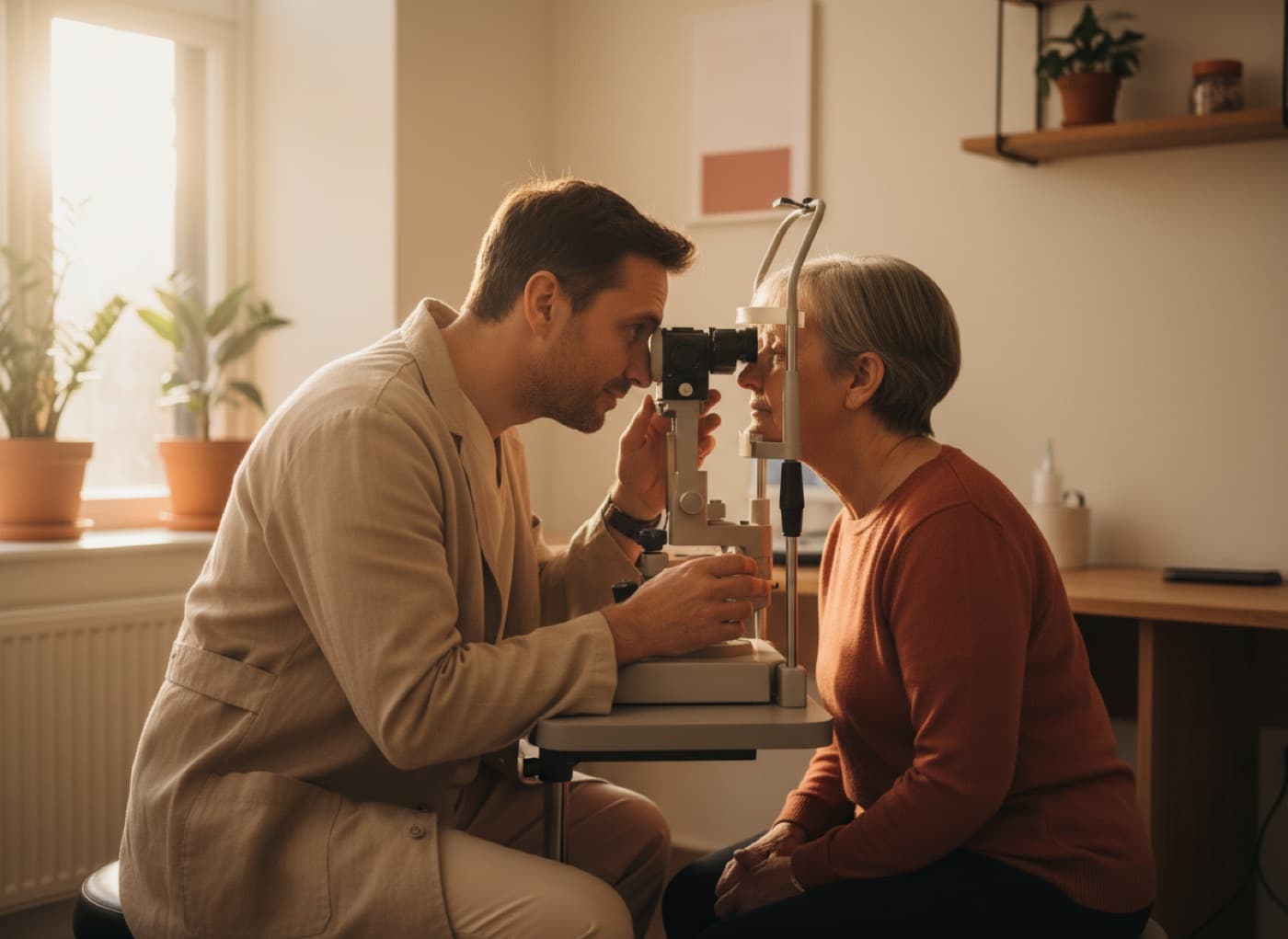
Drops in, patients waiting, every line lit. Each caller still gets an answer.
Four calls an eye care front desk gets every week, and what happens to each one when nobody can pick up.
 New patient
“My eye doctor said I need cataract surgery”
- What happens
- Monday at 10, the technicians are dilating and the front desk is checking in patients when a referred patient calls to book a cataract consult.
- When nobody answers
- The call goes to voicemail. They call the next practice their optometrist mentioned, and that practice does the consult and the surgery.
- With Medman
- Medman answers, takes the referral and the reason, and, with your EHR connected, books the consult while they’re on the line. Your desk keeps checking people in.
- What it never does
- Advises on lens choice or decides what testing is needed.
 Existing patient
“Can I reorder my contacts?”
- What happens
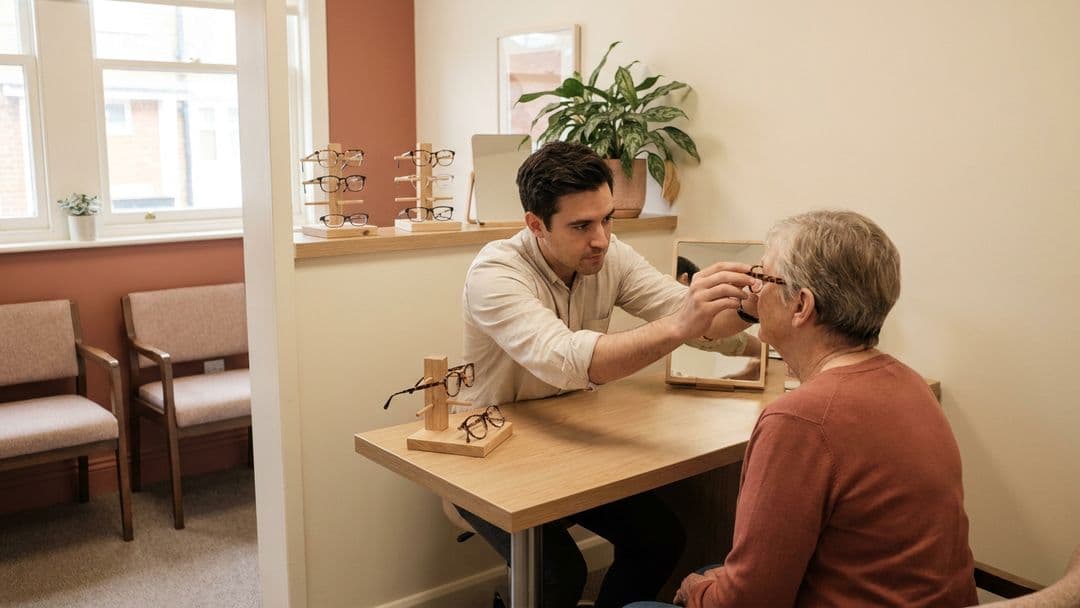
- All day, patients call to reorder contacts, ask if their glasses are ready or check what their vision plan covers.
- When nobody answers
- Each call pulls your optician off a fitting. The ones that hit voicemail order their lenses online instead.
- With Medman
- Medman separates lens orders, optical shop questions and vision plan questions, and writes each up for the person who handles it. Your optician finishes the fitting.
- What it never does
- Declares a prescription valid or advises on lenses.
 Existing patient
“I need to move my injection appointment”
- What happens
- Patients on regular injections and pressure checks call to move their visit, often around a ride from family.
- When nobody answers
- The call waits, the slot is missed, and the next opening is weeks away.
- With Medman
- The visit is moved in your EHR on the call, with the type of visit noted, so the schedule stays full and the patient keeps their place.
- What it never does
- Decides what testing or treatment is needed.
 Existing patient
“My surgery is tomorrow and I don’t have my instructions”
- What happens
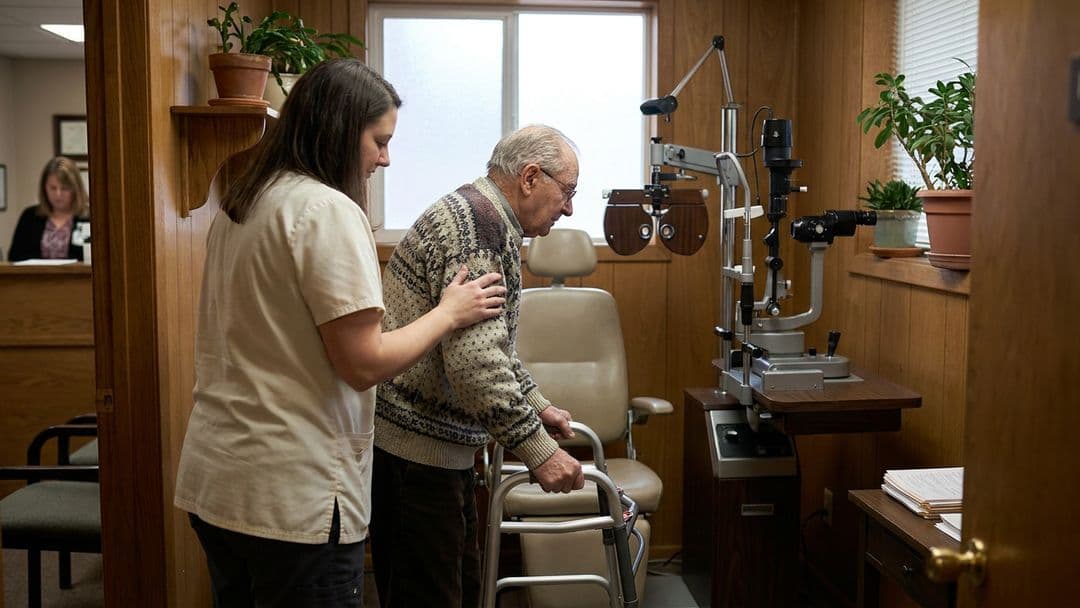
- At 4:30 the day before cataract surgery, a patient calls because the pre-op instructions never arrived.
- When nobody answers
- The message waits until morning, the patient arrives unprepared, and the case is moved.
- With Medman
- Medman notes the surgery date and the missing instructions and marks it Urgent. Your surgical coordinator taps Urgent before leaving, so the instructions can go out tonight.
- What it never does
- Advises on drops or a post-op symptom.
A weekend of calls, sorted before Monday.
Watch the AI receptionist answer a practice's weekend calls, write each one up and put the urgent one first.
It knows the words your callers use, and writes them down as said.
Callers don't have to translate “my knee gave out” into a category. The write-up keeps their words, so your team reads what the patient actually said.
Exams and tests
- eye exam
- dilated exam
- pressure check
- visual field
- OCT
- imaging
- retina
Conditions
- glaucoma
- cataract
- dry eye
- floaters
- flashes
- red eye
- pink eye
- stye
Treatment
- injection
- monthly shots
- drops
- lens choice
- premium lens
- LASIK consult
- PRK
Glasses and coverage
- glasses prescription
- contact lens fitting
- trial lenses
- optical shop
- frames
- vision plan
- VSP
- EyeMed
- medical insurance
The calls that can't wait are at the top of the list.
Each answered call is written up and marked Urgent, Important, Normal or Low by what the caller needs. Your team calls back Urgent and Important first, then works down the rest.
- Each write-up says what the caller asked for and suggests a next step, with the transcript lines it came from
- Resolve a call when it's handled
What callers ask · how it might be marked
- Cataract surgery tomorrow, no pre-op instructions yetUrgent
- Eye hurts two days after surgeryImportant
- Next monthly injection appointmentNormal
- Reorder my contact lensesNormal
- Are my glasses ready?Low
Priorities are suggestions from the write-up, not a clinical judgement. Your team decides, and it is not an emergency line.
What it handles, and what stays with your team.
It handles
- Answering every callOn your practice number, with your greeting and voice, nights and weekends included
- Booking, with your EHR connectedPatients book, reschedule and cancel right on the call
- Eye care intakeMedical eye care, surgery, contact lens, optical or prescription-copy request, with the details the caller gives
- Slower read-backOffers to read details back slowly for callers who have trouble reading
- Routine questionsHours, location, optical shop hours, accepted plans: answers only from details your practice has reviewed
- Marking the callbacksUrgent, Important, Normal or Low, with the transcript lines each write-up came from
Your team handles
- Anything clinicalVision changes, eye pain, drops, lens choice and post-op symptoms
- PrescriptionsWhether a glasses or contact lens prescription is valid
- CoverageVision plan versus medical insurance answers, prior authorizations
- EmergenciesIt is not an emergency line: callers with an emergency are told to call 911
Before it takes real patient calls, you'll complete practice setup inside the app.
Medical-practice setup and agreements are required before patient calls. Use fictional details for testing.
Patients book, reschedule and cancel right on the call.
Connect the EHR you already use and visits go straight onto your schedule. It books into AdvancedMD, DrChrono, Tebra, Practice Fusion, athenahealth, ModMed, eClinicalWorks and more. You don't need one to start: it answers your calls today, and your team books from the write-up.






A missed call is often a patient who books somewhere else.
50%
of patients have given up on a call because no one picked up or the hold was too long
MGMA 2025
69%
will switch providers if communication falls short of expectations
Artera 2025
Free to start. Pick a plan when you need more minutes.
Free
15 AI minutes a month, no card needed.
FreeEssentials
100 AI minutes a month.
$29.99 / monthPlus
300 AI minutes a month.
$99 / monthPro
600 AI minutes a month.
$199 / monthOnly Pro buys extra minutes, at $0.30 each; on the other plans you move up a plan. No annual contract.
See all pricingThe call is the start. Medman carries the rest.
When a caller’s coverage needs checking, the receptionist hands it to Medman’s eligibility agent. Referral faxes and records requests go to inbox triage. Your staff work one queue, and approve every final step.
See how Medman works →What should an eye care practice look for in an AI receptionist?
Four things. It should recognize eye care calls (exams, pressure checks, injections, cataract surgery, contact lenses and the optical shop) and take down what each needs. It should book visits straight into your EHR. It should never interpret a vision change or advise on drops or lenses. And you should be able to test it yourself before a patient calls. Medman’s AI receptionist is built around those calls, and is free to start.
Can an AI receptionist schedule eye care appointments?
Yes. With your EHR connected, patients book, reschedule and cancel right on the call. It books into AdvancedMD, DrChrono, Tebra, Practice Fusion, athenahealth, ModMed, eClinicalWorks and more. Without a connected EHR it takes the request and a callback number, and your team books the visit.
How does it handle a patient calling about a sudden vision change?
It does not interpret the change or say whether it can wait. A caller describing an emergency is told to call 911 straight away, without waiting for intake. For any other concern it advises contacting a clinician promptly, takes a brief reason and a callback number, and marks the call for your clinical team to review.
Can it handle optical shop and contact lens calls?
Yes. It separates contact lens reorders and fittings, glasses prescription copies, optical shop questions and vision plan questions, and answers practice questions from details you have reviewed. It does not declare a prescription valid or advise on lenses.
Will it answer post-op questions?
It books and moves post-op visits and answers practice questions from details you have reviewed. It does not advise on drops or say whether a symptom can wait: a post-op concern is written up and marked for your clinical team to review promptly.
How is it different from an answering service?
An answering service takes a message for the morning. The AI receptionist answers every call on your number, answers routine questions from details you have reviewed, books into your EHR, and writes up each call with a suggested priority and the transcript lines it came from. You set it up and test it yourself, in minutes.
What about HIPAA and patient information?
Medman is built for HIPAA, and we sign a Business Associate Agreement before any patient data moves. Medical-practice setup and agreements are required before patient calls. During setup it only looks up public practice information, never patient information.
What does it cost?
Free to start, no card needed: 15 AI minutes a month. Paid plans: Essentials $29.99 a month for 100 minutes, Plus $99 a month for 300 minutes, Pro $199 a month for 600 minutes. Only Pro buys extra minutes, at $0.30 each; on the other plans you move up a plan. No annual contract. It currently answers in English.
Set up your receptionist for eye care calls, and test it before a patient calls.
Free to start, no card needed. Set it up in minutes, make a test call, and forward your number when you're ready.