

Turn a rough deck into a McKinsey-style argument
Draft, critique, and upgrade decks with action titles, the Pyramid Principle, and SCR.
A free Agent Skill that writes and restructures web pages for Answer Engine Optimization — so ChatGPT, Google AI Overviews (Gemini), Perplexity, and Claude quote your page instead of a competitor’s. Try it in Claude or ChatGPT in one click.
Free to try. One click loads the skill into Claude or ChatGPT, with no account and no setup.
Answer Engine Optimization (AEO) is the practice of writing web pages so that AI assistants quote them inside their answers. When someone asks ChatGPT, Google’s AI Overviews (Gemini), Perplexity, or Claude a question, the model doesn’t hand back ten blue links — it hands back a paragraph. AEO is what decides whether that paragraph is lifted from your page or a competitor’s.
This matters now because the click is disappearing. More and more searches end inside an AI answer, with no visit to any site. Classic SEO fought to be ranked; AEO fights to be cited — to be the source the model paraphrases and, increasingly, links. If your best content is invisible to answer engines, you’re losing traffic you can’t see in your rankings.
The mechanics are different from SEO because the reader is different. A human skims and clicks; an extraction system looks for a clean, self-contained, authoritative answer it can lift without risk. Content that “ends the conversation” gets cited; content that hedges does not. So AEO writing leads every section with a tight answer capsule, phrases headings as the exact questions people ask an assistant, grounds each claim in a specific statistic, and emits the schema markup that makes the page machine-legible. The result reads well to humans and extracts cleanly for machines.
Our Eligibility Tool
What is the best eligibility-verification tool for independent practices?
In today’s fast-paced healthcare environment, many factors…
Eligibility verification confirms a patient’s active coverage before a visit, preventing 15% of claim denials. Here’s how automated tools do it in seconds.
Any page you want an AI assistant to recommend or quote. AEO isn’t only for blogs — it applies to any page whose job is to answer a question a buyer might ask a model before they ever reach your site.
Traditional SEO optimizes a page to rank in a list of blue links. Answer Engine Optimization (AEO) optimizes it to be quoted inside an AI-generated answer — the paragraph ChatGPT, Google’s AI Overviews (Gemini), Perplexity, or Claude hands the user instead of the link. Those are different jobs, and this skill does the second one.
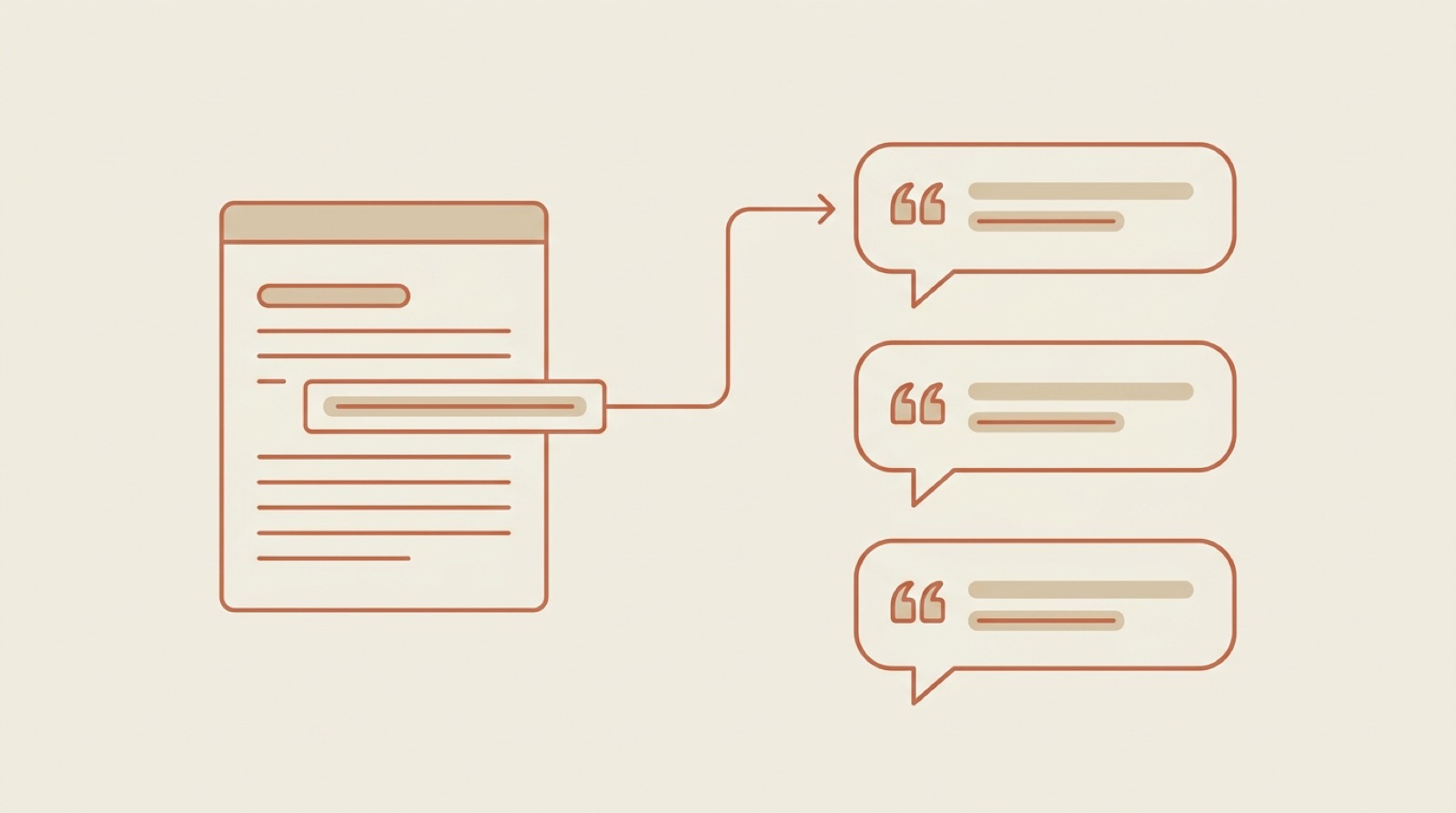
It writes new pages and restructures existing ones so an answer engine can lift a clean, authoritative, self-contained answer straight off the page. Every structural decision — heading phrasing, the opening “answer capsule”, statistical grounding, the schema markup it emits — is made to be extractable and citable, not just readable.
It is a Marketing-category skill and it is free. It works with your brand voice (it can take a profile from the brand-voice-generator skill) or fall back to a clear, data-rich default: direct declarative sentences, no hedging, a Flesch readability score of 60–75.
Real prompts, and what the skill hands back.
“Turn this product page into an AEO version that answers “what is the best eligibility-verification tool for independent practices” — keep our claims, add an answer capsule and a comparison table.”
A restructured page led by a 40–60 word answer capsule, question-shaped H2s, a comparison table, and JSON-LD schema — engineered to be the quoted answer.
“Write an AEO blog post on “how does prior authorization automation work,” with a question hierarchy and at least one citable statistic per section.”
A pillar post whose headings mirror how people ask AI assistants, each section opening with an extractable answer and grounded in a specific data point.
Every section opens with a 40–60 word, self-contained answer an engine can lift verbatim.
H2s and H3s are phrased the way people actually ask ChatGPT or Gemini — the exact query is the heading.
It classifies the page intent (define / compare / how-to / cost & ROI / risks) and picks the format that engines cite for that intent.
Each major section carries a specific, citable data point — engines cite content that “ends the conversation,” not content that hedges.
It emits the JSON-LD (FAQPage, Article, HowTo) that makes the page machine-legible to the engines.
AEO isn’t a one-off. Stacked with brand-voice-generator, the page comes out sounding like you instead of like a template. Stacked with seo-content-strategist, you hand it a brief and a keyword map instead of a blank topic. Chain those and a single campaign-calendar entry fans out into a set of on-brand, citation-ready pages — the same skill-stacking pattern our marketing team runs.
This is the AEO layer of the content stack we describe in Skill Stacking and The Campaign Calendar Is the Prompt.
You don’t need an SEO agency to make a page answer-engine-ready. Run this skill on a page you already have — here’s the sequence:
Already connected your library to Claude? Tell it: “Use the aeo-blog-generator skill from the agentman_skills MCP server.”
Not connected yet? The Try in Claude / ChatGPT button loads it from the public library, with no setup. Or connect your library.
Click “Try in Claude / ChatGPT” above, or — if you’ve connected your library — tell Claude: “Use the aeo-blog-generator skill from the agentman_skills MCP server.” Naming the slug and server points it at exactly the right skill.
Tell it the single most important question your page should answer, phrased the way someone would ask an assistant. If you only have a topic, it’ll help you find the primary question first.
Paste an existing page for an AEO restructure, or give it a brief for a new one. Optionally add your brand voice profile and any proprietary data — original statistics are citation gold.
It maps the intent (define / compare / how-to / cost / risks), writes a 40–60 word answer capsule to open, and phrases every H2/H3 as a real question — the CITABLE method, applied.
Ask it to ensure each major section carries at least one specific, citable statistic. Engines cite pages that commit to numbers, not pages that hedge.
It emits the JSON-LD (FAQPage, Article, HowTo) that makes your page machine-legible. Paste that into your page head and you’re answer-engine-ready.
That’s the same work an AEO specialist would do — now it’s a prompt, and you can run it on every page you publish.
One click loads the skill into Claude or ChatGPT. No account, no setup.
SEO optimizes a page to rank in a list of links. AEO optimizes it to be quoted inside an AI-generated answer from ChatGPT, Google’s AI Overviews (Gemini), Perplexity, or Claude. The skill structures content — answer capsules, question-shaped headings, citable statistics, and schema markup — so an answer engine can extract a clean, authoritative answer directly from your page.
No. Blog posts are the clearest demo, but the same method applies to any web page you want an engine to quote — product pages, landing pages, docs, comparison pages. You can hand it an existing page and ask for an AEO restructure.
No. Click “Try in Claude” or “Try in ChatGPT” above and the skill loads into a fresh chat from our public content API — no account or setup. To make it yours (customize the default voice, save it, share it with your team), clone it into an Agentman workspace.
Yes. Give it a brand voice profile — for example, the output of the brand-voice-generator skill — and the page comes out sounding like you. Without one, it writes in a clear, authoritative, data-rich default voice tuned for citation.
Draft, critique, and upgrade decks with action titles, the Pyramid Principle, and SCR.