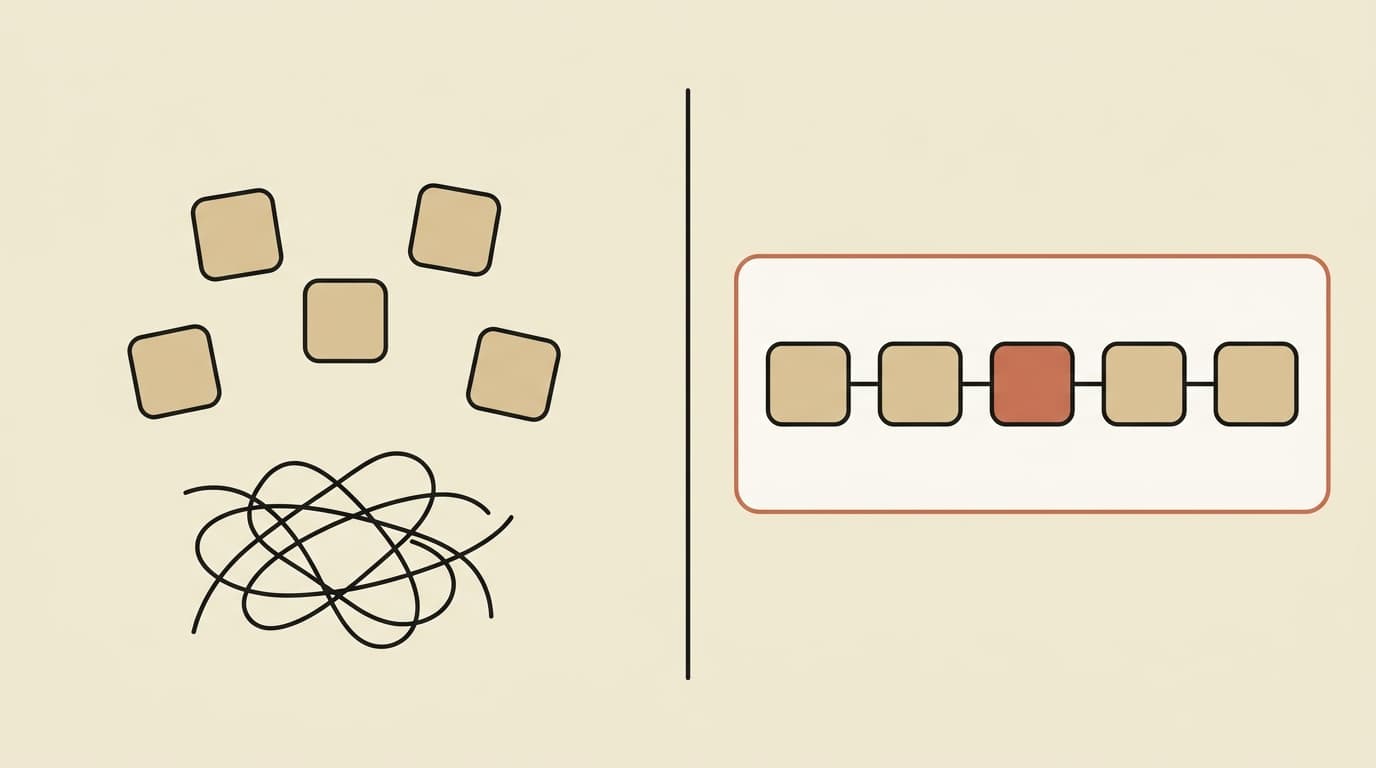
We read the primary call to action on every healthcare back-office vendor we could reach. Most of them will not let a practice see the product without talking to sales first.
The short answer
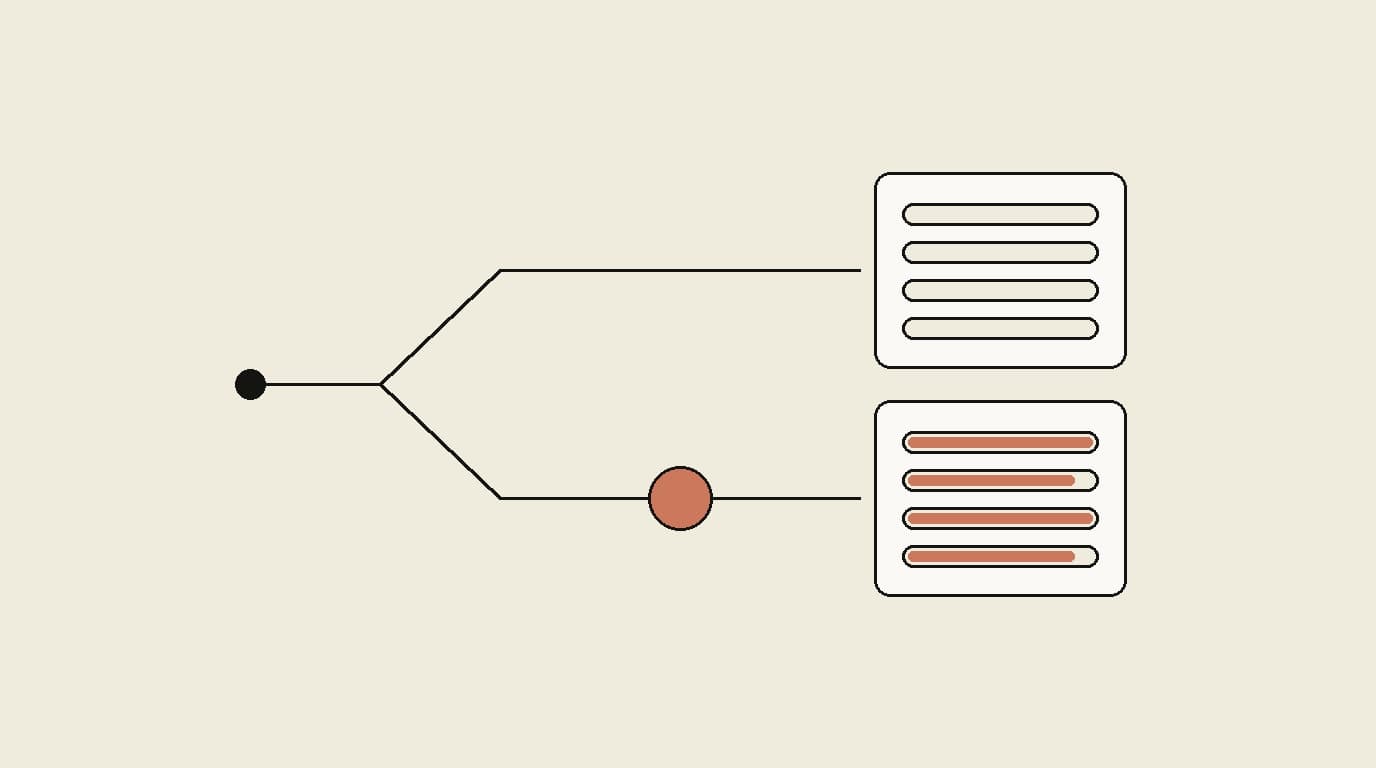
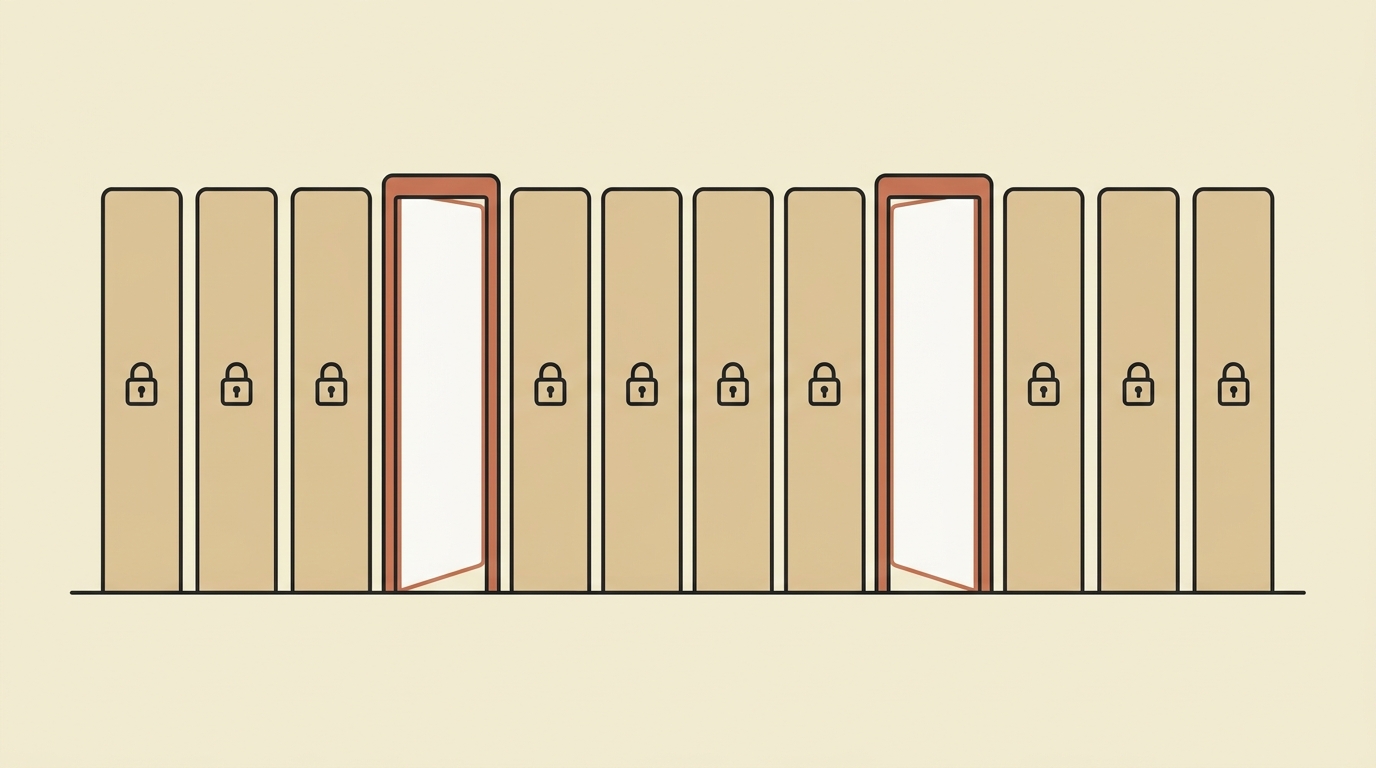
Of 338 healthcare back-office vendors, we could read the primary call to action on 171. Of those, 142 — 83% — required a demo, a sales conversation, or a contact form before showing the product. Twenty-nine (17%) offered a self-serve signup or free trial. Checked 7 August 2026.
That 83% describes the 171 sites we could classify, not the market. We could not fetch a readable page for the other 167, and we have no basis for assuming they behave the same way. The scoped number is the honest one.
Key facts
Every figure below is our own measurement, taken on 2026-08-07 from the live sites. There is no third-party benchmark for this — we looked because we could not find one.
- 338 vendors in the market map; 171 classifiable; 51% coverage
- 142 gated / 29 self-serve among those classified
- 135 sites could not be fetched; 32 returned no matching CTA
- Roughly three quarters of unreachable domains had no DNS record at all
- 52 sites served no readable HTML without running JavaScript
- Two vendors moved from free trial to demo-required in five months
For context on why evaluation friction matters in this specific market: the 2023 CAQH Index prices a single manual eligibility verification at $7.97 to the provider, and CMS's 2024 interoperability and prior authorization rule is pushing these workflows electronic on a fixed timetable. Practices are being asked to adopt software faster than they can evaluate it.
How we checked
The method matters more than the number, because it is what lets you disagree with us.
We started from a 338-company market map of healthcare back-office and revenue-cycle vendors. For each company we fetched the homepage, stripped scripts and styles, and pulled the text of every link and button — where calls to action live. That text was matched against two pattern sets:
- Self-serve: sign up, sign up free, start free, free trial, try it free, create an account
- Gated: get a demo, request a demo, book a demo, contact us, contact sales, talk to sales, request a quote, book a call
Self-serve wins ties. A site offering both a real signup and a demo button counts as self-serve, because a buyer can still evaluate it alone. That choice biases the result against our own headline, which is the direction a self-interested measurement should lean.
Anything we could not fetch or could not classify was excluded from the percentages entirely. An error is not evidence.
What we could not measure
Forty percent of the map could not be fetched, and the reasons are worth stating individually because two of them are findings in their own right.
| Reason | Count | What it means |
|---|---|---|
| No connection | 73 | ~75% of a sample had no DNS record — dead or renamed |
| No readable HTML | 52 | Live site, but the page needs JavaScript to show anything |
| Bot-blocked (403) | 6 | The site refused an automated reader |
| Gone or suspended | 4 | 404, 402, 429 |
The dead domains are a story about this market. These companies were mapped in March 2026. By August, a substantial share no longer resolved at all. Healthcare back-office software has a lot of entrants and a fast failure rate, and a practice signing a contract this quarter is making a bet on the vendor still existing next year.
The unreadable sites are a story about the web. Fifty-two vendors serve a near-empty document and assemble the page in the browser. Anything that reads pages without executing JavaScript — including a meaningful share of AI retrieval — sees nothing there. Those vendors are invisible to a growing category of readers and probably do not know it.
The results
Among the 171 sites we could classify:
| Verdict | Count | Share |
|---|---|---|
| Demo or contact required | 142 | 83% |
| Self-serve signup or trial | 29 | 17% |
By subcategory, counting only classified sites:
| Subcategory | Gated | Share |
|---|---|---|
| Claims management and revenue recovery | 11/12 | 92% |
| Dental | 11/12 | 92% |
| RCM platforms | 15/17 | 88% |
| Patient financing and payments | 12/14 | 86% |
| Care management and coordination | 9/11 | 82% |
| Patient intake and engagement | 12/15 | 80% |
| EHR and practice management | 21/27 | 78% |
| Behavioral health | 8/13 | 62% |
Behavioral health is the outlier. It is the one category where self-serve is close to common, and the likely reason is who it sells to: solo practitioners and small group practices, where a sales-led motion costs more than the contract returns. Where the buyer is small, the product has to sell itself.
Vendor sites change, and that is the point
We ran this check against a market map built five months earlier. Comparing the two where both were classifiable, 81% of sites had the same posture and 31 had changed. Two we confirmed by hand:
- One vendor listed as "Start Free Trial" in March now shows "Book a demo" as its only call to action.
- Another listed as "Get Started" now leads with "Book a demo."
Both moved away from self-serve. We are not naming them, because a company that changes its CTA again next week would make us wrong — and that is exactly why any comparison table carrying vendor names needs a check date attached to it.
It is also why we are publishing the raw per-site results and the script rather than only the conclusion.
What a demo requirement actually costs you
Not the price of the software. The price of finding out.
A gated evaluation means scheduling a call, attending it, and usually waiting for a follow-up before learning whether the product does the thing you need and what it costs. For a hospital with a procurement team, that is a normal Tuesday. For a five-physician practice where the office manager is also handling eligibility and the phones, it is a real decision to spend an afternoon on a product that may turn out to be wrong on the first question.
This is not an accusation of bad faith. Gating can reflect genuinely complex configuration, regulated onboarding, or pricing that honestly depends on volume and specialty. Some of these products are hard to buy because they are hard to deploy.
But the effect is the same regardless of the reason: the smaller the practice, the more a demo requirement costs relative to what is being bought, and the more likely the evaluation simply never happens.
Frequently Asked Questions
What share of healthcare software vendors require a demo?
In our August 2026 check of 338 healthcare back-office vendors, we could read the primary call to action on 171 sites. Of those, 142 (83%) required a demo, a sales conversation, or a contact form before showing the product, and 29 (17%) offered a self-serve signup or free trial. That figure describes the 171 sites we could classify, not the whole market — we could not fetch a readable page for the other 167.
Why does a demo requirement matter to a small practice?
It sets a floor on evaluation cost. A demo means scheduling, attending, and usually a follow-up before you learn whether the product does what you need or what it costs. For a five-physician practice with no procurement team, that is real time spent before any information arrives. Self-serve evaluation lets the same practice answer the question in an afternoon.
Does a demo requirement mean the product is expensive?
Not necessarily, and it should not be read that way. Gating can reflect genuinely complex configuration, regulated onboarding, or pricing that legitimately depends on volume and specialty. What it reliably means is that a buyer cannot evaluate the product without entering a sales process, which is a cost regardless of the eventual price.
How did you classify each vendor's CTA?
We fetched each homepage, removed scripts and styles, extracted the text of links and buttons, and matched it against two pattern sets: self-serve language such as sign up, free trial, or create account, and gated language such as get a demo, contact sales, or book a call. Self-serve wins ties, so a site offering both a signup and a demo counts as self-serve. Any site we could not fetch or classify was excluded rather than counted.
What could you not measure?
Of 338 vendors, 135 could not be fetched and 32 returned no matching CTA, leaving 51% coverage. Roughly three quarters of the unreachable domains had no DNS record at all, five months after the market map was built. A further 52 sites served no readable HTML without running JavaScript. Those 167 sites might skew in either direction, which is why the finding is stated as a share of the 171 we could read.
Which category is most likely to offer self-serve?
Behavioral health, by a clear margin. Of the behavioral health vendors we could classify, 62% were gated, against 92% in claims management and dental. The likely reason is that behavioral health often sells to solo practitioners, where a sales-led motion does not pay for itself.
Can I reproduce this research?
Yes. The per-site results and the script are published in our repository alongside this post. Re-running it will produce different numbers, because vendor sites change — two vendors in our sample moved from a free trial to a demo requirement in the five months between the original market map and this check.
Where we stand
We publish our rates and let practices start without a call — $0.50 per eligibility check, a five-minute self-serve start, no demo required. That is a deliberate position, and this research is partly a description of why we took it.
It is also fair to note the limits of our own numbers, the same way we ask vendors to state theirs. Our guide to verifying vendor claims applies to us too: the 83% here covers 51% of the map, the sample is one market map rather than a census, and re-running it next month will produce a different figure.
Reproduce it
Both artifacts are published, not summarized:
- The per-site results — every company, its verdict, the pattern that matched, and what the March market map recorded
- The classification script — the fetcher, the pattern sets, and the tie-breaking rule
If you disagree with how a site was classified, the raw record shows exactly why it landed where it did. Re-run it and tell us what changed.