← Blog

Healthcare

Eligibility, prior authorization, the fax inbox and the phones: how independent practices put AI agents to work in the back office.

More in Healthcare

46 posts · page 3 of 4
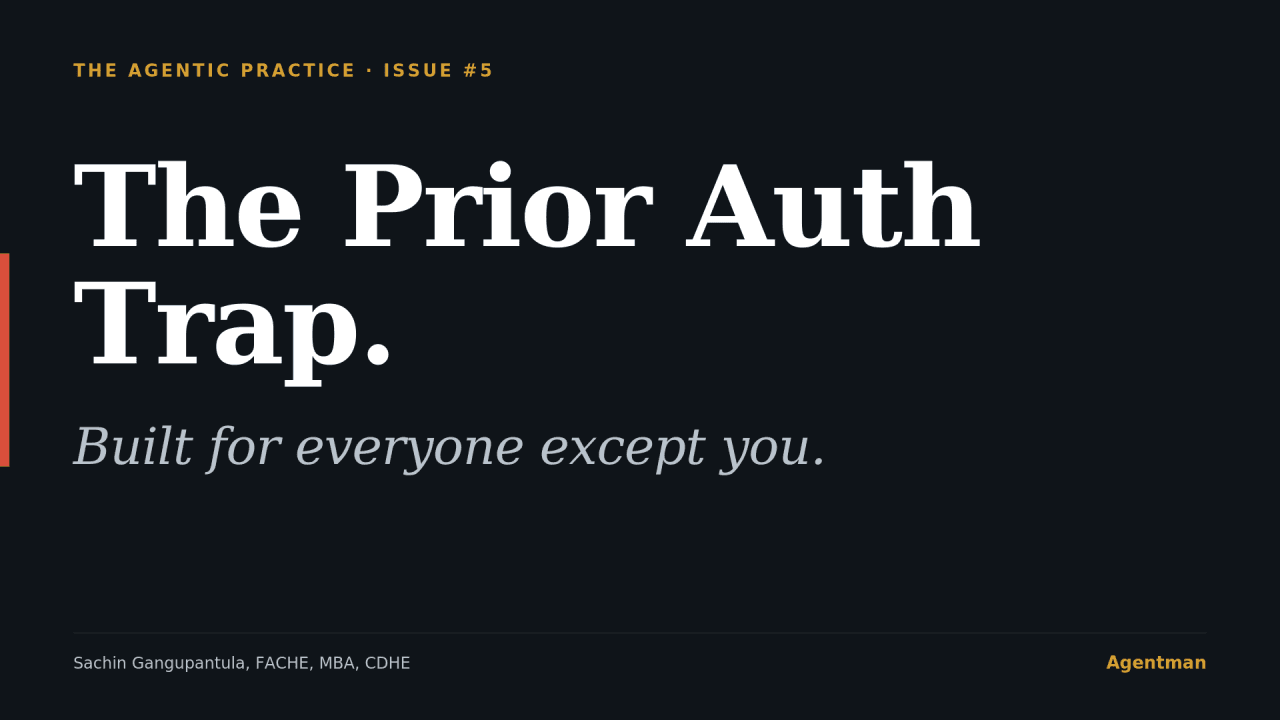
  • The Agentic Practice Issue 5 cover: The Prior Auth Trap — built for everyone except you

    Healthcare

    Newsletter #5: The Prior Auth Trap — Built for Everyone Except You

    Physicians spend 13 hours a week on prior authorization. 67% of denials are never appealed. Every solution the industry has shipped — outsourced PA, CoverMyMeds, payer portals, AI auto-fill, the new wave of agentic PA startups — was built for the payer, not the independent practice. The first round of CMS-mandated public data confirms what staff schedules have shown for years: this is working exactly how it was designed. It just wasn't designed for us.

    Sachin Gangupantula

  • Illustration of eight medical billing agent skills arranged in a grid, framed by a governance shield with audit-trail connecting lines and a human-in-the-loop reviewer.

    Healthcare

    8 Agent Skills Every Medical Billing Team Needs in 2026

    The eight production-ready agent skills with the highest measurable impact on medical billing teams in 2026 — from eligibility verification to prescription refills — and the four governance guardrails that keep them safe from AI hallucinations.

    Debby Wang

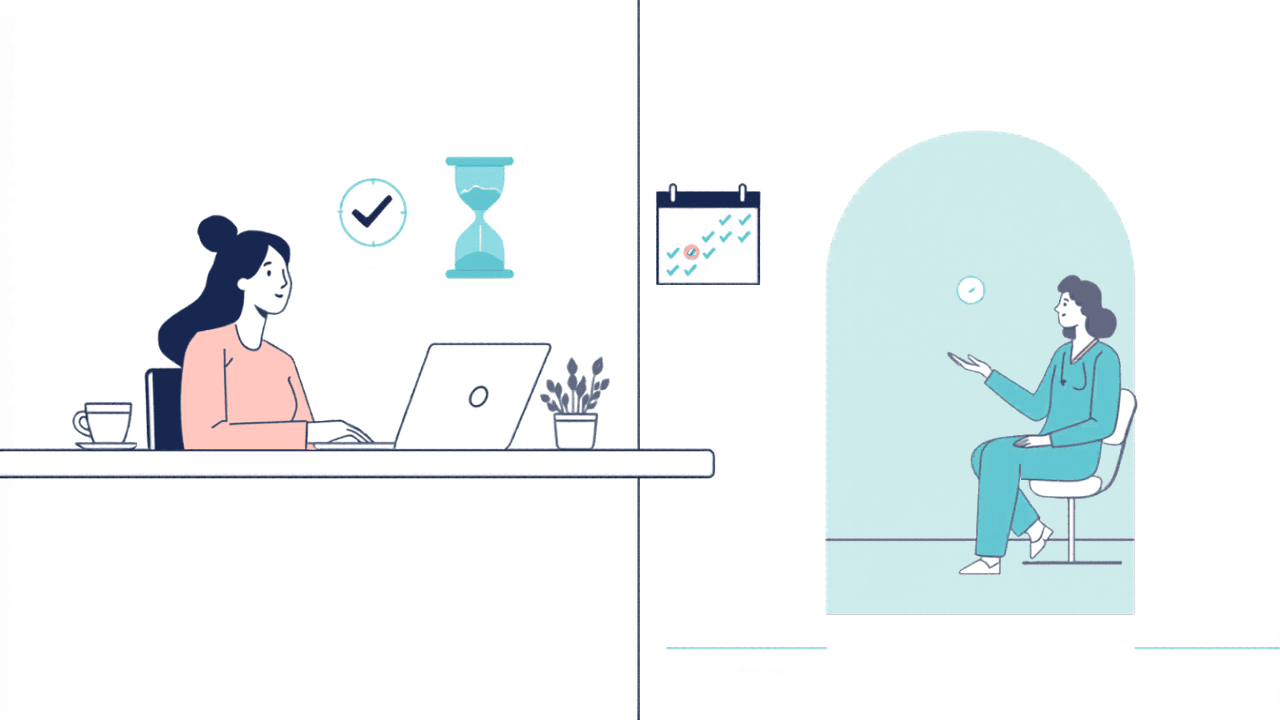
  • Flat-vector illustration of a calm front-desk worker at a medical practice reviewing a scheduling dashboard with completed checkmarks, while in an adjacent room a clinician has an unhurried conversation with a patient — visualizing how recovered staff hours from automated eligibility verification translate into more attentive patient care.

    Healthcare

    Why Eligibility Verification Is the Foundation of Practice Survival

    Manual eligibility verification consumes 90+ minutes per doctor per day and sets up a 10-week denial cascade that drains $50,000–$80,000 per provider per year. Automating this single workflow is the highest-leverage move an independent specialty practice can make — here's the math, the mechanism, and the schedule shift that turns defense into offense.

    Debby Wang

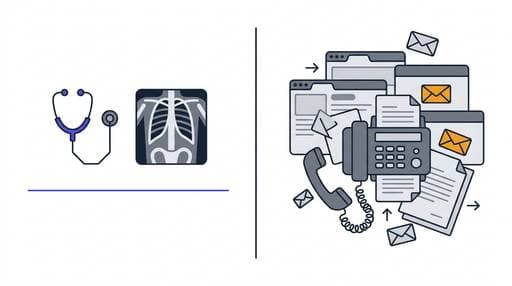
  • Split flat illustration contrasting clinical AI on the left — a clean stethoscope and chest X-ray with calm geometric lines — against administrative AI on the right — a cluttered cluster of overlapping payer browser tabs, a fax machine, a phone receiver with a coiled cord, paper stacks, and a caution-amber denial-letter envelope.

    Healthcare

    The Doctor Didn't Ask Who Diagnosed Me — They Asked If the Bill Will Get Paid

    Clinical AI gets the magazine covers. Meanwhile, the administrative layer that decides whether an independent practice survives runs on fax machines, twelve browser tabs, and staff on payer hold lines. The headlines and the outcomes have drifted apart — and the joke that practice managers tell is starting to look like a strategy.

    Debby Wang

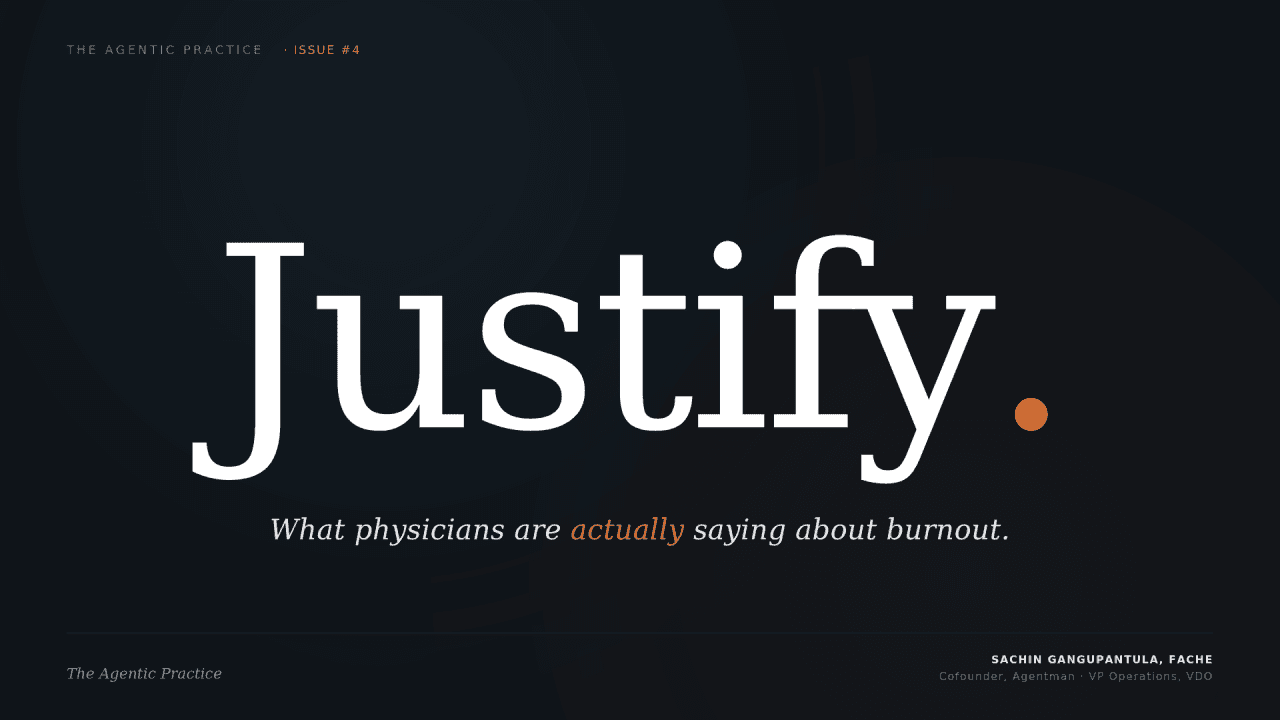
  • The Agentic Practice Issue 4 cover: the word Justify with the subtitle What physicians are actually saying about burnout

    Healthcare

    Newsletter #4: Justify My Care — What Physicians Are Actually Saying About Burnout

    A physician I know recently said this out loud, to no one in particular, after a long day: I don't want another peer-to-peer call with insurance to justify my care. That sentence is the single most common feeling in American medicine right now — and it's not burnout. It's architecture. This is what the wheel costs, and why agentic systems are the first off-ramp in thirty years.

    Sachin Gangupantula

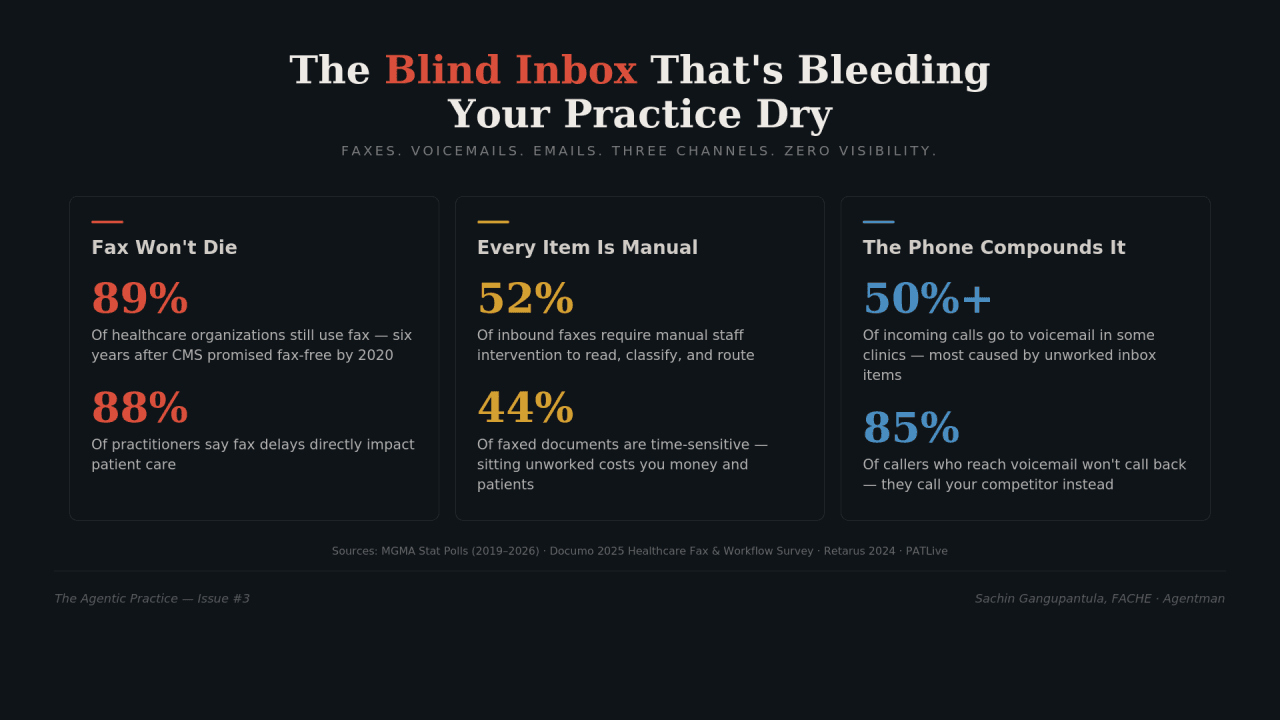
  • AI inbox triage agent organizing faxes, voicemails, and messages for an independent medical practice

    Healthcare

    Newsletter #3: The Blind Inbox That's Bleeding Your Practice Dry

    Independent medical practices lose over $50,000 annually to unsorted faxes, voicemails, and unworked messages. An AI inbox triage agent can cut processing time from 120 minutes to 15 minutes per day and recover revenue hiding in the blind inbox.

    Sachin Gangupantula

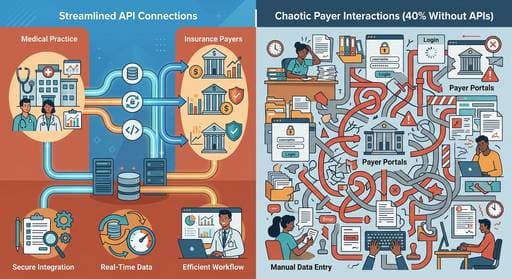
  • Flat illustration showing two paths from a medical practice — one through clean API connections and another through messy browser portals — with a desktop application bridging both

    Healthcare

    Why Healthcare AI That Only Works With APIs Is Missing 40% of the Problem

    Every healthcare AI startup building prior auth automation assumes payers have APIs. They don't — an estimated 30–40% of payer portal interactions lack clean API access. Cloud-only platforms can automate 60–70% of the revenue cycle. Medman's screen agent technology closes the rest.

    Kofi Agyare-Kwabi

  • Flat illustration showing a large hospital surrounded by AI technology while a small family medicine clinic is left in shadow, representing the gap in healthcare AI adoption

    Healthcare

    The $5B Problem No One's Solving: Why Small Practices Are Left Behind by Healthcare AI

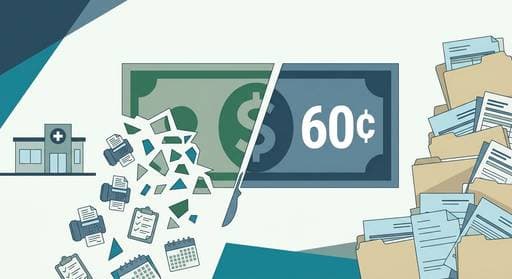
    The healthcare AI market has poured billions into large health systems while leaving ~190,000 small practices to drown in the same administrative complexity — prior authorizations, claim denials, payer variability — without the resources to fight back. The $5B RCM opportunity for independent clinics remains largely unaddressed.

    Kofi Agyare-Kwabi

Have a workflow that will not behave?

We have run agents in production for 24 months. Tell us what you are trying to automate and we will tell you plainly whether agents help.